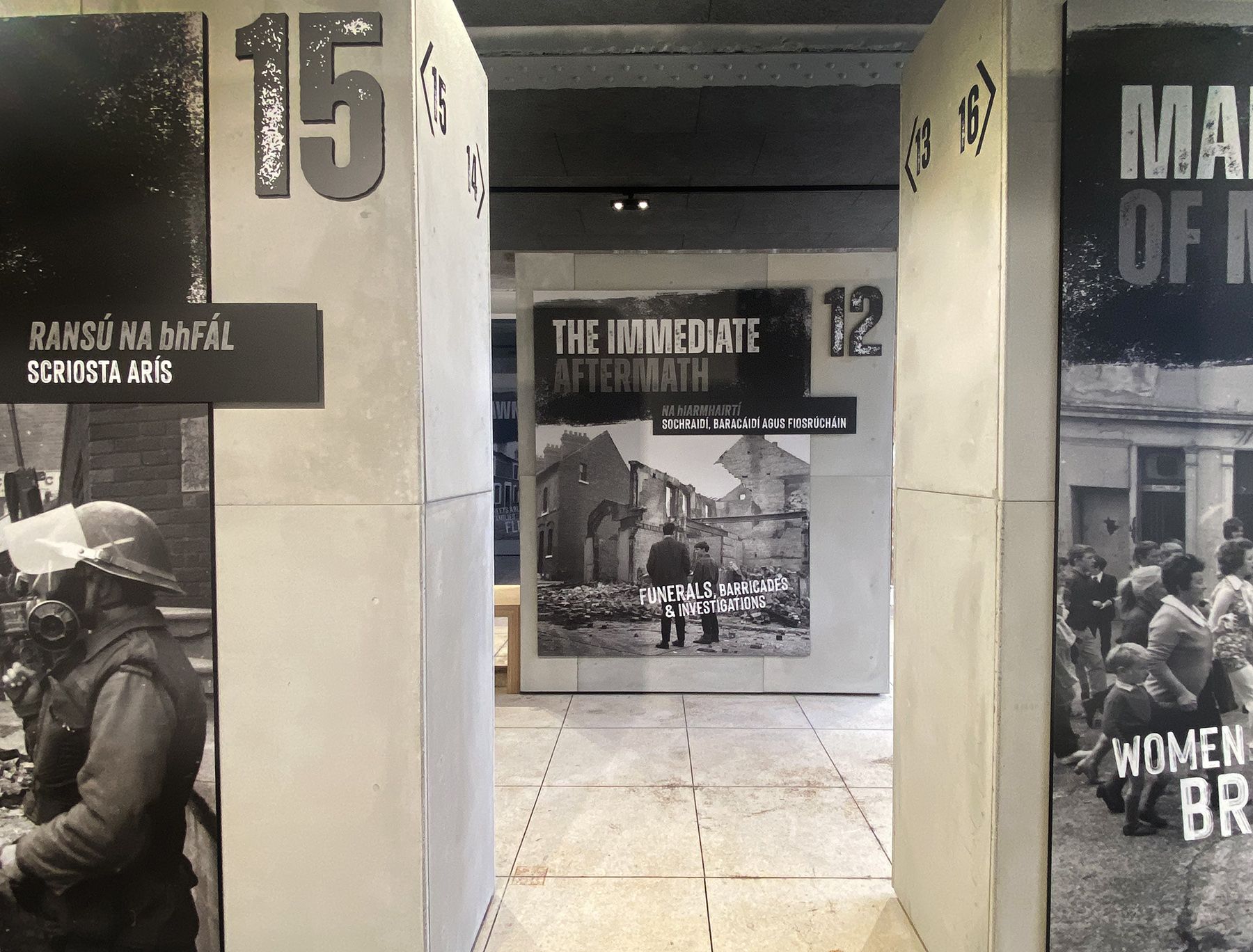
THE new exhibition about the Falls will blow your mind. It has to be seen to be believed. It's located in no better location than the former St Comgall's school.
This amazing exhibition is not just for tourists, it's for local residents, particularly those who experienced the late 1960s and early 1970s first-hand. It offers recognition and validation by telling the story of events that unfolded on our streets around familiar buildings, grounding history in lived reality rather than abstract politics.
Personal testimonies, photographs and recorded memories allow visitors to hear voices that were often unheard at the time. For many, this is not simply about recalling what happened, but about seeing those experiences treated with care, dignity and honesty.

However, the exhibition’s value extends well beyond the local community. For younger generations, who know the Troubles largely through textbooks or second-hand accounts, it provides an essential opportunity to engage with the past in a direct and human way. Rather than dates and statistics, visitors encounter ordinary people navigating fear, confusion and sudden upheaval in their daily lives. This will help younger audiences understand that history is not something distant or inevitable, but something shaped by human choices, emotions and consequences.
Older visitors who may not have lived on the Falls during that period will also find the exhibition deeply affecting. It offers insight into how quickly social tensions can escalate, how communities can be transformed almost overnight, and how long the effects of conflict can linger. In doing so, it encourages reflection not only on the past, but on the present, on the importance of dialogue, empathy and vigilance in any society.
One of the exhibition’s greatest strengths is its balance. It does not sensationalise violence, nor does it reduce complex events to simple narratives. Instead, it places emphasis on context, community impact and personal experience. This makes it accessible without being simplistic, and informative without being overwhelming. Visitors are invited to listen, reflect and think, rather than being told what to conclude.
Ultimately, the exhibition – 'The Falls, Where the Troubles Began' – matters because it reminds us that history happens to people, families, neighbours and children, not just to nations or governments. It shows why remembering is not about reopening wounds, but about understanding them so that our future generations can build something better.
For locals, it is a mirror; for visitors, a window; and for everyone, a lesson in the enduring importance of compassion, memory and shared humanity.
It’s a must-see and aul' doubting Thomas himself would give it ten out of ten.