NEW Year finds Casement Park in West Belfast mouldering and unused. Euro 2028 will not visit it as was promised. But not all is gloom.
When I worked in the BBC as a freelance for several decades, all things Irish stopped at the door. Scant attention was paid to southern newspapers in the ‘It Says in the Papers’ part of the morning newscast. I remember once working with a sound engineer to make a programme and I asked him to include some background Irish music. His response wasn’t hostile but it did include the comment "So you like the diddly-dee stuff, Jude?"
On another occasion myself and another Catholic/nationalist were making a radio documentary and approached the person in charge of securing music for such programmes. We asked him if he’d order up some Christy Moore recordings. He point-blank refused. "I don’t like his music and I don’t like his politics." As an inarticulate simpleton, I could think of nothing to say, but my companion was a tougher nut. “Oh, really?” she replied. “And could you give us a list of any other artists and music that are on your censored list?”
Both events were trivial really, but they give an indication of how things Irish were seen in the North at the time. If you were into traditional Irish music, chances were you were an undependable person, maybe even a supporter of Sinn Féin/IRA.
Things have changed since. The Irish language is being taught in East Belfast. Sinn Féin representatives have attended War Memorial services (even if the outreach hasn’t been reciprocated). And the local BBC has long given up ignoring Féile an Phobail, as it grew and grew and grew.
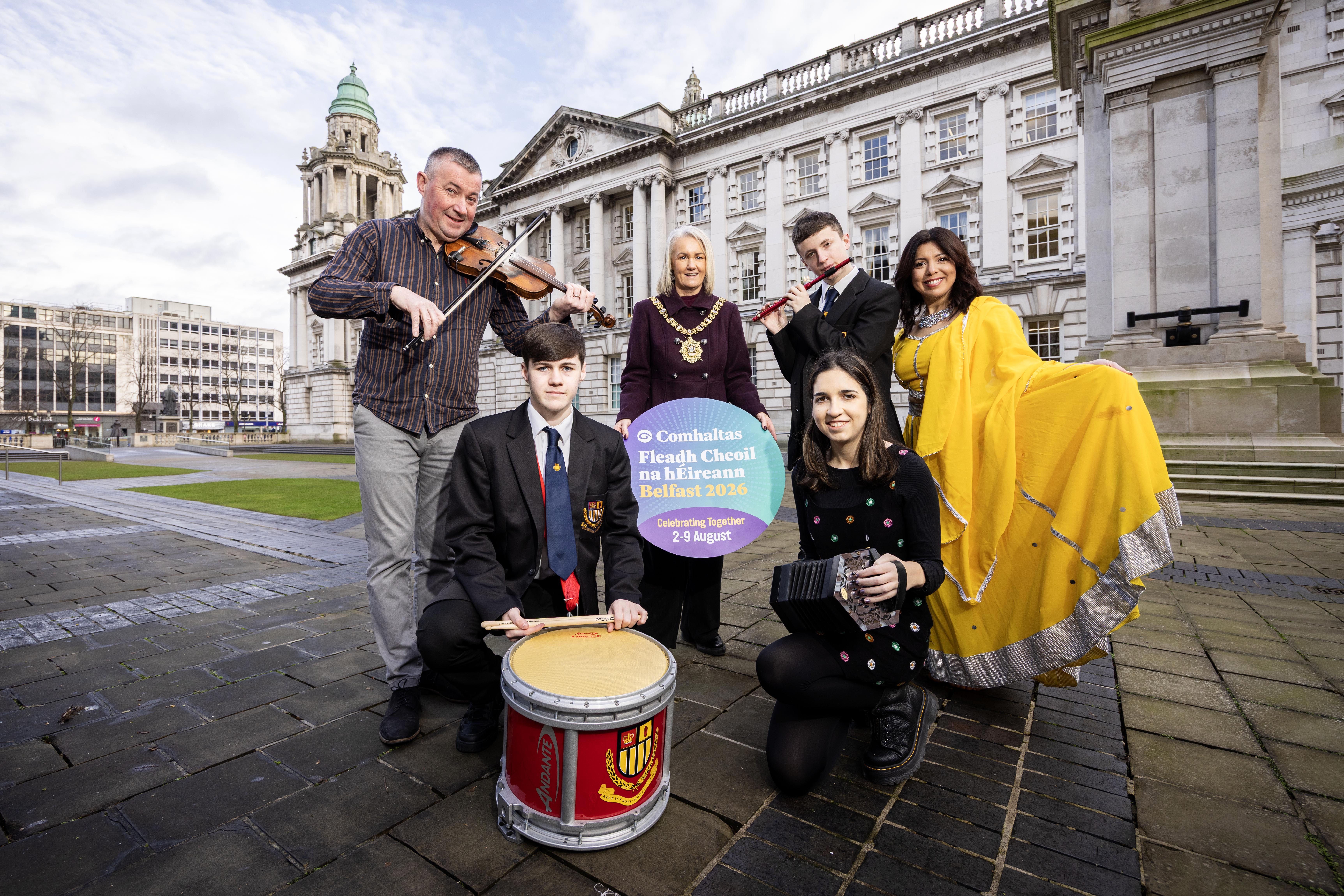
Later this year, Belfast will experience an invasion that would have seemed like Armageddon to our recordings censor back in the day. That’s because Fleadh Cheoil na hÉireann is coming to Belfast this August.
Most of you will have a pretty clear idea of what that will involve, but let me remind you. Fleadh Cheoil na hÉireann is the premier festival celebrating Irish traditional music and culture; it combines elite competition with a mass public cultural celebration. It is one of the biggest cultural festivals in Europe, and will attract up to 500,000 visitors to Belfast. It’ll generate tens of millions of pounds. This huge celebration of Irish culture and identity will make clear that traditional Irish culture is no longer some old guy with no teeth singing by an open hearth: traditional Irish culture will reveal itself as something vivid and alive, embraced with delight by everyone who encounters it.
But the where is probably as significant as the what. The Fleadh Cheoil will be happening in Belfast. That’s the place where unionist MLAs mocked those who used a few words of Irish in the Stormont debating chamber. That’s the place that excluded Irish from state support and education for decades after 1921. That’s the place where some people get hot and aggressive at the use of Irish on street signs. That’s the place where GAA clubs were attacked and vandalised (and the vandals haven’t gone away, you know). That’s the place where, well into the last century, public funding and civic recognition of Irish culture were minimal in unionist-controlled councils.
People develop hostility most often because they’re afraid. Things Irish – symbols, language, cultural expression – are seen by some as political challenges to British identity.
But next August will see a Belfast saturated by Irish music, dance, singing. The grim statues in front of City Hall and the Titantic Quarter that can’t quite shake off the shipyard history of bitterness and bigotry will be swallowed whole by this week-long joyous occasion.
As Bobby Sands predicted : "Our revenge will be the laughter of our children."