NEW British Prime Minister Andy Burnham’s decisions on the Secretaries of State for the regions voting for parties who campaign for independence tell us something important.
Stephen Kinnock, son of Neil (for those of us old enough to remember the charismatic former Labour leader), is appointed for Wales – a strong media performer with a considerable political track record and, importantly, from Wales.
Douglas Alexander, a Labour stalwart, maintains his position as Secretary of State for Scotland; he has faced the SNP for a long time, but, importantly he's from Scotland.
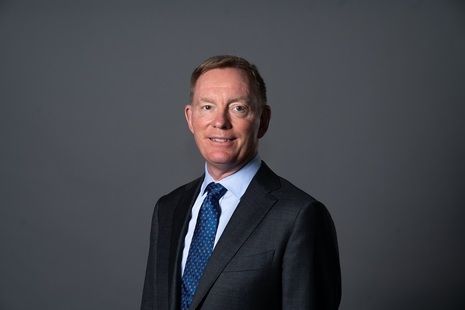
And for us, a new face. Mr Chris Bryant came to our attention as a strong remainer and had much to say about the impact of Brexit on the Good Friday Agreement on Newsnight at the time. While on the margins of political debate, he has always had a position for the many media requests he receives. And for us here the important thing is he is from... Wales.

Other than when he discovered us as the threat of a no-deal Brexit loomed large and there were media requests galore, it’s hard to find a huge amount of interest from him in our affairs, but that’s about to change.
Challenges regarding the local budget proved intractable with his predecessor, who brought a Tory-lite approach to our local needs, and could/would not see the disproportionate legacy of disinvestment and conflict on our region, coupled with the particular economic impact of Brexit on our communities.
It will be instructive to see if the new SoS will try to kill independence with kindness, and try to make devolution work with sufficient resources. However, with Burnham focusing on giving the North of England a new economic focus, that first test will be worth noting.
For what it’s worth, there is a quick win to shift the books. The Treasury continues to fight our local Executive on the matter of the Injured Pension. Despite introducing legislation in Westminster for injuries that occurred under direct rule, the local block grant has had to fund the scheme for all applicants wherever they live, including victims from and living in Britain. The sums are not inconsiderable. Should the Treasury do the right thing and take fiscal responsibility for its own scheme, then that would free up resources from the Block Grant. It would not be a magic wand but could tip the scales, making budget-balancing easier. On a political level it would also allow the Executive to recommend that our Fresh Prince of Chichester Street extend the deadline on the scheme, allowing the complexity of injuries to be properly supported.
On legacy it is unlikely that we will see a champion for victims in Mr Bryant. His track record on Palestine is devastatingly weak. The Irish government and all victims will be watching to see if he can stand up for human rights in a cabinet now with a heavy champion for British army veterans in the Chancellor of the Exchequer John Healey.
However, there is one glimmer of hope. One Ms Louise Haigh. Newly promoted and clearly a heavy political hitter herself, our issues are understood by her. She impressively stood against the Legacy Act and promoted the Good Friday Agreement while Shadow Secretary of State. If Bryant wants an ally for progressive positions he may have one in her.
IF he wants one.