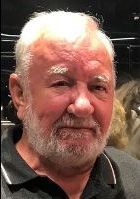
Tommy Ramsey died peacefully at home surrounded by his loving family on November 20. Gerry Kelly delivered this oration during his funeral on Monday at Milltown Cemetery.
TOMMY Ramsey was, amongst other things a life-long Irish Republican and community activist.
I have to say I was shocked to learn of Tommy’s passing. I knew from seeing him at funerals and commemorations that he had suffered from health issues for some time
If there is any consolation for his loving family it is that he passed peacefully, with his beloved wife, Kate, and one of his children, Sue, on either side of him. As Sue said to me, "He died, as he lived – quietly and without fuss."
Tommy was brought up in Coates Street in the Lower Falls area. He was from a large family, a bit like my own. Kate tells me that she took a shine to him when she saw him playing football when they were very young. She also told me he was a very good footballer and should’ve kept at it, as it would’ve been nice to live in the lap of luxury, at least for a wee while, when he had made his fortune.

When they were in their teens they used to go to a dance hall called ‘The Jig’ in the Jennymount area where one night Tommy built up the courage to ask her out. Not too long after that, they wanted to get married but Kate’s Daddy pushed her to wait till she was 18. They got married on Saint Stephen’s Day 1962, so would have been 63 years married at the end of this year, together, through thick and thin.
They were burnt out of their house in Coates Street in 1969 and moved to 10 Springhill Cresent, which is where I first met them. Their home, like most homes in Springhill, was an open house to Republican and community activists throughout the long period of conflict which ensued.
As well as the personal and horrific experience of being burned out of their home, Tommy and Kate also witnessed the rise of the Civil Rights Movement and the Orange State’s attempts to crush it, with violence and imprisonment without trial.
They witnessed thousands of other Catholics and Nationalists being driven from their homes. They saw the thousands of armed British troops who were sent here, not to defend or protect those who were suffering, but instead, to crush our community.
During the first couple of days of Interment in August 1971 ten residents were shot dead by British soldiers in Ballymurphy, including Fr Hugh Mullan as he was trying to help others who had been shot. Then again, in July 1972, British soldiers gunned down five innocent people in Springhill, also including another priest, Fr Fitzpatrick, and three children.
They also watched the British army on TV, in Derry, shooting down peaceful Civil Rights marchers.
Closer to home, Loyalist death squads were on a killing rampage against innocent Catholics and Nationalists.
For Tommy, the question was, how could he best oppose the naked sectarianism, the supremacism, the discrimination and the brutality of the Unionist regime and its RUC, and the British government, its military forces and Loyalist murder gangs.
He was determined to defend his community. He decided, as many other men and women did at that time, that armed resistance was the only way to face an occupying military force and he was not going to leave that challenge to others. His ability and commitment was clear from the start and his intent to lead from the front was obvious.
Tommy first joined the IRA Auxiliaries and shortly after was sworn in as a Volunteer of Óglaigh Na hÉireann.
Internment without trial had diminished the ranks of the IRA. People were being arrested in waves, so by the beginning of 1972 the units in the Greater Ballymurphy area were almost entirely made up of teenagers.
The years 1972 and 1973 were the worst years for casualties on all sides during the conflict. There was a revolutionary atmosphere within the Republican working-class areas throughout the Six Counties.
The seven districts that make up the Greater Ballymurphy Area were at the centre of that conflict and Tommy was one of the core leaders in the area. It was a 24/7 existence in a highly militarized situation where the oppression by British forces was a way of life, as was the daily battle against that oppression.
Younger Volunteers appreciated talking to the older comrades like Tommy and learning from their conflict experiences as well as their life experience in general.
Tommy always showed great respect to younger people. He was a good listener and gained a reputation of being strategic and tactical in his activism. It’s strange looking back from my age now, because as a teenager, I looked at people like Tommy, Jim Bryson, Tommy Toland and others of their age as much older and wiser, even though they were still in their twenties!
Tommy was interned in 1972 for a time but on his release he immediately reported back to active service in the IRA. He had much more to give to the struggle.
He took on a number of different roles in the Irish Republican Army. He was a loyal friend and comrade that you could depend on, especially if in a tight spot – not just in reference to the conflict but throughout his life. He especially looked after younger members of the Movement. If you had his friendship it was long lasting.
In the middle of all his activity, fighting for all our futures, he also had a family of seven that he and Kate had to cater for. He had been a steeplejack for a period but was better known as a Black Taxi man. He drove the taxi for many years and earned the nickname ‘Hack’ Ramsey.
I am reliably informed that three of the letters on his registration were PHS or ‘Please Hack, Stop!’ Kate says he found it hard to bring a wage packet home because he knew so many people on the road and that translated into free travel.
Tommy was arrested and charged in 1980 on the word of a so-called ‘supergrass’ in connection to operations carried out by an ASU, which was referred to in the media as the ‘M60 Squad’. He was remanded for a while but the case against him was dismissed by the court. Shortly after his release the Ramsey home, which was situated in a vulnerable site at the top of Springhill close to the Springfield Road, was attacked by loyalists.
For the safety of their young family they moved to Twinbrook and squatted in an empty house. The Housing Executive arrived to evict them but found several dozen black taxis there, in vociferous protest.
So they were allowed to stay.
Kate was Tommy’s rock and he was hers, co-activists throughout over 60 years of being together. They ended up with seven children and a niece in their family: Thomas, Charleen, Patricia, Cathy, Angela, Joseph, Sue and Frances.
When I used to be in and out of their house in Springhill in 1972 and '73 one of the childer was a ‘cheeky cat’. (As we were wont to say at the time.)
When I got to know Sue better many years later, when she became an MLA, I thought it was her but realized she was just a two-year-old baby at the time. So, Patricia proudly owned up to being that child at the wake on Saturday. Mind you Sue was more than cheeky enough for all of us when in the Assembly.
There is a lot of love in the Ramsey household and a great sense of mischief and humour. Kate was saying to me on Saturday that after Tommy passed Sue and her were trying to wake him up at first, before they realized, but she was waiting to hear him say ‘Yes my Dear’ which he always said, to make her think he had been listening to what she was saying to him.
Tommy was very aware of the changing dynamics in the period of military conflict. He knew that military action on its own would not achieve a United Ireland and that Republicans needed to be active in every aspect of community life. He knew that Republicans had to learn from the past but act in the context of the present.
His passion for helping youth was obvious in his activism with the Lagan Valley Project which he was very central to.
He had learned a lot from the work of Fr Des Wilson and his team in Springhill. Along with other volunteers he worked with youths who had been let down, outcasts from the formal education system. Between 1992 and 2007 he and others took on young people from right across the whole community and helped them turn their lives around. He got joy out of seeing them find their purpose in life. He took pride in it and saw that as another very positive strand of struggle.
A chairde, now in 2025 we are closer than ever to undoing the injustice of partition and reuniting our country. The Orange State has gone forever. Unionist domination has gone, whether they like it or not. Sinn Féin is the largest political party in Ireland and we have an Irish Republican First Minister in the Six Counties. And in the tradition of Irish Republicans, she is a First Minister for all.
Thankfully our young men and women no longer feel that they have to risk their lives and liberty on active service.
Irish Unity, of course will not just happen. We need to make it happen. That’s the focus as we go forward together. By continuing to put our shoulders to the wheel, just as Tommy did, we will finish the task ahead.
We will achieve a united Ireland, a New Republic, where the rights and identity of all people, living on this island, of whatever persuasion or background, will be welcomed and cherished.
But let me be clear that we could not have got this far without the courage and actions of Tommy and his comrades in the Irish Republican Army.
A Chairde, the most fitting tribute we can give to our friend and comrade, Óglach Tommy Ramsey, is to continue that struggle for a free, independent, united Ireland based on equality for all living here.
You will have your own stories of Tommy and no doubt tonight the sad, and the many happy memories, will be shared in celebrating a life well lived.
As you know Tommy was a lifelong tee-totaler and when anyone brought a problem to him, he would invariably say, "Sure let's have a cup of tea and see if we can sort it out." I’m sure he will forgive us for remembering him tonight with something a touch stronger than tea – and I’m not talking about coffee!
Tommy did great things in his life, sometimes very difficult things, brave things, but through it all, he was always quiet, thoughtful, unassuming and willing to help all who needed help.
He will be sadly missed by many, many people, but most of all by his wife, his co-activist and lifelong partner, Kate, along with their family: Thomas, Charleen, Patricia, Cathy, Angela, Joseph, Sue and Frances.
Also by their 19 grandchildren and 16 great grandchildren. 19 and 16 – now there’s a Republican finish to remember!
Slán ár gcara agus ár gcomraidí agus bigí cinnte go mbeidh ár lá linn.