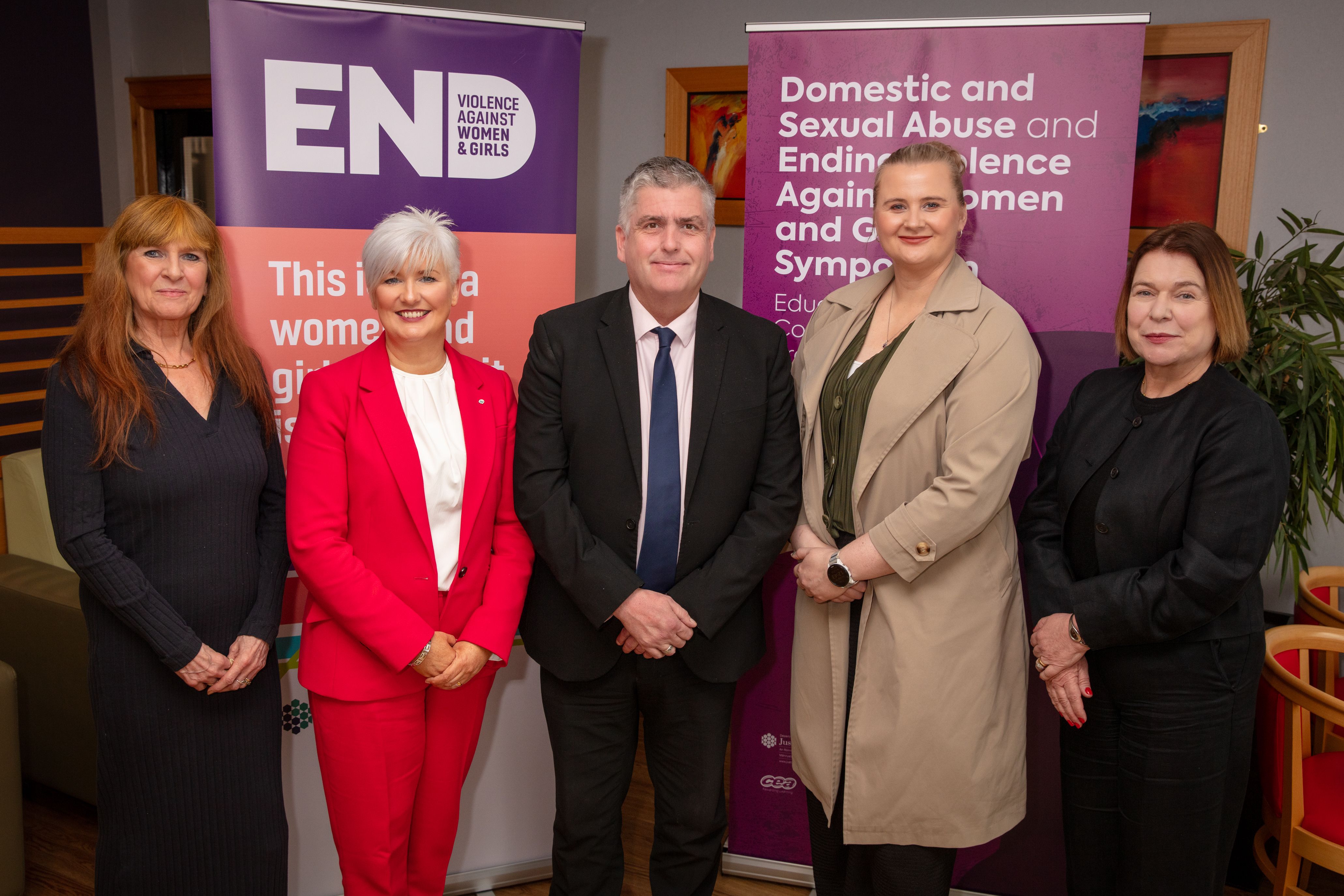
A CONFERENCE has taken place in Belfast to explore the role that schools can play in building healthy relationships.
Hosted by the Council for the Curriculum, Examinations & Assessment (CCEA), the meeting focused on the impact of domestic and sexual abuse and ending violence against women and girls policies at a school level.
The event at Stranmillis University College was held in collaboration with The Executive Office, Department of Justice, Department of Health and Department of Education.
Since 2019 over 30 women and girls have been killed by men in the North – the highest figures in Ireland and Britain.
More than 120 senior post-primary school leaders and teachers joined government departments and safeguarding agencies to examine how education underpins the North's wider strategies on domestic and sexual abuse and ending violence against women and girls. Delegates explored the role of the whole school approach to wellbeing and safeguarding as a foundation for long-term prevention and strengthened alignment between schools, government and frontline safeguarding partners.

The programme demonstrated clear alignment from legislation and departmental policy through to operational school practice. It highlighted the importance of school culture, ethos and leadership in driving prevention and emphasised Healthy Relationships Education as a cornerstone of long-term safeguarding and early intervention.
Senior officials and sector leaders from across government, education, policing and specialist services contributed to the programme, underscoring the strategic importance of the event and the shared commitment to prevention, protection and cultural change.
A central message echoed throughout the day: education is the cornerstone of prevention.
Justice Minister Naomi Long and Education Minister Paul Givan with Council for the Curriculum, Examinations and Assessment (CCEA) Chairman Deborah O'Hare, Chief Executive Gerry Campbell and Programme Manager Roisin Radcliffe 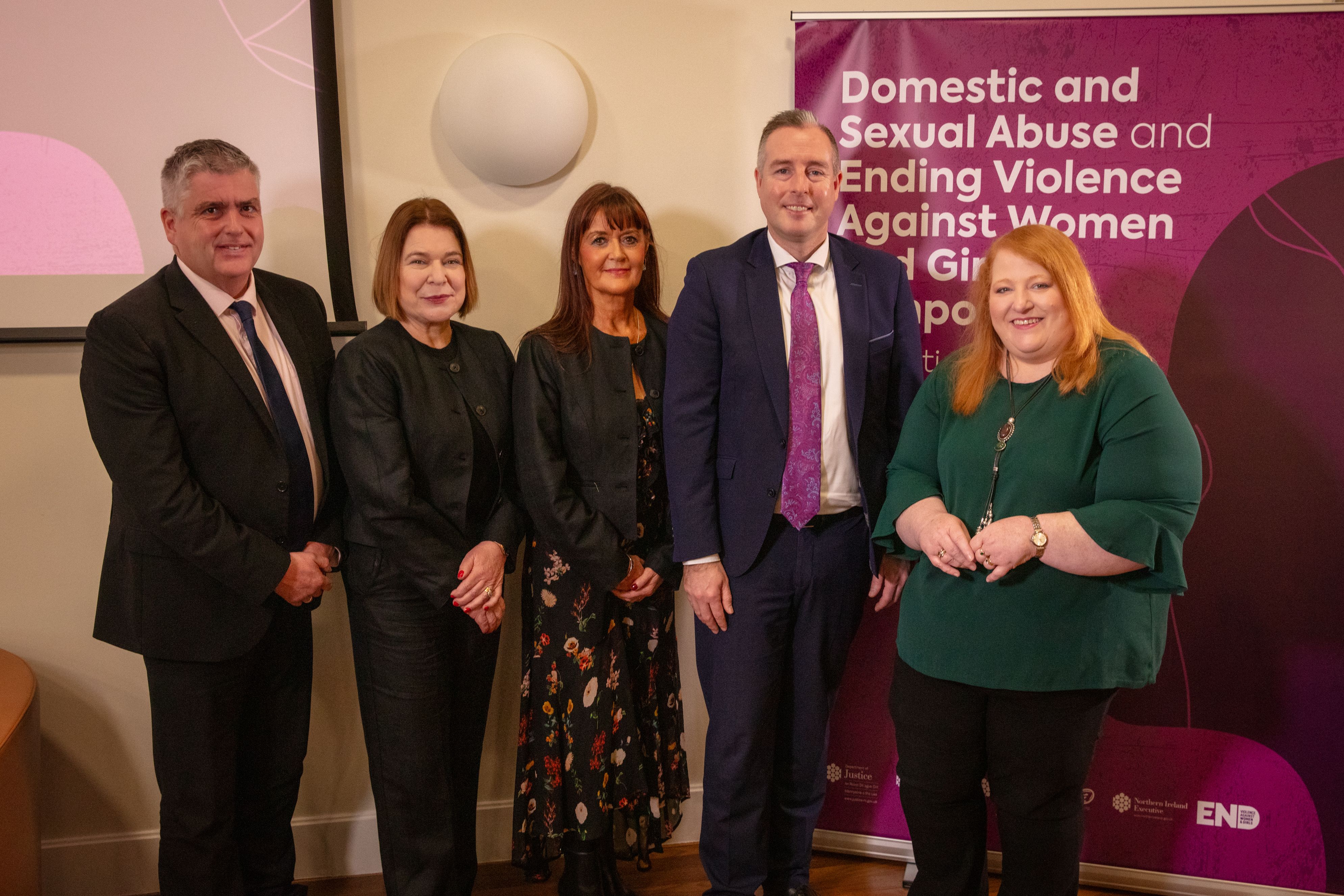

Gerry Campbell, Chief Executive of CCEA, said: “Education plays a pivotal role in safeguarding and prevention, and school leaders shape the culture and daily experiences that influence young people’s understanding of healthy relationships.
“High quality Relationships and Sexuality Education (RSE) gives young people the knowledge, skills, confidence and critical thinking they need to build positive relationships and recognise harm. The work already underway across schools and departments is significant, and the commitment of school leaders is deeply valued.
“Ending domestic and sexual abuse, and violence against women and girls requires sustained partnership across government, education, policing, health and the voluntary sector. Schools cannot do this alone. Today’s event strengthens the collective leadership and aligned action needed for the next stage of collaboration.”
Junior Minister Aisling Reilly said: “The tragic and senseless deaths of two more young women in recent weeks has reminded us yet again of the catastrophic consequences of violence against women and girls.
“It ruins lives and devastates families and communities, and that’s why ending this scourge on our society is a key priority for The Executive.
“Through the Ending Violence Against Women and Girls Strategic Framework we are prioritising prevention – stopping the violence, abuse and harm before it starts. So, I want to thank CCEA for organising this event and bringing school leaders together to focus on the challenges facing our children and young people and the actions we can take collectively in response.
“Schools play a vital role through equipping young people with the knowledge and confidence to build healthy relationships and recognise harm. This is how we will improve outcomes for this generation and the next – by acting early, acting together, and committing to making real change and building a better future for all our young people.”
Fellow Junior Minister Joanne Bunting said that ending violence against women and girls is "one of the most pressing challenges facing society today".
“Recent headlines are an all too sad reminder that violence against women and girls is having a devastating impact across Northern Ireland. Our message is clear – the women of Northern Ireland deserve and demand better.
“Today’s event demonstrates the Executive’s shared determination to tackle the root causes of violence against women and girls and domestic and sexual abuse. We want all children and young people to know that any type of violence, abuse and harm in relationships is never acceptable. Prevention and education are critical -–ay, in classrooms, online and in their communities, and it is encouraging to see such strong commitment from school leaders here today.
“By joining up prevention, early intervention and support, we can reduce harm, protect those at risk and bring about the change our society needs.”
Minister of Justice, Naomi Long MLA, said The Domestic and Sexual Abuse Strategy is a joint initiative led by the Department of Health and the Department of Justice. "It sets out a comprehensive, whole-system approach to tackling domestic and sexual abuse across Northern Ireland," she added.
Minister of Education, Paul Givan MLA, said the symposium reinforced the united commitment across government to address all forms of domestic and sexual abuse and to end violence against women and girls.
"Education is central to this effort," he said. “High quality healthy relationships education is one of our most powerful tools for long-term prevention. The progress already being delivered across schools and safeguarding partners is significant, and the dedication of school leaders is deeply valued.
“Today’s event has strengthened that shared commitment and set a clear direction for the next phase of collective action to ensure every young person grows up safe, supported and respected.”