IRISH language advocacy group Conradh na Gaeilge has voted to amend its constitution to “work towards a united Ireland”.
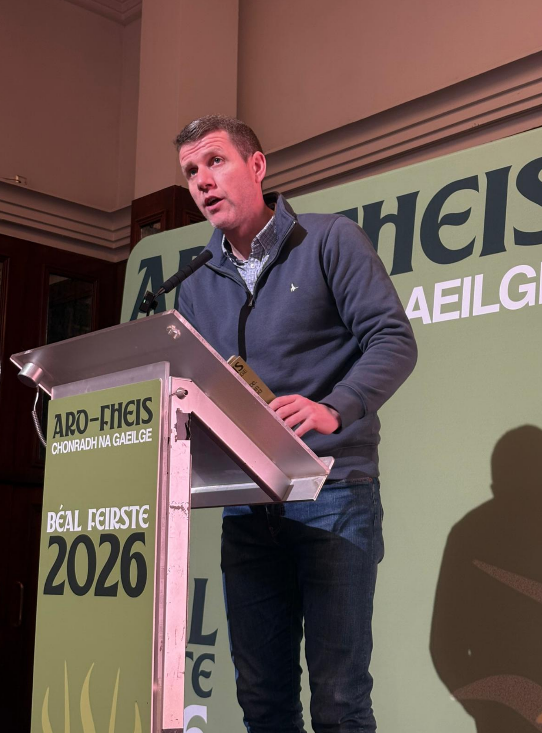
The historic vote took place during its Ard-Fheis in Belfast at the weekend. Other motions that were carried mandated the organisation to immediately address issues including the Gaeltacht housing crisis and an overhaul of the role of Irish in the education systems on the island.
Belfast man Ciarán Mac Giolla Bhéin was also returned as President.
Speaking at the Ard-Fheis he told delegates: “I am very pleased that a series of motions relating to a united Ireland were passed, and that in these motions we recognised constitutional change as a ‘once-in-a-lifetime opportunity' for the Irish language and the Gaeltacht.

“As a result of the constitutional change adopted this morning, the organisation will now by ‘working towards a united Ireland for the benefit of the Irish language and the Gaeltacht’, and furthermore that ‘stronger normalisation of Irish can be achieved in the context of a united Ireland, based on equality, mutual respect, and language rights for all.
“Through the motions passed this year, members have given Conradh na Gaeilge a clear mandate to act in the coming years for the benefit of the Irish language and the Gaeltacht, as well as to make urgent action on the housing crisis in the Gaeltacht, Irish-medium education, and the protection of our communities, our culture, and our environment. These motions set out a clear programme of work for the year ahead and highlight the central role of the Irish language in building a fairer Ireland for future generations.”
General Secretary of Conradh na Gaeilge, Julian de Spáinn, said planning for the Irish language must be done on “an all-island basis”.
“Conradh na Gaeilge will continue to press both governments on the major issues that emerged at this year’s Ard-Fheis, particularly in relation to the housing crisis in the Gaeltacht, in relation to achieving fair, sustainable funding in line with the needs of Irish-speaking communities across the island, to act towards important educational reforms and language policies north and south.”