THE first time I heard “Something Inside So Strong” by Labi Siffre was one of those seminal musical moments in my life, when lyrics and melody conjured something more. The pressure on the Apartheid state of South Africa was intense and at last the momentum was with the people of a land brutalised and oppressed as part of Europe’s 19th century colonial adventure and shame. Nelson Mandela was still in prison, but when Labbi sang we knew that would end soon.
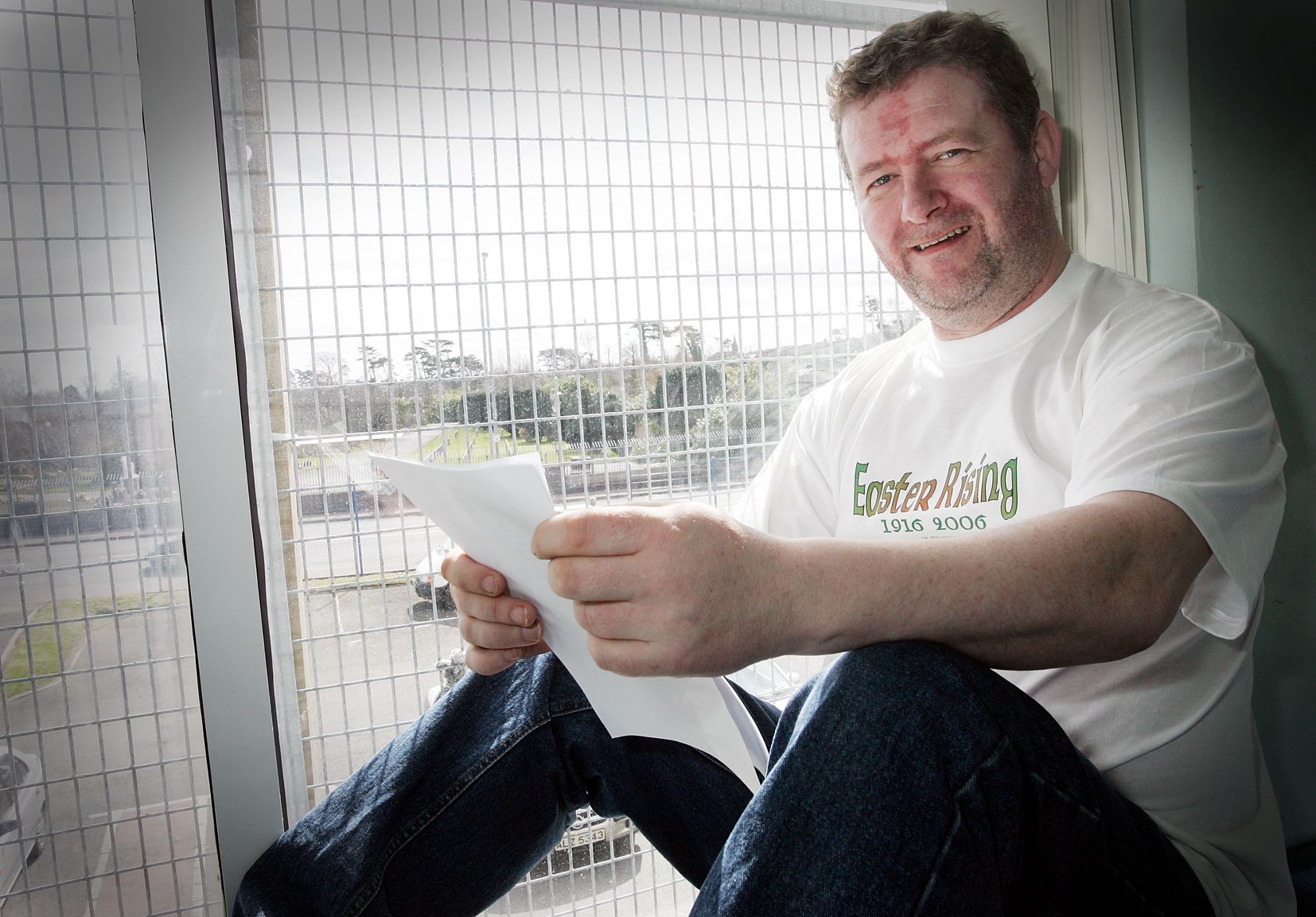
When Terry 'Cruncher' O’Neill sang the same song in Belfast in the early 1990s its meaning shifted and the song became our own. At the height of censorship, state killings and collusive slaughter, when Cruncher began to sing what become his anthem, he caused our chests to swell with hope and courage again.
He came to Dublin to sing, in the very few pubs where republicans were welcome, to raise a few quid for the campaigners interested in the systemic human rights abuses on this island. With his guitar, good humour and legendary stories he was one of us. Except for the night when the Dubs lost by a point to Derry in the All-Ireland semi. A night when he began singing at seven in the evening and finished at maybe one in the morning, he whispered “14-15” between sipping pints and strumming chords. Despite the grieving crowd being entirely dressed in navy and sky blue, no-one held it against him, and by the end of the night our souls were healed.
Whatever he was paid, if he was, it was not enough. His knowledge of the intersection of folk music, ballads and rebel songs with the Irish condition might be matched but was unsurpassed. He had a song for every occasion, and for none. His musical instinct and raw, passionate voice did not go unrecognised but it most certainly wasn’t as exalted as others, or as it should have been, for the simple reason that he was an unrepentant Fenian and ex-political prisoner from the New Lodge. In the late 1980s and early 1990s that was the most dangerous of conditions, so his voice, that would have held its own beside Luke Kelly’s, did not achieve the official status of some others, except with those who needed him – his own people.
It is easy now to forget what it was like to be an Irish republican in the years that were the height of Cruncher’s minstrelsy. There was no predetermined outcome to the political struggle, or to the peace process. With electoral defeats, heavy political marginalisation and a steady escalation in the British use of a loyalist campaign against the 'pan-nationalist front', it would have been easy to falter. But the thing inside us all that determines the pursuit of universal human rights is worthy, that democracy and self-determination are noble causes, and that basic human decency is our common ground, was reaffirmed when Cruncher started to sing. No-one sang the H-Block song better. His version of the Bold Fenian Men made grown modern-day Fenians cry. And when we sang from the bottom of our toes along with him that we knew our pride was not gone, “Oh no." We were indeed ready to go and “do it anyway”.
That is a fine legacy for all those who sing for Ireland today.