ENGLAND has lurched to the far right. Scotland and Wales have voted for self-determination. So begins a new phase as Britain’s last colony walks onwards to independence.
It’s nearly tempting to focus on political unionism’s reaction. Reinforcing its inward, right wing, and self-defeating strategy of talking to no-one except themselves, pretending they are the reasonable ones, ignoring society ignoring them, they continue chasing an ever-decreasing demographic and vote, now even reopening the sea border debate, in the hope Nigel Farage will come over in a flotilla to save them. But not only would that tear the last shred of life out of our weary bodies, it’s simply irrelevant to everyone but themselves.

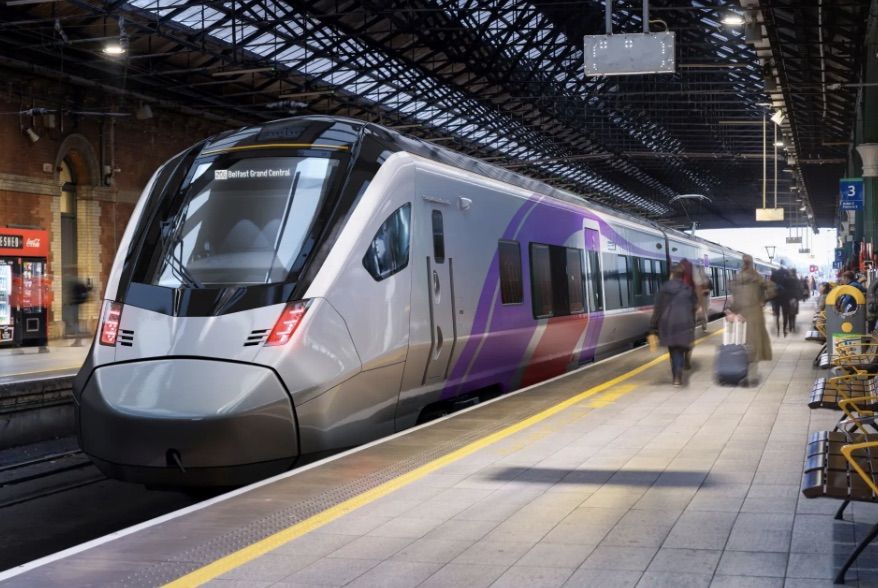
Ireland is united in so many areas already. Try getting one of the now hourly trains without booking in advance. If anything, there could be a half hour service if the lines could be freed up. Given the train is not cheap, is not even faster than driving, and doesn’t even go into Dublin airport – goals that will undoubtedly be achieved in the relatively near future – that tells us a lot about the economic and social potential of all-island connectivity.
There is not one single discussion of political, economic or infrastructural significance that does not now include a contribution from Dublin. From the Narrow Water bridge, to waterways, to healthcare, nurses' pay, community infrastructure, no-one thinks that Westminster will care a jot and increasingly representatives from Dublin are in the room scoping out the issues and solutions.
Noboby could say that this is all-island planning by stealth, we know from Micheál Martin’s approach that this is simply not on his radar. But somehow all-island approaches have become the realistic and viable conversation in every room as the Irish economic model, in Europe, recognises inter-connectivity and relies on the all-island workforce. That has accelerated in recent years with increasing dysfunction in Westminster. The growing disconnection from London matched to the growing connection from Dublin.
But that in no way should diminish the huge task ahead of us. A Farage government in London will mean a jingoistic, chaotic power grab that will not respect the Windsor Framework, devolution, international law and certainly not the Good Friday Agreement. London Brexiteers hate Irish concerns and would see us cast adrift in the morning, but that should not make us think that a Farage government is good for those seeking self-determination. But it should make us speed up the glacial pace of engaging with the constitutional question.
For while the Gardaí and PSNI are happy to pose together on single items like the Violence Against Women and Girls agenda, there is a huge mountain to climb to agree the necessary process for merging the forces into an all-island human rights-compliant service. And while the local courts and local populations will undoubtedly welcome respect for a human rights-compliant approach and an end to their usurpation in London’s Supreme Court, there is huge work to do to join both jurisdictions in law.
Rinse and repeat for every single issue of fundamental importance, with health and housing at the top of that list. But the size of the challenge should not deter us, this is an historic opportunity that needs to be grabbed with both hands.
Events on the island of Britain can only send one message to Dublin and Belfast: Tapaigh an Deis. Seize the Day. And our united future.