IF you want to save nature in Ireland, save the Irish language.
It might initially seem to be a little hard to connect the two, but according to a growing band of academics and experts, they go hand in hand. And when the English language is allowed to dominate, we get a country that’s being continually stripped of nature. And we get tragedies like Lough Neagh.
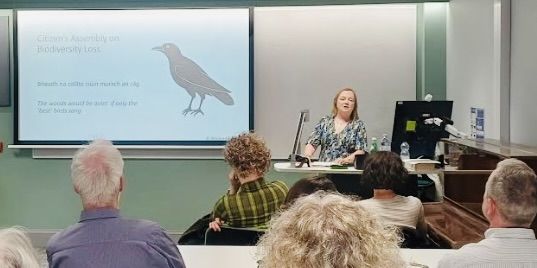
One such expert, Professor Mairéad Nic Craith, gave an hour-long talk at Queen’s last week explaining why the Irish language can help end the ecological crisis in Ireland.
Dúlra bears witness to that crisis year after year. Species of birds continue to disappear, often before our eyes. All around Belfast in the last 12 months, hedgerows have been pulled out by diggers as fields are expanded. Landscapes that were filled with rushes and frogs are drained and turned into green deserts that are mowed three times a year for grass silage.

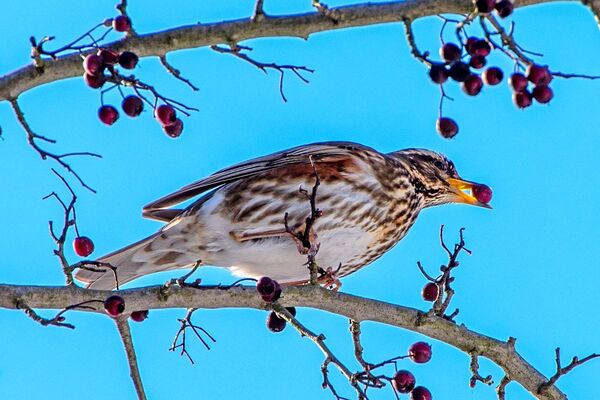
First the bullfinches disappeared, then the winter-visiting fieldfares fly on overhead – they’ve no berries to feed on. Then the breeding chaffinches vanish. Finally silence replaces the calls of the wrens, blackbirds and robins.
Surely they can’t be saved by a language? It doesn’t seem possible.
But it’s the system of beliefs and understanding that comes with the Irish language that experts say can help restore the Irish countryside – because the Irish language is part of that environment.
The people who have spoken it for thousands of years are as much a part of the hills and rivers as the animals and birds.
Irish connects us to the land, linking historical Ireland to the land of today – and English represents a break in that link.
Every hillock in Ireland was named with affection, with a story behind it. These names prompt an emotional response. All our 60,000 townlands were given a unique name. In English they have no meaning at all.
Many of those places were named after ancient stories – like the brilliant Limavady, ‘The Leap of the Dog’, or Ballinamallard, the Town of the Curses, after St Colmcille cursed it because there wasn’t a rooster there to tell him the time when he was in a hurry!
The Irish were not in Ireland – they were part of it.
Stories reconnect us with the countryside – and storytelling is being used to prompt people into action to counter the climate crisis. Professor Nic Craith called it "moral imagination", which allows us to think of alternative futures.
Ecological knowledge is more widely valued in Irish. Giving objects a gender – all objects are either masculine or feminine in Irish – helps make them more precious. On a small scale, you’re less likely to take a chainsaw to a tree when you think of it as a he or she rather than an it.
English treats nature as a collection of genderless objects. You see the world in a certain way through English, and in another way through Irish.
In old Ireland, the distinction between humans and animals was blurred. We weren’t supreme beings who can do as we want with the countryside. That hierarchy just didn’t exist – and the language reflected that.
Shape-shifting was common in the historical stories – where people morphed into creatures and back again. We were equal.
In Irish we say ‘tá tuirse orm’, rest is on me – but English puts the person first – I am tired (and ‘I’ is always a capital letter, just to emphasise how important we are!). The English language gives a huge importance to the person – and that self-centred power has helped cause the climate crisis because nature is often something to be used and abused.
“Irish itself is an ecological language,” Prof Nic Craith said. “We need to challenge the view that people are superior to nature,” she said. That only opens the door to exploitation.
“The Irish language is not superior, but it is the language of here,” she said, adding that there is now a sense that things are changing regarding the importance of the language north and south.
Placenames are crucial to protecting our environment, Prof Nic Craith said. It gives value and increases empathy with the environment.
And these placenames can be used when introducing new species – where better to free golden eagles in the hope they would breed once more here than Sliabh an Iolair – the Mountain of the Eagle – in County Kerry?
So the revival and strengthening of the Irish language isn’t just a cultural endeavour, it’s an environmental one.
Many scholars like Prof Nic Craith say the Irish language is the key to saving Ireland’s environment from being totally destroyed. Dúlra has only one thing to say to Prof Nic Craith – go raibh maith agat!
The ground beneath the massive Hilton Hotel in Belfast city centre is a killing field – thanks the peregrine falcons who nest on the roof. One reader saw three pigeon carcasses there, with just a bloodied backbone and two wings remaining! Not sure the tourists will appreciate it – unless they are twitchers!
REMAINS: There wasn't much left of the pigeon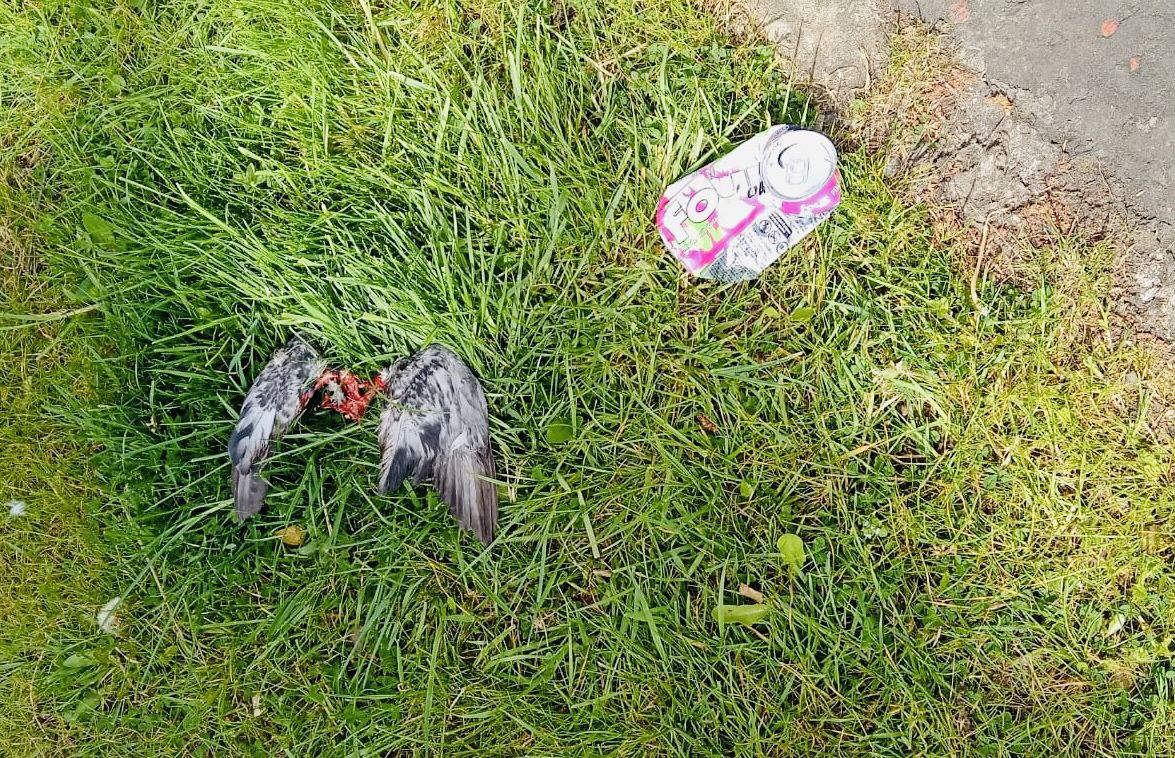

• If you’ve seen or photographed anything interesting, or have any nature questions, you can text Dúlra on 07801 414804.