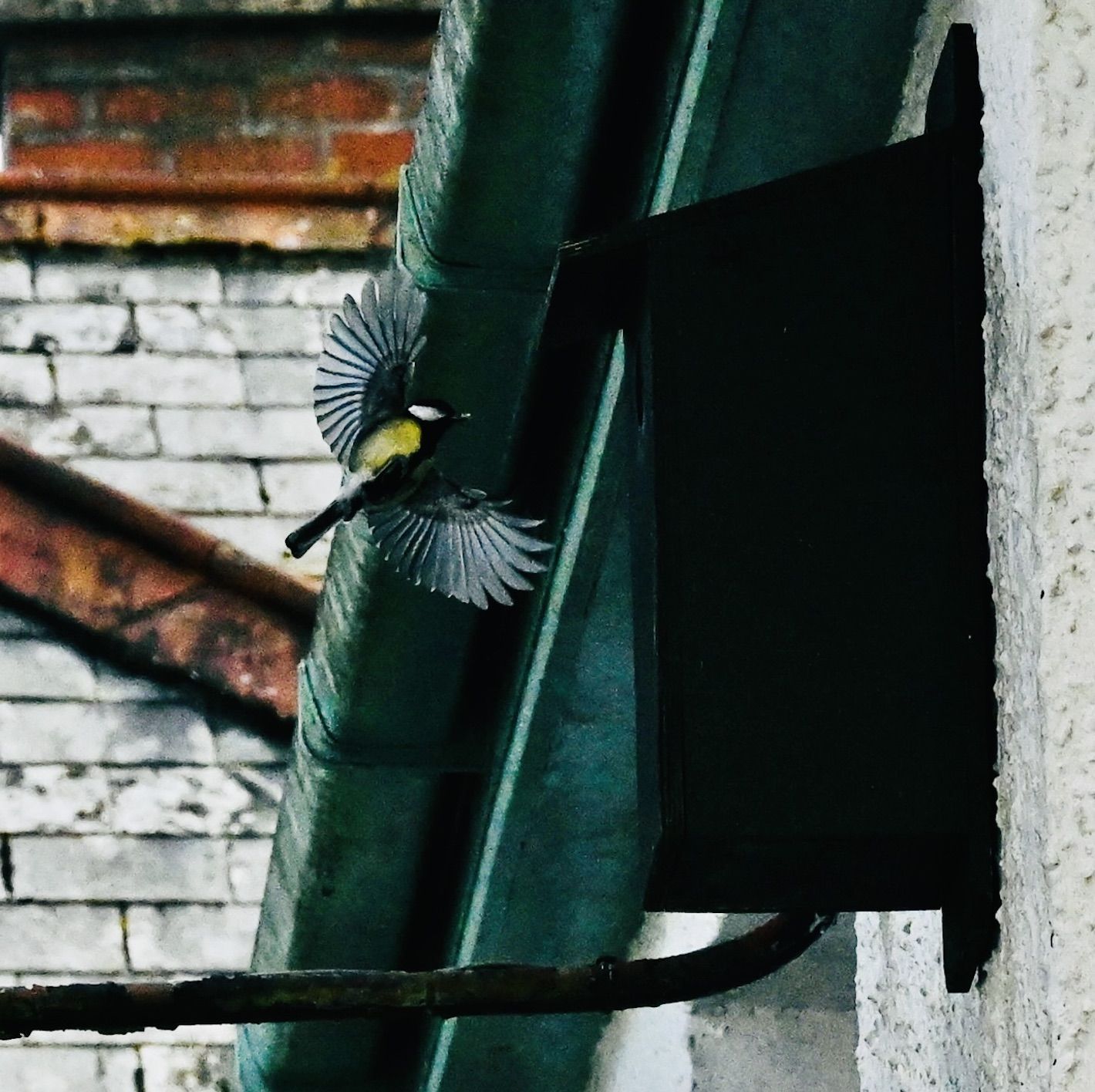
DÚLRA’S not looking for any photographic awards for this picture – but if there are any going, he’ll gladly accept them!
And the remarkable thing about this picture was that it wasn’t even hard to get – Dúlra just stood at the back door and waited completely still for the great tit to arrive to feed the chicks. You click and hope – and only when he downloaded the picture onto the computer did he realise he’s snapped the great tit in full flight with food in its beak just inches from the nestbox.
Birds don’t really care if a person is up close – they only notice you when you move. The problem is that people can’t stand still for a second. It’s not in our nature to be completely still, but you have to be when watching birds near their nest. You even get conscious of how your chest moves with each breath – you have to slow down and regulate it like a sniper.

And when you've a pair of binoculars or a camera in your hand, it’s doubly difficult. There’s a perfectly succinct Irish saying: ‘Is trom cearc i bhfad’ – ‘Even a chicken is heavy after a while’. For chicken, substitute camera.
But thankfully it took just ten minutes to capture this bird nesting on the wall of Dúlra’s house because now that the eggs have hatched, the parents are on a constant loop back and forth. This parent’s beak is full of food, most likely caterpillars and spiders – their favourites.
It’s interesting to see how these birds behave around their nest. You would barely have known they were using the nestbox at all, they never hung about nearby. And they never call anywhere near it, obviously in case it attracts attention. But when the chicks hatch, they have to visit regularly, silently darting in and out, their beaks packed with grubs and insects.
Normally the male great tit, meantán mór in Irish, doesn’t shut up. It has 40 calls and songs. It’s believed that this is a ploy to fool other birds into thinking there are lots of males in the breeding territory, instead of a single bird.
This picture is of the daddy – he has a more distinct black strip on his chest. He could have up to a dozen offspring to feed so he’ll be working around the clock for the next fortnight.
Dúlra put the box up about six years ago in the hope of attracting starlings. This nestbox is designed for starlings, with a larger entrance hole and a deep space inside. No offence to starlings, but who wouldn’t prefer a great tit nesting at their house?
And it’s great to know that the home you are offering them is super-safe. In the wild, their nests are often ‘rookied’ by woodpeckers, squirrels or stoats – but none will get near this sturdy wooden box, never mind inside it.
In a fortnight those wee chicks will be jumping out of the box to make their own way in the big world. And Dúlra will be standing still as a statue hoping to catch that big moment as well. There's room on the mantelpiece for another gong.
Down to the wire
Belfast City Council has acted to remove barbed wire from a new fence that they have erected on Cave Hill after complaints from hillwalkers saying that animals were getting injured.
GOOD NEWS: The Council has agreed to change the wire on this fence on Cave Hill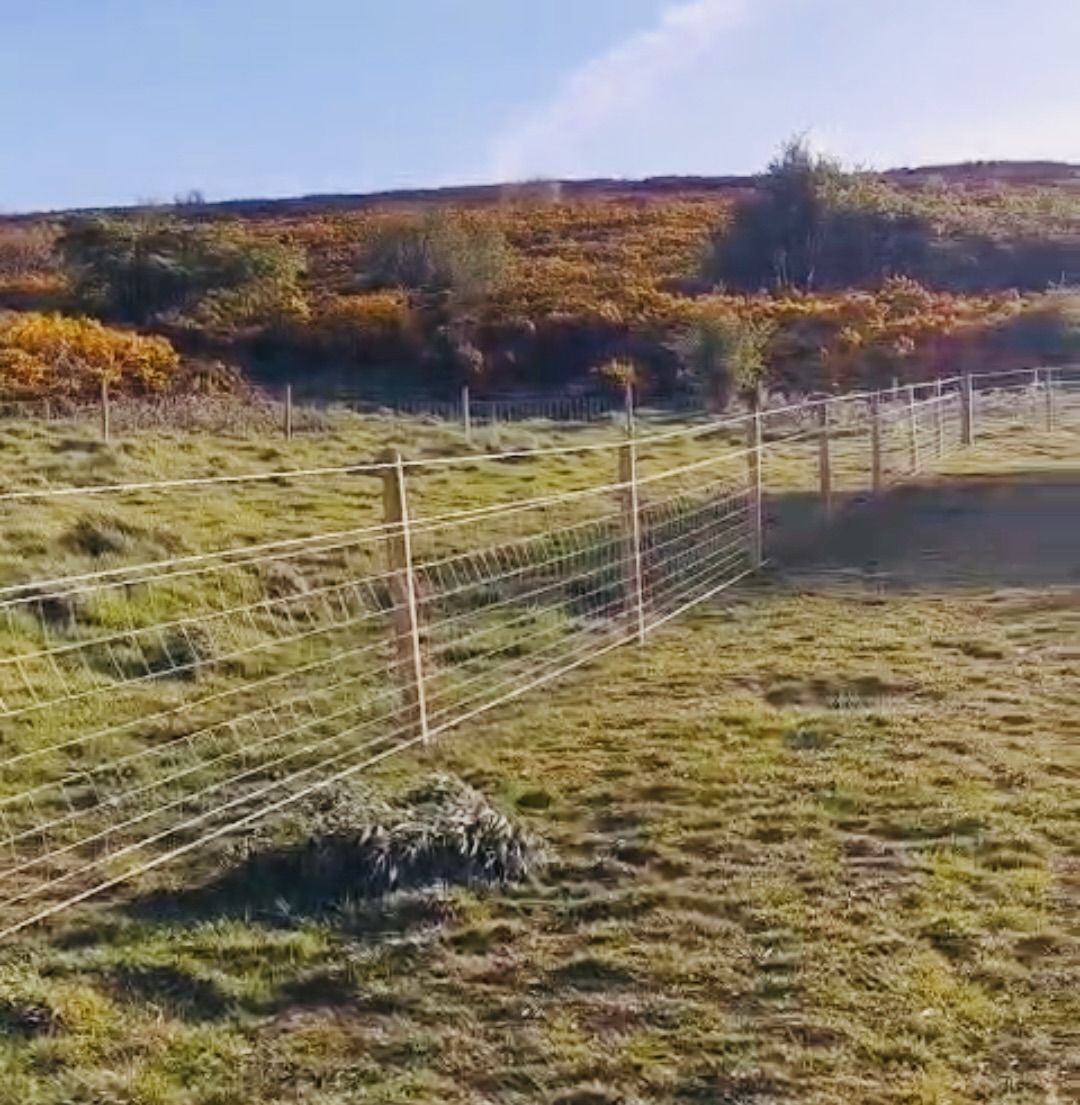

The problem is the barbed wire along the bottom of the fence. Not only do wild animals like badgers and hares get caught by it, small dogs too. Council officials agreed and it’s now being replaced by ‘non-barbed straining wire’. Of course, the best barrier of all would be a traditional hedgerow. With so many of them disappearing, it would be great if the Council planted new ones instead of wire fences. Is that too much to hope for in the future?
• If you’ve seen or photographed anything interesting, or have any nature questions, you can text Dúlra on 07801 414804.