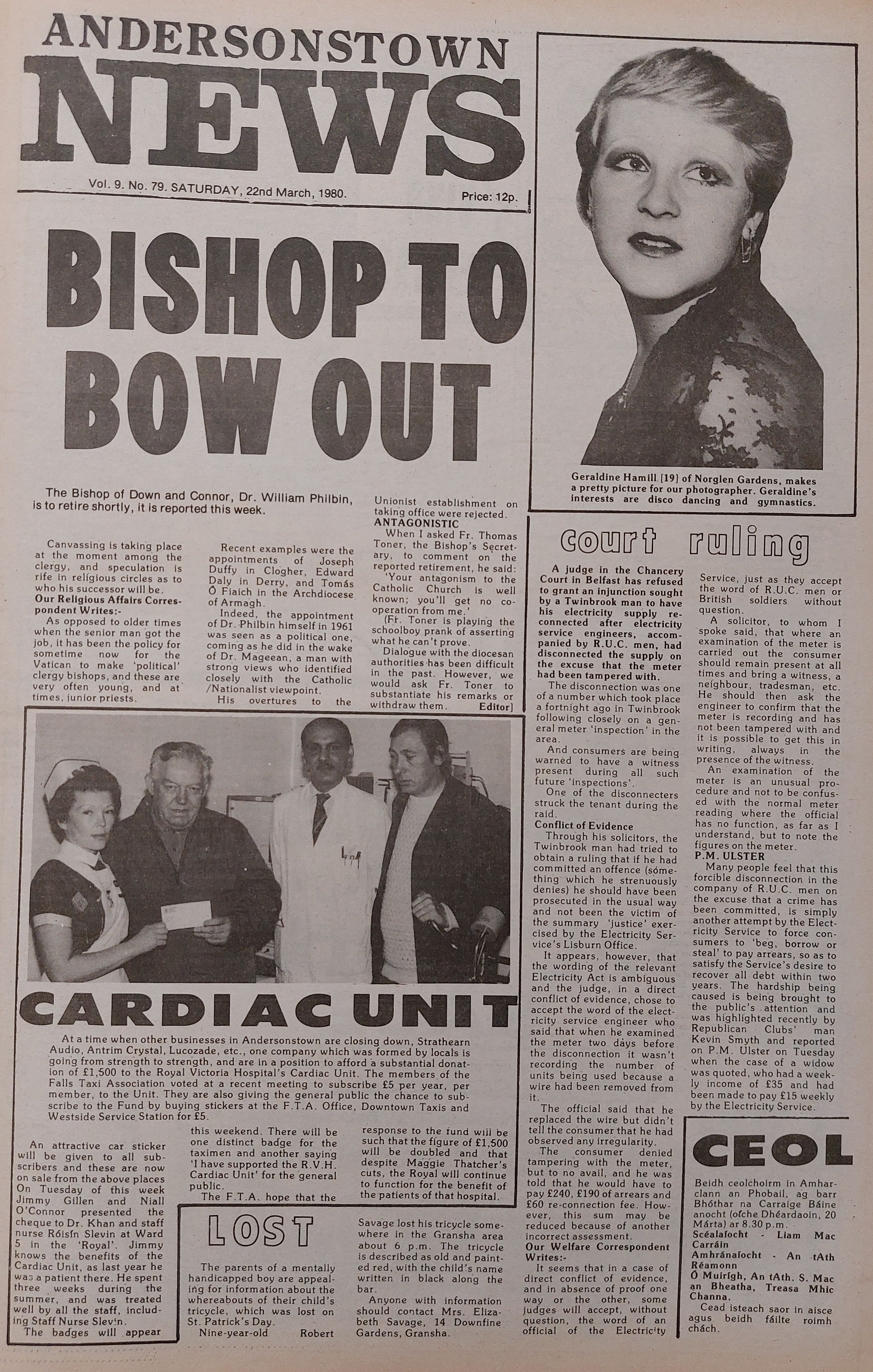
We look back at the stories that were making the headlines in the Andersonstown News this week in 1980
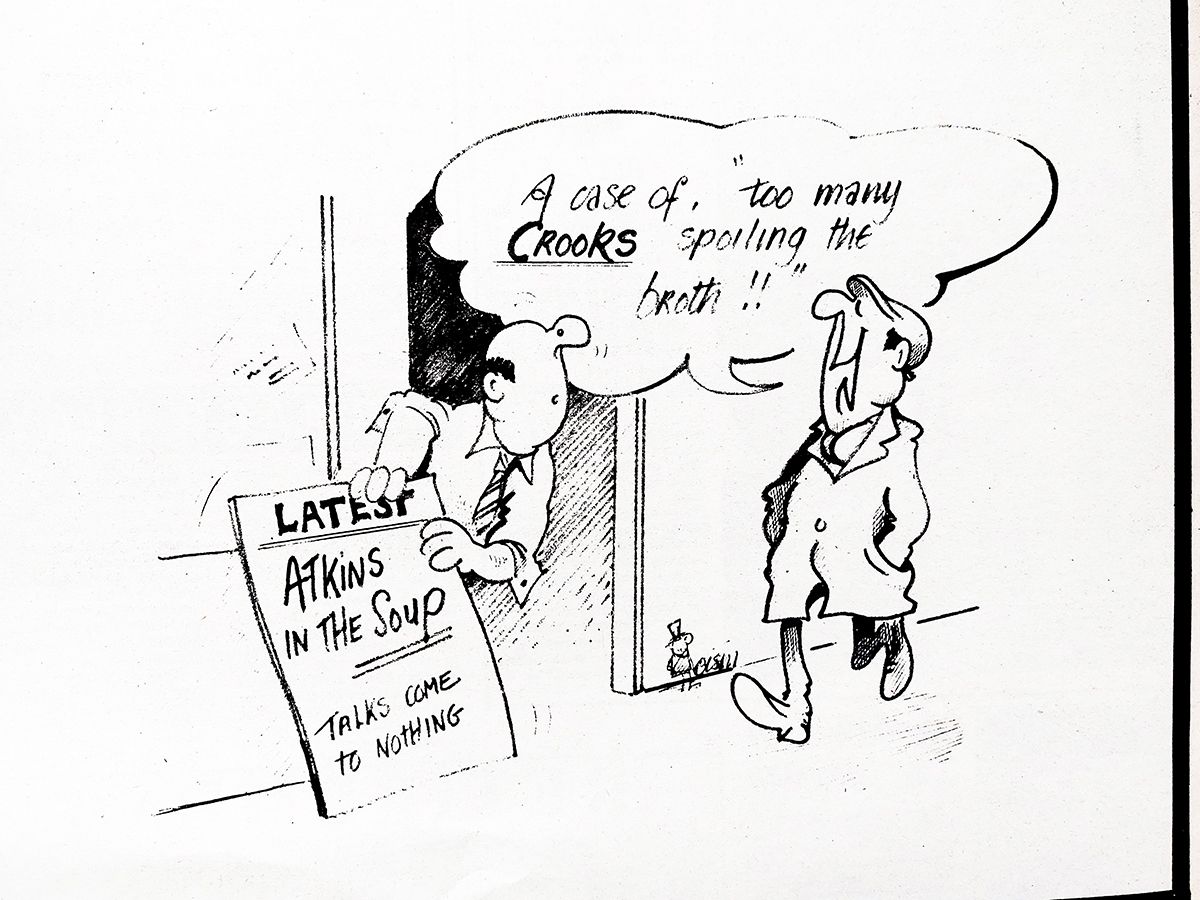

Electricity raids: Court ruling
A JUDGE in the Chancery Court in Belfast has refused to grant an injunction sought by a Twinbrook man to have his electricity supply reconnected after electricity service engineers, accompanied by RUC men, had disconnected the supply on the excuse that the meter had been tampered with.
The disconnection was one of a number which took place a fortnight ago in Twinbrook following closely on a general meter ‘inspection’ in the area.
And consumers are being warned to have a witness present during all such future ‘inspections’.
One of the disconnectors struck the tenant during the raid.

Through his solicitors, the Twinbrook man had tried to obtain a ruling that if he had committed an offence (something which he strenuously denies) he should have been prosecuted in the usual way and not been the victim of the summary ‘justice exercised by the Electricity Service’s Lisburn Office. It appears, however, that the wording of the relevant Electricity Act, is ambiguous and the judge, in a direct conflict of evidence, chose to accept the word of the electricity service engineer who said that when he examined the meter two days before the disconnection it wasn’t recording the number of units being used because a wire had been removed from it.
The official said that he replaced the wire but didn’t tell the consumer that he had observed any irregularity.
The consumer denied tampering with the meter, but to no avail, and he was told that he would have to pay £240, £190 of arrears and £60 re-connection fee. However, this sum may be reduced because of another incorrect assessment.
Our Welfare Correspondent writes: It seems that in a case of direct conflict of evidence, and in absence of proof, some way or the other, some judges will accept the word, without question, of an offical of the Electricity Service, just as they accept the word of RUC men or British soldiers without question. A solicitor, to whom I spoke said that where an examination of the meter is carried out the consumer should remain present and bring a witness.
St Patrick's Day on the Andersonstown Road, 1980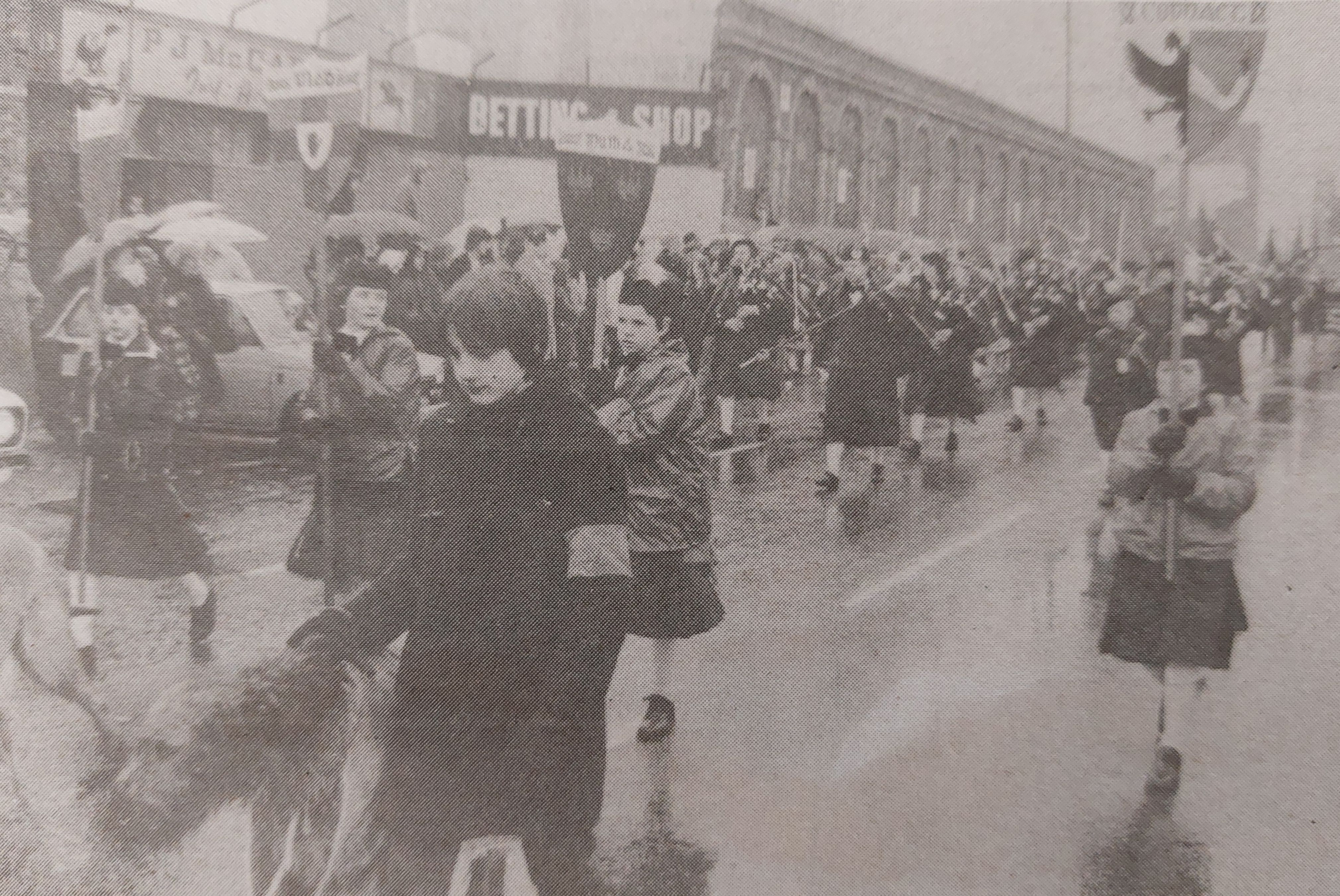
Editorial
ANY attempt to combat vandalism and to improve the appearance of an area is praiseworthy; and it is pleasing to note that some West Belfast priests have taken an initiative in the matter. Their initiative has been exercised mostly through the schools and whether this is the best place to begin or not, their efforts are to be praised.
It would be unfortunate, however, if in seeking to improve the décor and quality of life in West Belfast they should allow their campaign to be used as a further attack on the people of the area. That this is happening will be obvious to any viewer of Tuesday evening’s ‘Scene Around Six’.
‘Vandalism in West Belfast,” said Clive Ferguson, “has become a way of life.” And nothing the clergymen said subsequently seemed to deny this. We’re dirty, untidy and destructive, it appears, in a way that the people of other areas aren’t; and in a recent sermon an Andersonstown priest seemed to agree, as he compared this to other ‘Christian’ areas where, he said, gardens are well-kept, there is no rubbish lying about, and no graffiti on the walls.
West Belfast has its share of vandalism like other urban areas. God knows, considering what this area had had to put up with over the years, something was bound to give. Even now, City Council Departments, with a working knowledge of the problem can tell you of the appalling situation in other areas, particularly the more prosperous East of the city, notorious over the years for mindless, vicious, vandalism.
By all means, let us clean up our area. This newspaper will be to the front, as always, in such a campaign. But don’t let any of our public people, especially our priests, seem to side with those who want to do us down and further malign us. We’re not the monsters our public enemies say we are. We’re no mean people who have had to take more than you would think humanly possible over the years, and not just recent years.
Some people seem to think if you remove papers from the street, cover up the graffiti, and paint a few doors (the few that aren’t already painted) that everything will be ‘alright’. This is a shallow, facile attitude. It’s dishonest and it’s misleading; and it diverts our attentions from the real problems.
Officialdom has tried for years to make us vandals. That it hasn’t succeeded says a lot for the dignity and humanity of our people. The clergy have always had a big hand in nurturing that dignity and humanity.
We mustn’t forget that – and neither must they.
Kathleen McCrory makes a presentation to Martha Smith of Colligan Street on her retirement from the RVH in the Glenowen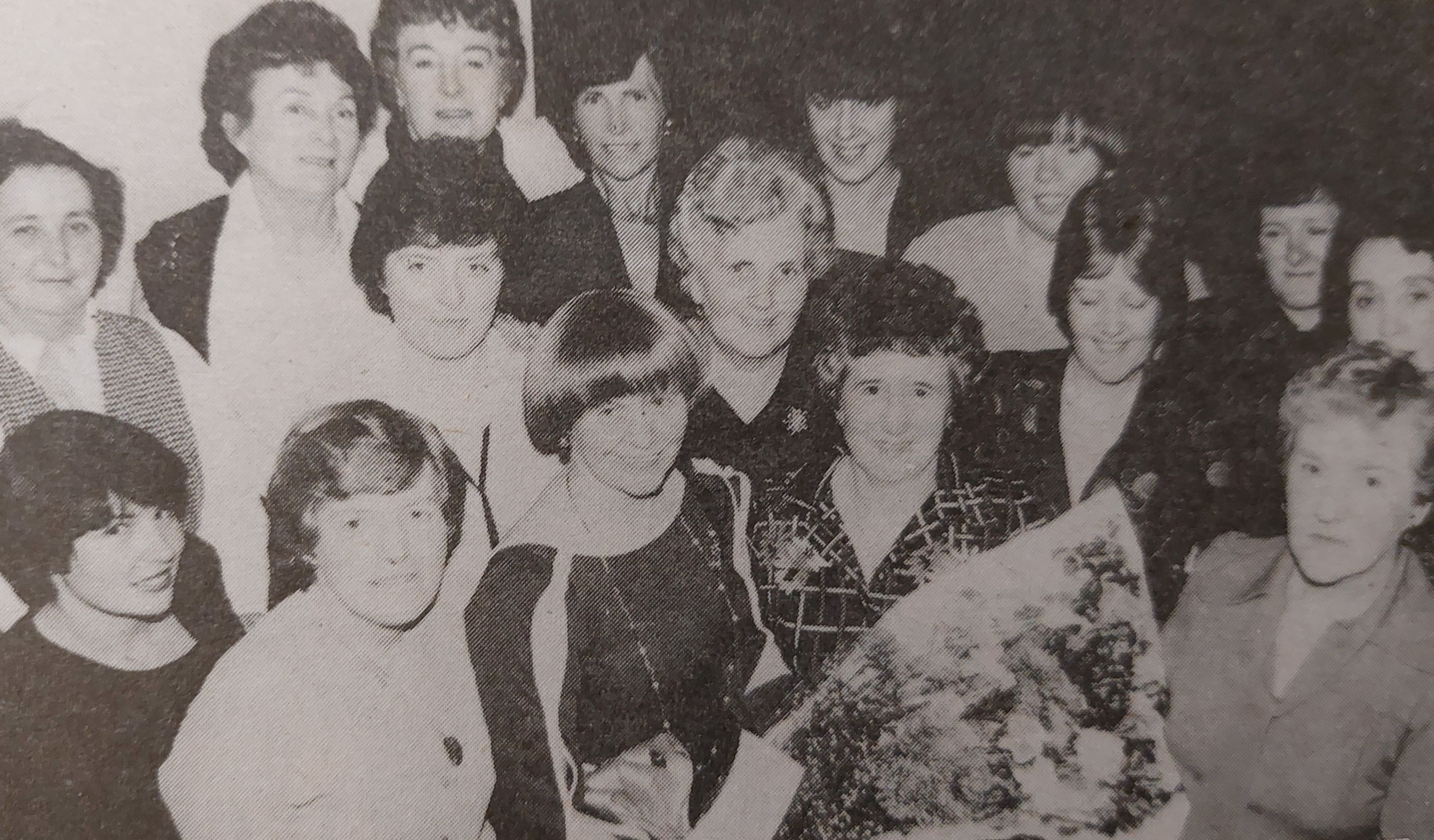
Bishop set to bow out
THE Bishop of Down and Connor, Dr William Philbin, is to retire shortly, if is reported this week.
Canvassing is taking place at the moment among the clergy, and speculation is rife in religious circles as to who his successor will be.
Our religious Affiars Correspondent writes: As opposed to older times when the senior man got the job, it has been the policy for sometime now for the Vatican to make ‘political’ clergy bishops, and these are very often young, and at times, junior priests.
Recent examples were the appointments of Joseph Duffy in Clogher, Edward Daly in Derry, and Tomás Ó Fiaich in the Archdiocese of Armagh. Indeed, the appointment of Dr Philbin himself in 1961 was seen as a political one, coming as he did in the wake of Dr Mageean, a man with strong views who identified closely with the Catholic/Nationalist viewpoint.
His overtures to the unionist establishment on taking office were rejected.
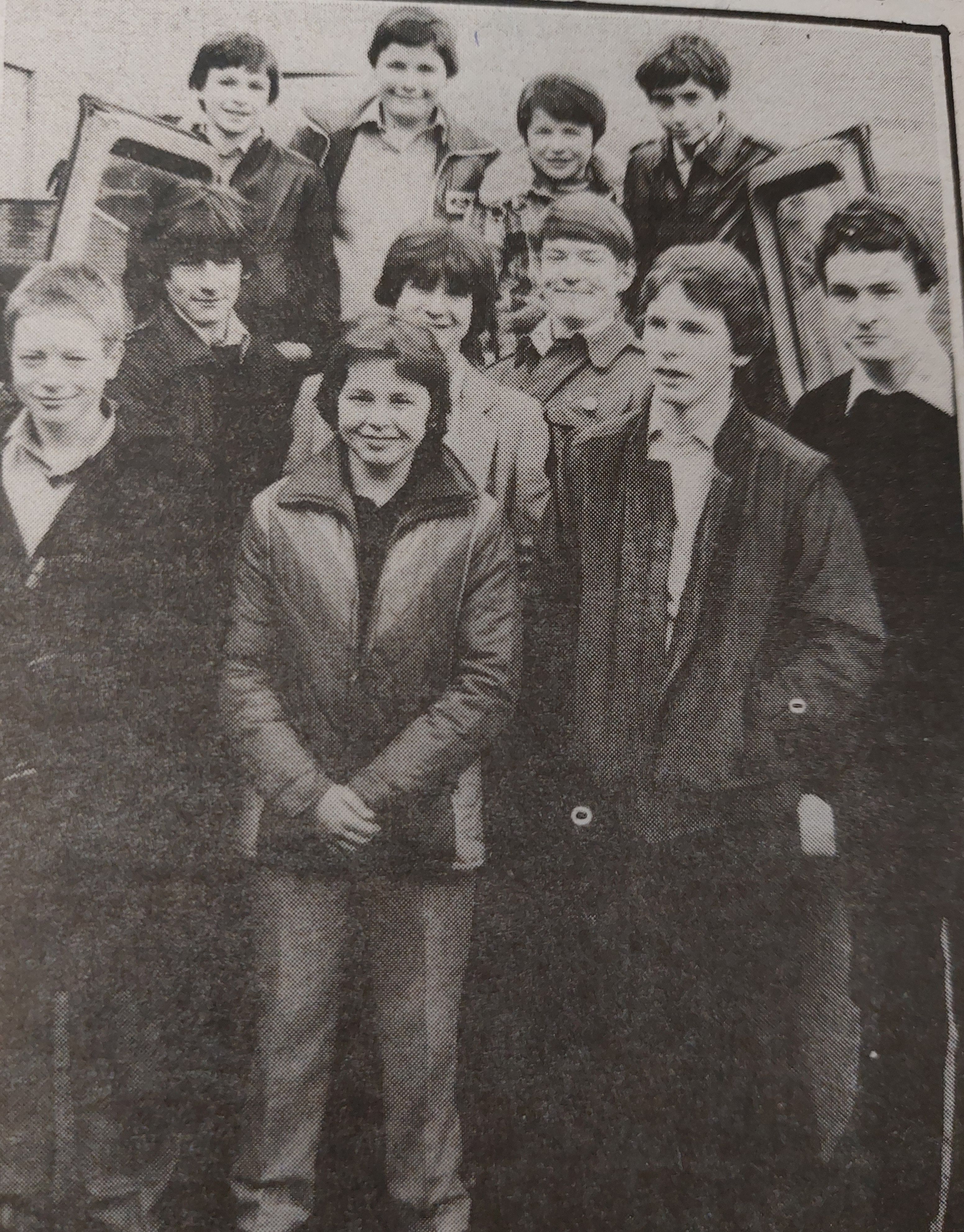
George Cooper and members of his class at St Paul's Secondary School, leaving on their skiing trip to Andalo in Italy