WE are in the midst of Seachtain na Gaeilge. It used to run for one just week, but its popularity is now such that it has been extended in order to cover the period from March 1 to 17 – St Patrick’s Day.
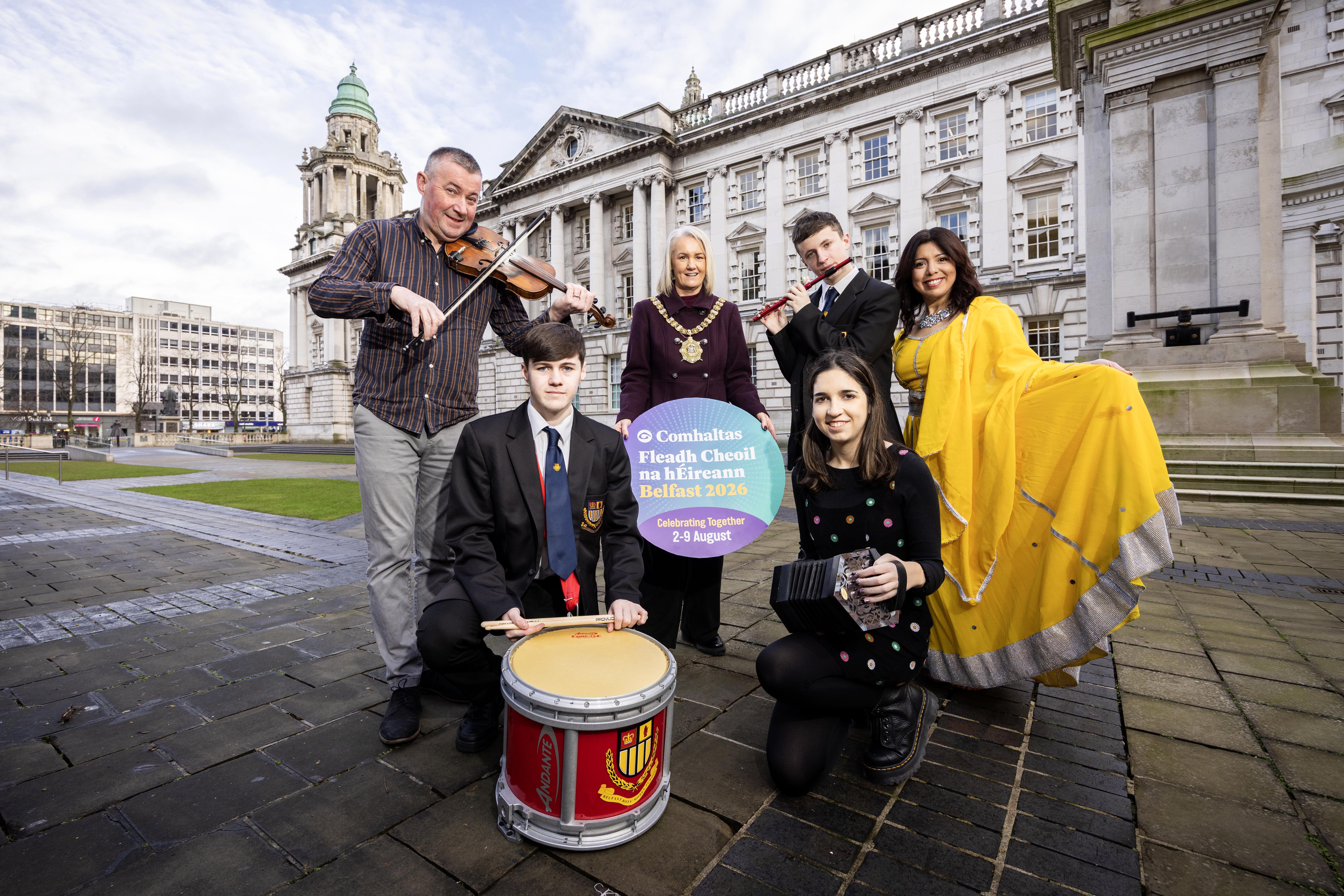
It is very appropriate that it has been officially confirmed that Fleadh Cheoil na hÉireann, which will take place this August, is already slated to return to Belfast next year. Fleadh Cheoil na hÉireann is the world's largest annual Irish traditional music festival and is expected to attract tens of thousands of visitors to Belfast.
Is í Seachtain na Gaeilge an ceiliúradh is mó den Ghaeilge agus cultúr na hÉireann ar domhan. Bhí an oiread sin ráchairt uirthi gur síneodh amach chuig coicís í. Bíonn sí ar siúl ashan bhliain ó Márta 1 go dtí 17 – Lá Fhéile Pádraig.

Seachtain na Gaeilge was founded in 1902 by Conradh na Gaeilge as part of the Gaelic revival of that time. Initially it was limited to the island of Ireland but today it is a global phenomenon and the largest celebration of our language and culture here and overseas.
Whether you have a cúpla focal, are fluent in the language or want to enjoy yourself and find out more, there is an extensive programme of events taking place across Ireland and beyond for the next couple of weeks.
Seachtain na Gaeilge was launched last week at Stormont by An Ceann Chomhairle, Assembly Speaker Edwin Poots, who said the Irish language and culture were “intertwined with the identity of many in the Assembly and the wider society.”
Ciarán Mac Giolla Bhéin, President of Conradh na Gaeilge, was there also.
Language is not a spectator sport. Language requires learning, whether it is done as a child, in school or as an adult. The key to growing the use of Irish is to use whatever Gaeilge you have, no matter how limited. All of us can say ‘Go raibh maith agat, le do thoil, fáilte romhat or cad é mar atá tú?’ And numerous other little phrases. Why would we ever say ‘Cheerio’ or ‘Bye bye’ ever again when we can say ‘Slán’ or ‘Chifidh mé thú’?
There is still a lot of work to be done. Seachtain na Gaeilge is a part of this. Maith sibh to everyone who is organising and participating.
To read more about what's on in the festival, go to https://snag.ie/
I’m in London to tell the truth and show respect
I’M writing this week’s column in London. I’m in the Royal Courts of Justice in a civil case that has been brought against me by three claimants, innocent victims, who were injured in three IRA bomb attacks in 1973 and 1996. They are alleging that I was party to those attacks.
There was a small crowd of former British soldiers outside the court and some in the court room itself. There were also some people with tricolours showing their support.
Today the legal teams for the claimants and for me made their opening submissions. My legal team set out logically and clearly my position. In summary, they said that I have consistently rejected claims that I was in the IRA. In this case I am also stating emphatically and unequivocally that I had no involvement in the three bomb attacks.
MEDIA CALL: Gerry Adams at the Royal Courts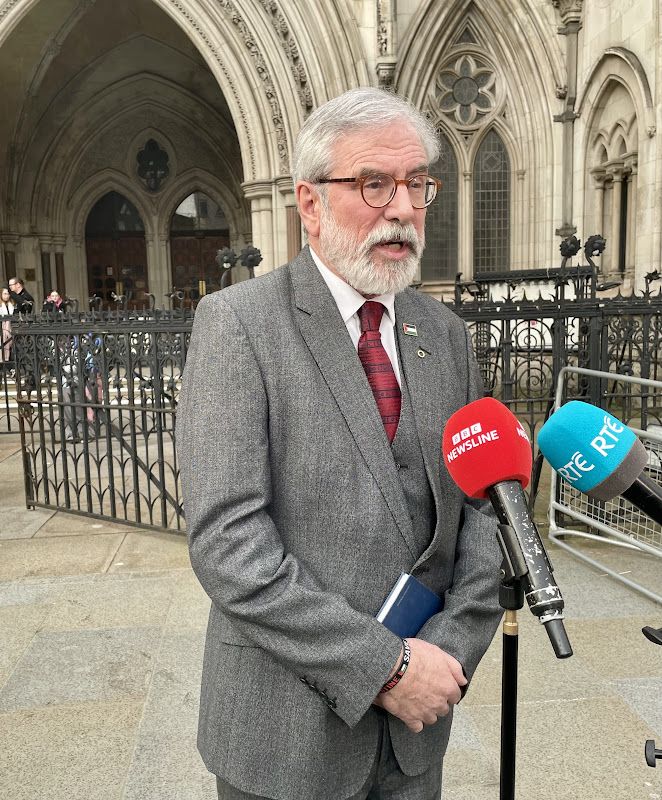

As my barrister Eddie Craven said: “The mainstay of the Claimants’ case consists of bald allegations and assertions based on statements allegedly made by third parties many years ago. In many instances the individuals who allegedly made those statements are unidentified. In many instances they are patently unreliable – individuals, for example, with an overt hostility towards Mr Adams and a track record of lies.”
On Tuesday the witnesses for the claimants commenced their evidence. I expect the case will continue until Wednesday or Thursday of next week. I will be making it clear that I am guilty only of being an Irish republican committed to ending British rule in our country and uniting the people of Ireland on the foundation of freedom, equality, peace and solidarity. Asked by the media at the Old Bailey why I travelled to the court I told them it was to defend myself and to challenge the allegations against me.
It was also out of respect for the claimants who had suffered grievously in the bomb explosions.
Moore progress
THE legal challenge being taken by the Moore Street Preservation Trust against the plans by developer Hammerson to destroy much of the historic 1916 Battlefield site in Dublin is up for mention shortly in another court. This time in Dublin. However, the case itself is unlikely to be heard until the autumn.
Last week an important draft piece of legislation – An Bille um Cheathrú Chultúir 1916/the 1916 Cultural Quarter Bill – to designate the Moore Street 1916 battlefield site as a Cultural Quarter received unanimous support when it was discussed at the Oireachtas Committee on Housing, Local Government and Heritage. This was an important moment in the campaign to save the Moore Street Battlefield site. Among those who supported the Bill were Cathaoirleach Mícheál Carrigy TD (FG), Paul McAuliffe TD (FF), Senator Maria McCormack (SF), Seamus McGrath TD (FF), Senator Aubrey McCarthy (Independent) and Tommy Gould TD (SF).
The Bill, which is proposed by Sinn Féin’s Aengus Ó Snodaigh TD, was supported in testimony by James Connolly Heron on behalf of the relatives of the signatories of the 1916 Proclamation and by Stephen Troy, of Troy’s Butchers, representing traders on the street. The Bill would help to ensure the full restoration and preservation of Moore Street as a heritage site, celebrating our history, culture and language.
In his submission to the Committee, James Connolly Heron urged support for the Bill on the basis that it will help transform the city. He said: “Through this proposal we will walk in the very footsteps of those who made history, in the very buildings in which the Irish Volunteers – our best and brightest – made their last stand. An area of preserved streets and laneways – an outdoor classroom – making history come alive in a city centre freedom trail.”
He quoted former Uachtarán Michael D Higgins who after walking the battleground site described it as “belonging to no one individual, group association or party. It belongs to the people.”
More recently, Uachtarán Catherine Connolly said: “Moore Street is not just a collection of old buildings, it is the last living battlefield of 1916, a place that tells the story of courage, sacrifice, and the struggle for Irish freedom. It belongs to the people of Ireland, not to developers or speculators.”
The next stage for the Bill is at Dáil Select Committee where amendments can be made.