2025 was a good year for Irish unity. All of those advocating for a new Ireland, including Sinn Féin’s Commission on the Future of Ireland, worked hard and effectively promoting the message that Irish unity will be good for the people of the island of Ireland.
Crucially, both houses of the Oireachtas – the Dáil and the Seanad – passed motions calling on the Irish government to begin the process of planning and preparing for unity referendums. These include the Oireachtas Good Friday Agreement Committee. This is the only all-Ireland committee in Leinster House. It is unique in that members of Parliament from the North join TDs and Senators to work on issues relating to the implementation of the Good Friday Agreement.
The Good Friday Agreement remains the basis for relations on the island of Ireland and between the islands of Ireland and Britain. However, its implementation has been challenged, principally by indifference from London and a lack of consistent and positive leadership from Dublin.
Of course, there are important voices still not convinced of the merits of Irish unity. Among them are many within the Protestant and unionist section of our people, and especially within political unionism. We understand this. But we also recognise that there is a growing number of voices from within broad unionism that is increasingly open to this conversation. We have to build on this in 2026.
No-one should be surprised by the antipathy within the British political establishment to Irish unity. Listen to Farage and the Tories and many within the Labour Partym including Starmer and Benn.
Nonetheless, the momentum, North and South, toward unity is unmistakable. The imperative for unity has never been clearer. Just before Christmas the Economic Social and Research Institute (ESRI) published a report ‘Assessing Economic Trends in Ireland and Northern Ireland’. Its conclusions are important. For those who live in the North and are wondering what the benefits of unity might be the report concludes that living standards in the South are higher; household disposable income is higher; hourly earnings are 29% higher; and life expectancy is longer, with men living two years longer and women 1.5 years longer.
One of the report’s co-authors, Adele Bergin, said that the North continues to show lower levels of disposable income compared to the South “and also lower levels of educational attainment, labour force participation and export intensity.”
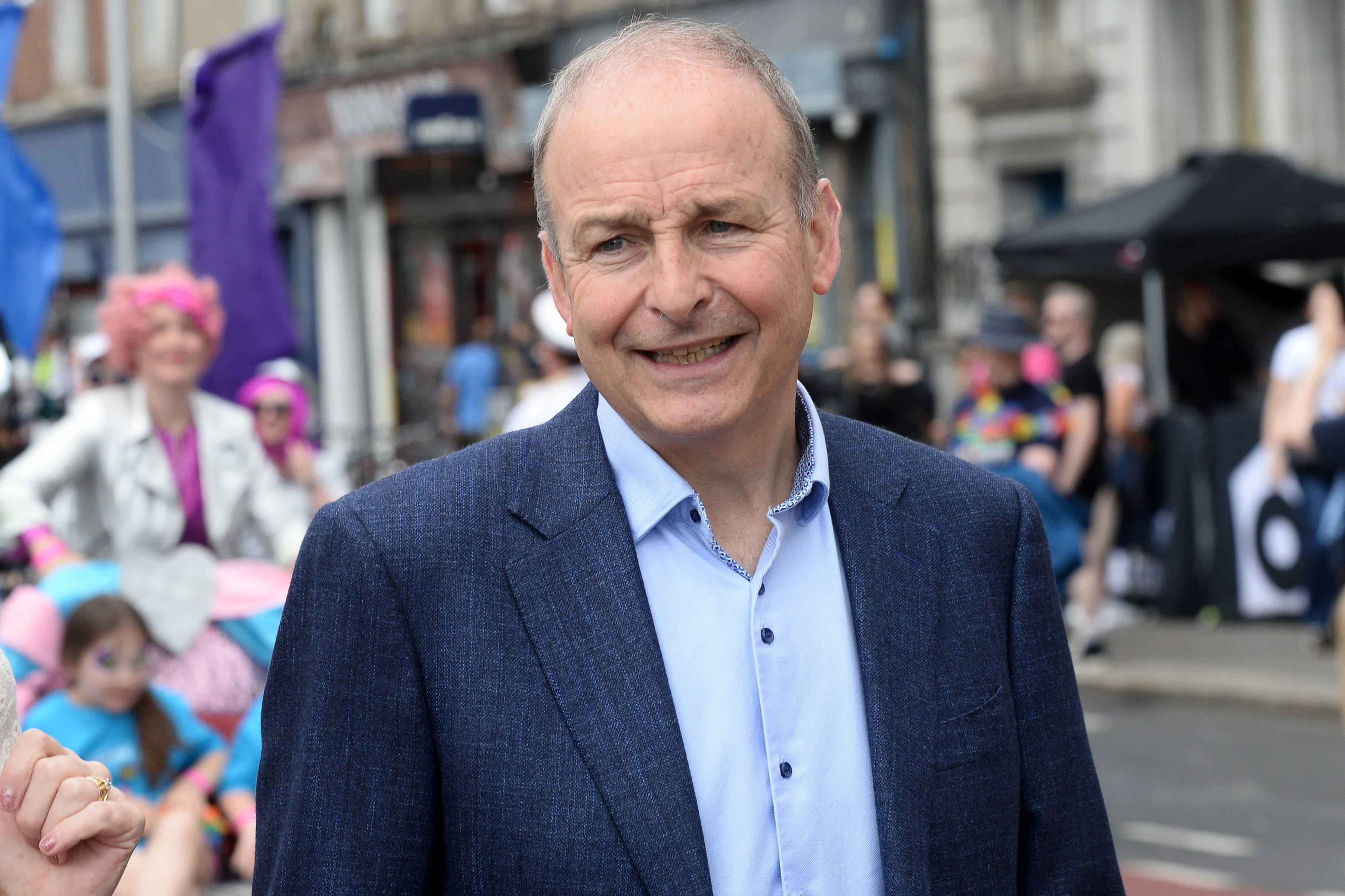
What is needed to take the debate on unity to the next level is an Irish government embracing the objective of unity and encouraging the conversation. Regrettably, at this time the Fianna Fáil leader and current Taoiseach Micheál Martin has set his face against this. Even before he assumed the leadership of Fianna Fáil, but especially since becoming Taoiseach, Martin has played a negative role in the unity debate. He has publicly ruled out planning, preparing or advocating for the unity referendums provided for in the Good Friday Agreement.
This position is at odds with popular opinion in the South that supports Irish unity. In October, former Taoiseach and leader of Fianna Fáil and one of the signatories of the Agreement, Bertie Ahern, stated his belief that referendums are inevitable and that Irish unity is desirable.
Last April another former Taoiseach and past leader of Fine Gael, Leo Varadkar, told an Ireland’s Future event in Philadelphia: “Every generation has its great cause. I believe ours is the cause of uniting our island, working to embrace differences instead of trying to erase them. Working to build a new home where all traditions, all stories and all our people belong.” It is, he said, “the political project of our generation” that “belongs to no one person, no one party, no one community and no one government. It belongs to all of us who believe in it.”
Micheál Martin has a unique and historic opportunity. But his politics are deeply partitionist. He is not the political leader who will frame and shape the new Ireland. However, change is already happening despite him. Ireland is changing. In this context, Catherine Connolly’s election as Uachtarán na hÉireann in October is a sign of more progress to come. The unity movement is taking shape. So we have a lot to look forward to. And a lot to do. 2026 will see more progress. So let’s keep working for unity. Let’s keep our eyes on the prize.
Let's get behind Francesca
FOR as long as I have been a republican activist I have been reading and writing about the impact of British colonialism on peoples around the world. As the largest empire in human history, Britain’s conquests and exploitation of other places resulted in untold misery, death and hardship for those living under British rule, not least of all here in Ireland.
To maintain its domination, the British Empire used violence and dehumanised the peoples it sought to exploit. Behind its claim of being a guardian of the ‘rule of law’ Britain stole land and property, exploited mineral resources and reduced native peoples to little more than slaves.
Among those many locations was Palestine. British policy is largely responsible for the decades of war that have blighted that land for a hundred years. Current British government policy is facilitating the genocide of the Palestinian people by the Israeli apartheid regime.
I have visited Palestine and Israel on at least four occasions, including the Gaza Strip in 2009. I walked along the ‘separation wall’ – a monstrous perversion designed to imprison Palestinians into smaller and smaller ghettoes.
As 2026 begins, life for the Palestinian people in the Occupied Territories and in the Gaza Strip remains bleak. Starvation, the cold and rain, the flooding, the constant breaches by Israel of the so-called ceasefire, the lack of a health and education infrastructure, the widespread destruction of homes and of the economy and much more are a challenge a people which many western governments have chosen to ally with Israel in destroying.
The multiple horror stories I have written of in this column and elsewhere of Israel’s brutal war against the Palestinian people, and especially over the last two years, risk numbing the reader and writer to the reality of this suffering. So, as 2026 begins let us remember just one victim of Israel’s genocide – Hind Rajab.
Hind Rajab was aged five. She went missing on January 29, 2024, in Gaza City along with her aunt and uncle and cousins as they tried to flee in their car. Israeli forces opened fire on the car, killing everyone except Hind and her cousin, 15-year-old Layan Hamada. Layan made a frightened urgent call to the Palestinian Red Crescent Society (PRCS), telling them that a tank was getting closer. Within seconds more shots were heard and Layan’s screaming stopped.
Hind was now alone, trapped in the car, with the bodies of her loved ones around her. The PRCS stayed in contact with Hind, as they attempted to gain permission from the Israeli army to send paramedics to the location to save her. An audio recording of her last words were released by it. She was terrified.
She pleaded for help: “Come take me. You will come and take me? I’m so scared, please come. Please call someone to come and take me.”
Desperately the Red Crescent sought clearance from the Israelis to send an ambulance. Two paramedics who went to the scene were also killed.
Later, Hind’s decomposing body and those of her family were found in their bullet-riddled car. A total of 335 bullets were fired at the car. The tank operators could clearly see the children and the dead.
This is Israel’s genocide in the Gaza Strip. This is the Palestinian Holocaust. In 2026 we must continue our solidarity with the Palestinians and work to expose Israel’s apartheid regime to international scrutiny.
Finally, one of the most outspoken critics of Israel is UN Special Rapporteur on the Occupied Palestinian territories, Francesca Albanese. She has been jointly nominated for a Nobel Peace Prize along with Gaza-based doctors, such as Dr Hussam Abu Safiya and Dr Sara Al-Saqqa, by 300 eligible proposers from 33 countries.
TARGET: Francesca Albanese has faced US retribution for opposing the Gaza genocide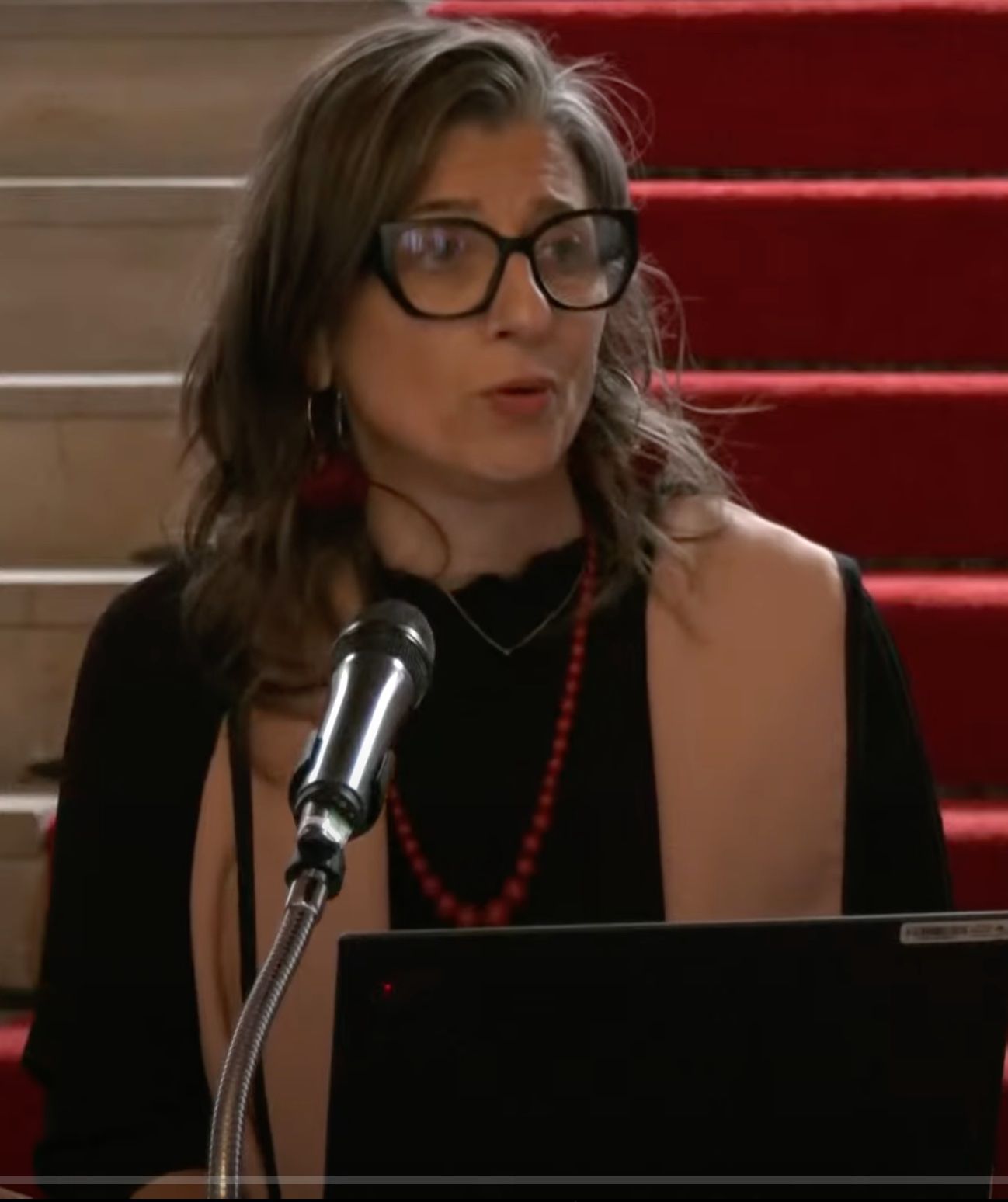

Its proposers, which include Sinn Féin MEPs Lynn Boylan and Kathleen Funchion, describe their nomination as “an expression of respect for the courage, efforts, and perseverance of individuals who defend fundamental human values in the most difficult circumstances” and “represents a contribution to peace that transcends political divisions”.
This is a nomination that deserves the widest public support, including that of the Irish government.
• A VERY happy New Year to all readers of this column, to the staff of the Belfast Media Group and The Irish Echo.
And to you, good readers, who have been good enough to stay with me over the years.
None of us know what 2026 will bring but we can be sure that it will be interesting. May it also be good to you all and good to your families.
Beirigí bua.