FOR as long as the English have occupied Ireland there have been political prisoners. As long as there have been political prisoners there have been daring and ingenious escapes. In the most recent period of conflict it is estimated that around 100 republicans participated in escapes, including the great escape from the H-Blocks in 1983. That was the biggest ever in British penal history. Others tunnelled their way out; clambered over walls; escaped in a helicopter; shot their way out; blew a hole in a wall; hid in a bin lorry; or dressed as priests; or in one case as a woman. I was a Samuel Beckett type of escapee. I failed. But I never gave up. I failed better.
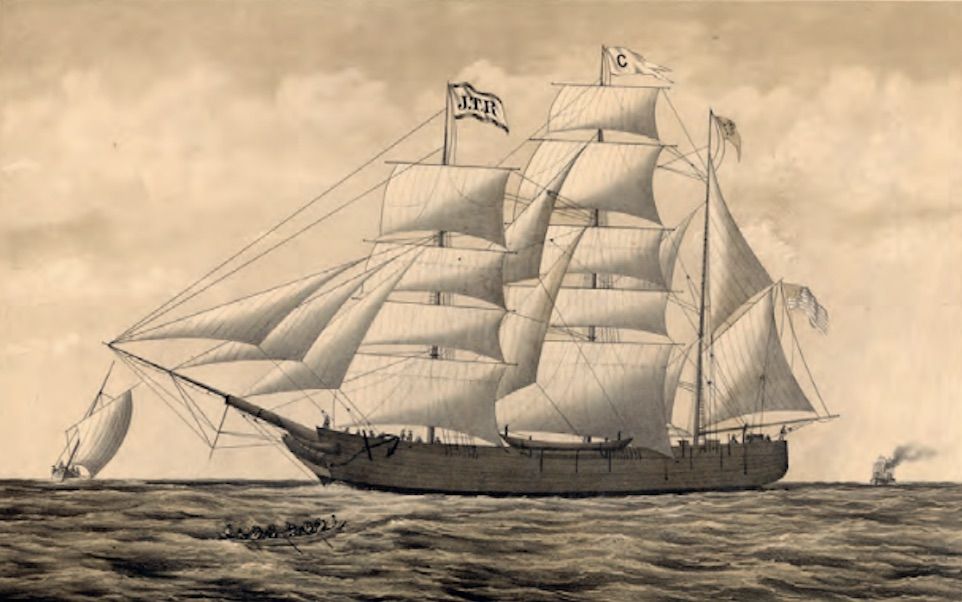
I tell you this because the flag of the Catalpa, a sailing ship that freed six Fenian prisoners from Fremantle in western Australia 150 years ago, was briefly on display in the National Museum in Dublin for two days last weekend. Originally, the museum had no plans to mark the anniversary of the Fremantle escape but public pressure and Conor Murphy raising it in the Seanad led to that short display.

The six Fenian prisoners were sentenced to death but this was commuted to life in prison and they were transported to Fremantle. Some of the Fenian prisoners wrote to friends back home asking for help. In an 1874 letter from James Wilson to John Devoy, one of the leaders of the Fenian movement, he wrote: “Dear Friend, remember this is a voice from the tomb. For is this not this a living tomb?”
Devoy and Clann na nGael in the USA raised $25,000. They equipped a whaling ship – the Catalpa – and despatched it to western Australia where it arrived at the end of March 1876. Three weeks later, at Easter time, the six Fenians rowed out to the Catalpa. As they left Australian waters they were pursued by a British Royal Navy ship called the Georgette that fired a shot and demanded that the Catalpa surrender. The American Captain, George Anthony, raised the American flag and told the Brits that they were in international waters and “If you fire on the American flag, it will be a declaration of war on the United States.” The Georgette retreated.
Anthony kept the flag for 20 years before giving it to Tyrone man Joe McGarrity, who was a leader of Clann na nGael in Philadelphia. The Clann in turn gave it to Joe Clarke, who had taken part in the 1916 Rising. Joe was a lifelong republican who participated in the famous Battle of Mount Street Bridge during which seven Volunteers held the bridge for nine hours against thousands of the Sherwood Foresters regiment of the British Army. They killed or wounded scores of British soldiers as they tried to advance on the centre of Dublin. They only retreated when they ran out of ammunition.
In October 1972, Joe Clarke, then Leas Uachtarán of Sinn Féin, presented the flag to the National Museum. It has never been on display before. The National Museum also has in its possession letters and other items that are part of the connection with John Devoy.
These, along with the flag, should now form part of a permanent exhibition.
Moore Street: Dublin must take the necessary step
THIS Friday, April 24, is the date 110 years ago when the Irish Volunteers and the Irish Citizen Army launched the Easter Rising. They published the 1916 Proclamation and proclaimed a Republic. For six days a small band of Irish rebels took on the might of the British Empire.
On April 28, as the GPO was ablaze, its garrison evacuated and made the short distance to 16 Moore Street, where the last headquarters of the rebellion was established. Five of the seven signatories of the Proclamation met there for the last time and took the decision to order the surrender.
HISTORY MAKERS: Graffiti at the Moore Street battlefield site sends an unmistakable message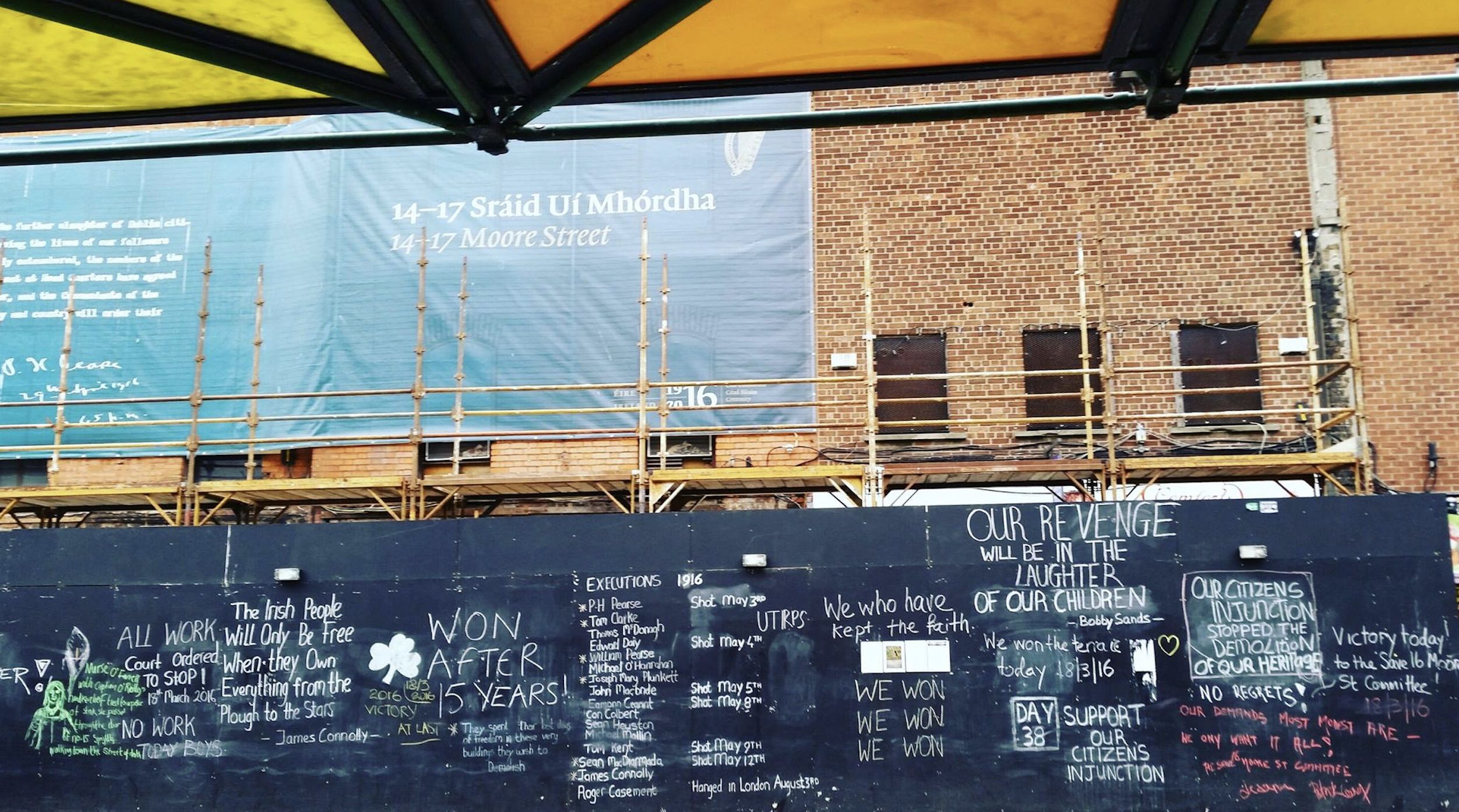

In other places I have visited around the world those buildings and locations linked to their fight for freedom have been preserved and protected. They are of historic and cultural value to the life of the nation. Almost two decades ago an Irish government bought numbers 14 to 17 Moore Street to turn it into a National Monument. It was supposed to be ready for the centenary of the Easter Rising in 2016. It is still not ready. Worse, in the meantime all of the buildings that are part of what is designated as the battlefield site have been allowed to deteriorate.
Over recent years Dublin City Council and several past Mayors of the city, as well as Sinn Féin, the Moore Street Preservation Trust, the Save Moore Street campaign and others have called on the Irish government to buy the entirety of the Moore Street terrace and develop it as a historic and cultural quarter.
Last month the Dublin Mayor, Fine Gael Councillor Ray McAdam, called on the state to use a Compulsory Purchase Order to buy the Moore Street Terrace. He was supported in this by the families of the 1916 Signatories of the Proclamation and by the Moore Street Preservation Trust, whose judicial review against the plans by the developer, Hammerson, is now slated to be heard in the High Court at the start of the new year.
Speaking for the Moore Street Preservation Trust, James Connolly Heron, a great grandson of James Connolly, said: “The continuing uncertainty over the future of this last extant 1916 battlefield in the city must end. The State, as guardians of our history and heritage, must take the next step and remove ownership of this historic street from the Hammerson/Allianz partnership and ensure that its future is secured, protected and preserved under public ownership for future generations.”
Such a move would honour the memory of those who died in the cause of Irish freedom, increase tourism and provide much needed jobs and investment in that part of Dublin. Taking Moore Street into public ownership makes sense.
Ard fheis time again
THIS weekend the Sinn Féin Ard Fheis will be held in the ICC Waterfront Hall in Belfast. Like hundreds more I will be there as the party debates policy, including how we can advance our core objective of Irish unity.
Apart from my years in prison I have been a regular visitor to Ard Fheiseanna since the late 1960s. Then Sinn Féin was a small banned organisation under the Special Powers Act. Today Michelle O’Neill is First Minister in the North and Mary Lou McDonald is the leader of the opposition in Dublin, with an ambition to be in government.
We have TDs, Seanadóirí, MLAs, MEPs, MPs and hundreds of councillors. And we have developed far sighted and thoughtful policies to benefit working families, tackle injustice and inequality, assist our communities and, crucially, achieve a united Ireland.
As the ultimate decision making body of the party, the Ard Fheis took critical decisions on fighting elections, North and South; supporting the hunger strikers; ending abstentionism; debating and passing important policy documents, like Towards a Lasting Peace in Ireland; was critical to establishing the Irish Peace Process and endorsing the Good Friday Agreement; and much more.
It also had its funnier moments. On one occasion, I think it was in Killarney, when my Presidential speech was being broadcast live, we handed a copy over to RTÉ so that Diarmuid O’Grady, the autocue controller, could set it up. Timing was everything. I had to finish on time otherwise RTÉ would cut from the Ard Fheis to go to the 9pm news.
I ran so far over time that I had to scrap the last couple of pages of the speech and ad lib my way to the conclusion. It worked but I could see RG and Diarmuid desperately trying to find where I was on the autocue yoke. Later Joe Cahill had to revive RG.
That part of my activism is now ended but I still enjoy the energy and enthusiasm evident each year in the Ard Fheis. It’s a great opportunity meet old friends and make new ones. And to be part of a truly democratic assembly.