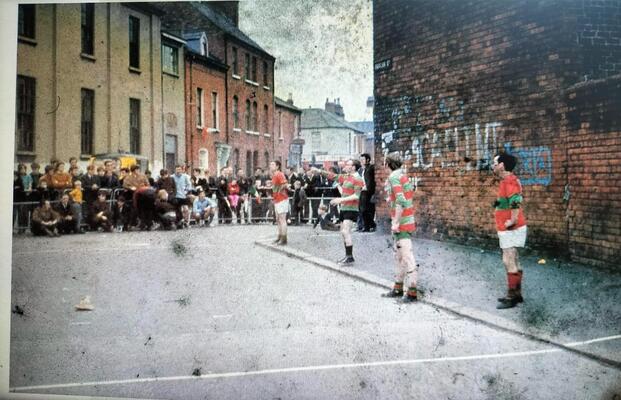
THE bulletholes from the August 1969 sectarian pogrom against the people of the Falls area are still visible on the front wall of St Comgall’s Primary School, Divis Street. Last Thursday lunchtime, a few yards from where whole terraces of houses were burned out, scores of community activists from across Belfast came together in Ionad Eileen Howell to discuss another pogrom. This time the pogrom was rooted in violent racism.
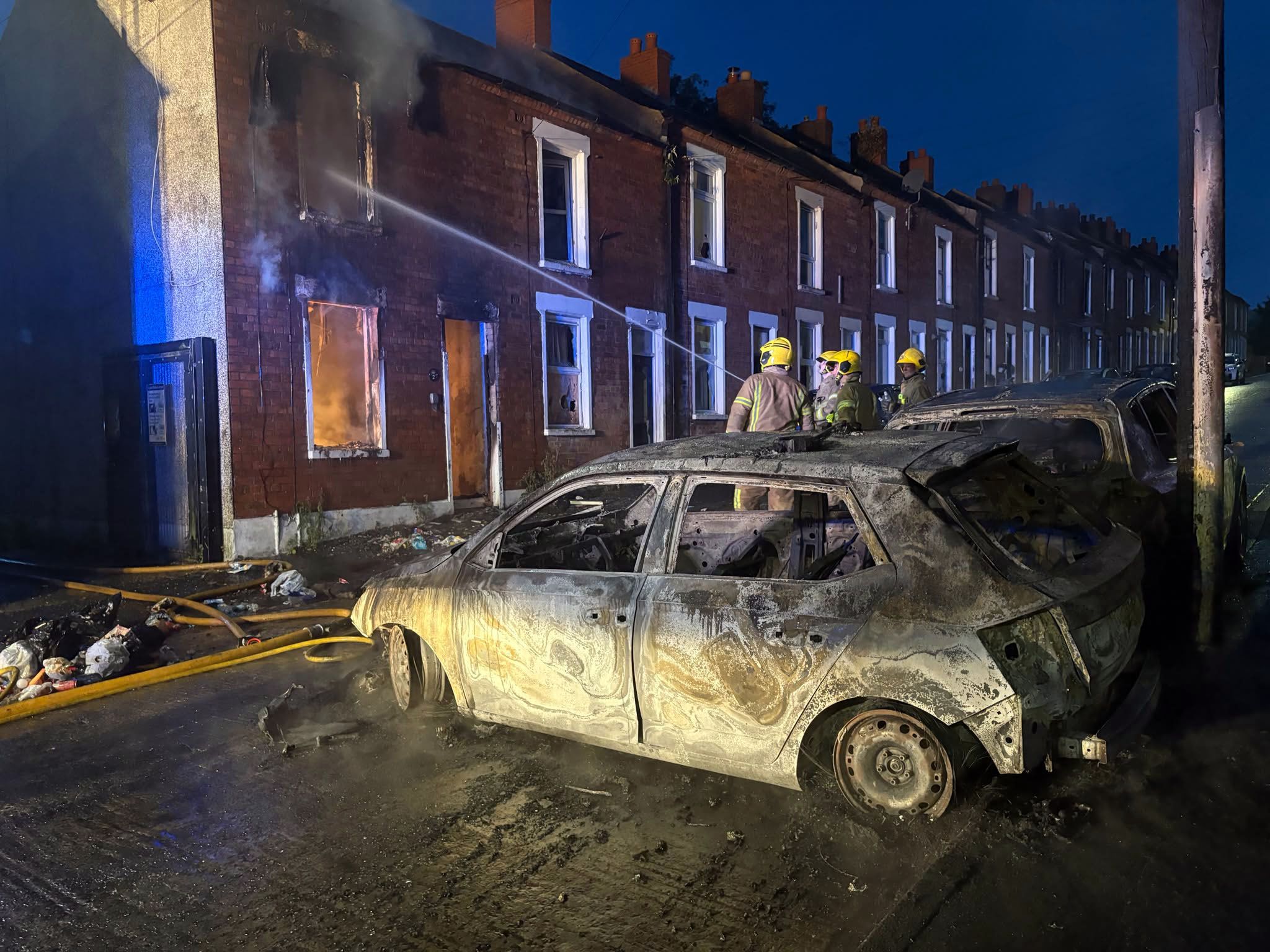
In the days before families and workers from the various ethnic groups who now make up an important and valued part of our society were attacked, threatened, and some were forcibly evicted from their homes. In harrowing scenes, cars and some homes were destroyed as masked thugs roamed the streets of parts of Belfast, Portadown and Glengormley attacking the PSNI and the homes of our neighbours. Terrified children fled with their parents.

Health workers were especially targeted. There was a clear attempt to intimidate many from their jobs. In addition, schools were closed. People were sent home from work. Public transport stopped.
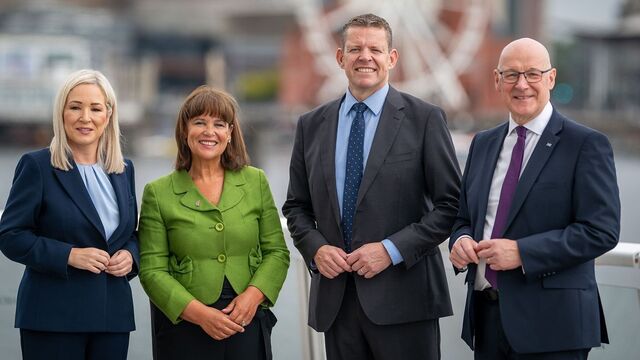
The community groups at the meeting in Ionad Eileen Howell described how they had helped relocate evicted families, worked with Belfast City Council to ensure that emergency accommodation was available, established a co-ordination and response group and had activists on the streets to defuse any attempt by right-wing elements to stoke up further attacks. From the GAA and individual citizens there was widespread opposition to the racism. First Minister Michelle O’Neill met community representatives, youth workers and ethnic minority communities. She visited health staff in the Mater Hospital who had been threatened. She expressed her unambiguous solidarity and support for them.
Belfast Ard Mheara Councillor Róis Máire Donnelly, who received death threats for standing up to the racists, refused to be silent. On Friday she addressed a local anti-racism rally and the next day she spoke to the thousands who attended the massive anti-racist demonstration at the City Hall. Róis Máire told the crowd that Belfast is “stronger” because of our diversity. And she described Belfast people as “resilient, compassionate and welcoming.” She is right on both counts. Diversity is a strength, not a weakness. And notwithstanding the naysayers and begrudgers, Belfast is a welcoming city that embraces our ethnic minority citizens.
While the events of last week have reminded us all of the scourge of racism we also see in the public response and widespread condemnation an absolute abhorrence of racism and fascism, and a determination to defeat them.
So, in the time ahead we have to work harder in planning a proper and more effective response to racism, as well as to the threat of sectarian violence, which remains a constant problem. Racism is the first cousin of sectarianism.
Hate crime, whether it is sectarian, race-based or targeted against the Travelling community, or against women, cannot be tolerated. This is a responsibility of government but it also requires community solidarity – people of goodwill standing together and supporting those who are being victimised. This is what our community groups and others were doing at the height of the onslaught. That’s what they are doing as I write this. I want to commend all of those who have provided support for those families and workers under threat and who have taken a stand against racism and sectarianism. Not for you a ‘Shelter with curtains pulled scrolling X.’ No! You stood up when needed.
Well done. We are proud of you.
Two giant steps forward in the journey towards a united Ireland
THERE are those who dismiss any possibility in the next few years of holding the unity referendums provided for in the Good Friday Agreement. Foremost among them is Fianna Fáil leader Micheál Martin, who obstinately refuses to countenance any preparation for unity.
However, his partner in Government, Fine Gael leader Simon Harris, clearly doesn’t agree. At the weekend he announced that his party is planning to develop and publish a blueprint for a united Ireland by their Ard Fheis in November. That is good news.
Harris’s statement of intent coincides with Uachtarán Shinn Féin Mary Lou McDonald’s introduction this week in the Dáil of a Private Member’s Bill that will compel the Taoiseach to begin the planning and preparation for constitutional change and Irish unity.
The ‘Planning for Constitutional Change Bill 2026’ will require the Taoiseach to institutionalise preparation and publish a Green Paper. This will facilitate consultation and encourage a national public debate as a first step before formal government legislation is established. The Green Paper will require the government setting out its ideas, vision and proposals on the economy, education, health, justice and the legal system and future governance arrangements.
Mary Lou’s Bill also provides for the convening of a Citizens’ Assembly to consider the many issues relating to constitutional change. A key requirement of the Bill will be to encourage the involvement of communities, experts and others, including the unionist section of our people. And those from that section who are considering a future without the union.
We must learn the lesson of the Brexit debacle. No preparation. No proper discussion. Fake news and fake claims and the wrong outcome.
Mary Lou’s Bill provides the Irish government with the opportunity to begin preparations for unity. The logic of the stance now taken by Simon Harris is that Fine Gael should be supporting the Sinn Féin Bill. It’s also time that Micheál Martin joined the conversation on unity, instead of trying to block it.
Mary Lou’s ‘Planning for Constitutional Change Bill 2026’ and Simon Harris’s blueprint are significant steps from both parties. They map out a clear pathway toward greater conversation and planning on Irish unity and are to be welcomed.
A long time coming
AFTER 37 years the inquiry into the murder of human rights lawyer Pat Finucane (above) has finally opened. Pat’s wife Geraldine, his children John, Michael and Katherine and his dedicated family circle and legal team are to be commended for their diligence and steadfastness in pursuing the truth about Pat’s murder.
Pat Finucane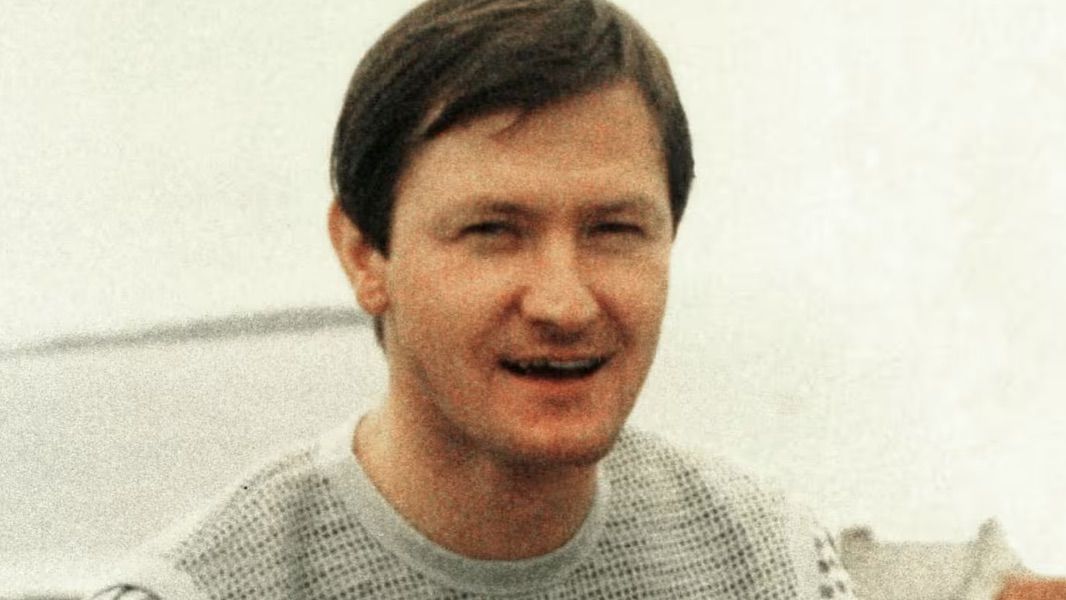

Successive British governments have lied, prevaricated, distracted, delayed and made every effort to prevent an inquiry from happening. Why? Because the extent of British state collusion with the UDA in his murder has the potential of laying responsibility for his death with senior political figures within the British Conservative government of Margaret Thatcher.
That there was collusion in his murder and that of hundreds more is not in doubt. But who was responsible? Who gave the orders? Who plotted and schemed to have Pat killed on February 12, 1989? Who knew what within the RUC; within RUC Special Branch; within MI5; the Force Reconnaissance Unit (FRU); the British Army; and the British Cabinet?
The road to the inquiry has been a long and torturous one for the Finucane family. In 2001 the British and Irish governments agreed at Weston Park to establish public inquiries into a number of cases. Canadian Judge Peter Cory recommended public inquiries into four deaths: those of Rosemary Nelson, Robert Hamill, Billy Wright, and Pat Finucane, and into the deaths in the South of former RUC officers Bob Buchanan and Harry Breen.
All of those took place, but Pat’s inquiry was blocked by British machinations.
In 2003 the third investigation by John Stevens into collusion concluded that there had been state collusion in Pat’s killing. The British government continued to stall on an inquiry.
Eight years later in 2011 the Cameron government decided there would be no inquiry but instead established a review of Pat’s murder by Desmond de Silva QC. He concluded that “agents of the State were involved in carrying out serious violations of human rights up to and including murder.” On the publication of his findings Prime Minister Cameron apologised to the family in the British Commons. But still no inquiry.
In 2019, the British Supreme Court unanimously found that all the previous investigations had failed to discharge their obligations under Article 2 of the European Convention on Human Rights. In essence the British state had not met its legal and moral obligations. But still no inquiry was established.
On the contrary, the following November, 2020, the British Secretary of State Brandon Lewis – remember him? – said he would not hold an inquiry. As John Finucane said at that time: “His decision defied the court; defied logic, and defied decency. It was an act of political cowardice.” The family challenged Lewis’s decision and two years later in December 2022 the High Court in Belfast quashed it.
Finally, in September 2024 an inquiry was finally announced and that has now opened. But that doesn’t mean the Finucane family will achieve justice. If we have learned anything from centuries of British colonial occupation, British justice protects British interests. So we have to remain vigilant and supportive of the family in the time ahead as they continue to challenge the efforts of the British military, intelligence and political establishment to frustrate the family’s need for truth.