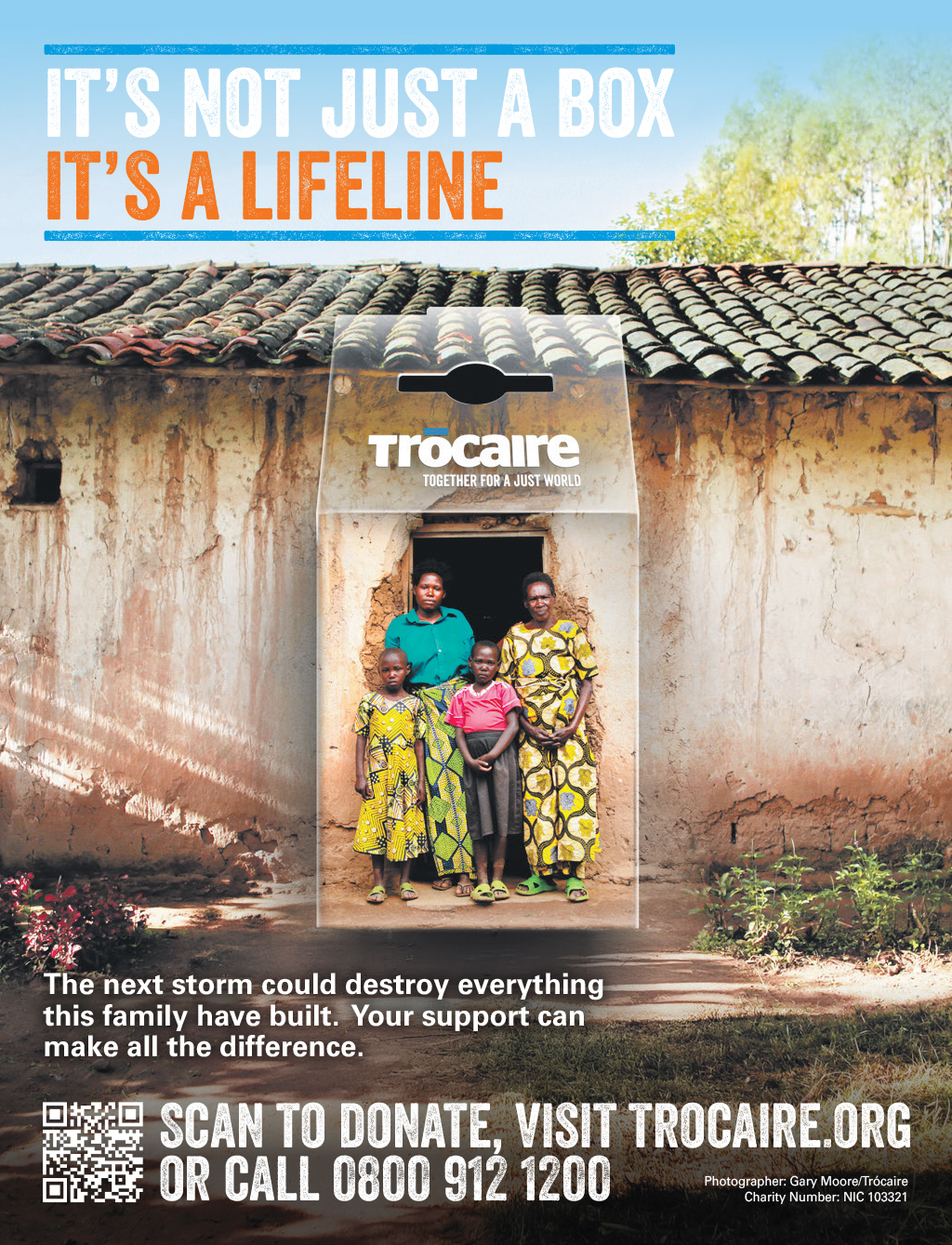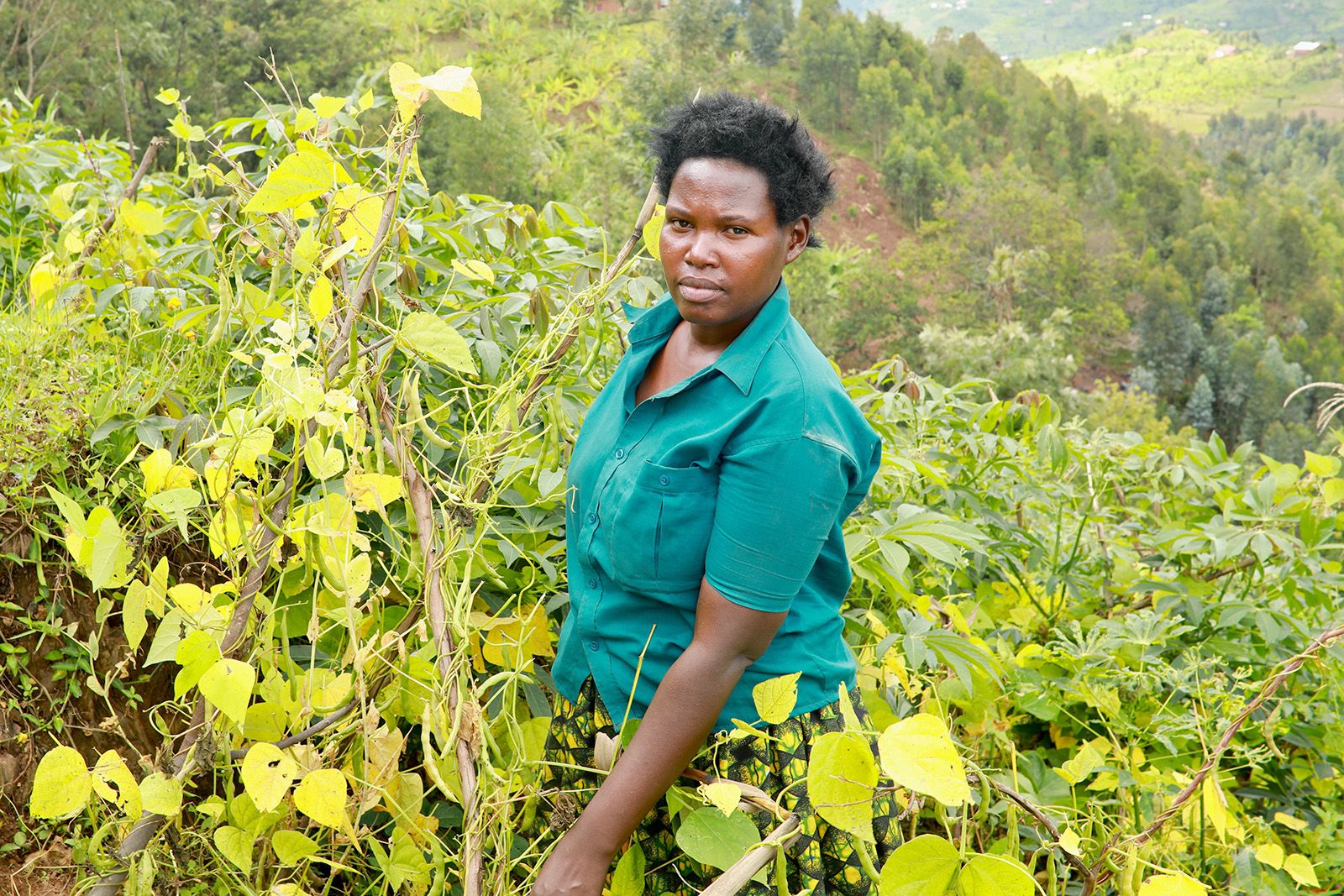
AT just 28 years of age, Uwamahoro has the weight of three generations on her shoulders. Living on the equivalent of 60p income a day from working in the fields of the local community, Uwamahoro is supporting her mother, Verediana, her daughter Ineza (7) and her niece Vanessa (12).
68-year-old Verediana, lives with a disability and is unable to work. The family do not have any livestock or land, so they are solely reliant on Uwamahoro’s income to buy food, along with whatever they can gather themselves from around the local community. Uwamahoro said, “You can’t work for 1,000 (60p) Rwandan Francs and get lunch and supper for the family – that's why we only take supper in the evening. If we had money to get lunch, we would be happy to have lunch as well.”
The house Uwamahoro’s family live in is a small mudbrick structure with three small, virtually empty rooms. They used to have a separate outdoor kitchen where they could cook safely and burn firewood for the stove without smoke filling the house, but a heavy rainstorm destroyed the kitchen so Uwamahoro cooks using a small pot and some firewood in the back room of the house, while her mother and the children stay in another room to avoid the smoke. After heavy rains, when the firewood is wet, the smoke intensifies and spreads into other rooms.
Losing her kitchen is just one of the many ways the increasingly severe rainstorms have impacted Uwamahoro and her family. Waking one night to a terrible rainstorm, Uwamahoro suggested to her mother that the family take the children and shelter elsewhere. Deciding there was nowhere else to go, they waited through the storm and watched as the roof was badly damaged.
All of the family’s belongings were destroyed by those heavy rains, including their floor mattresses, bedsheets, kitchen equipment and dinnerware. Most of these, they haven’t had the money to replace, so they each sleep on a mattress made from long grasses, basic bedcovers and among the family, they share “one cup, one plate, one saucepan”.
The heavy rains also impacted the children’s schooling as their notebooks were damaged and it was a while before there was money to replace them. When rains are prolonged, the children are unable to make it up the hill as the muddy ground becomes impassable from floods.
The impact of the rains on the environment is also significant. Heavy rains destroy the crops, affecting both income and food sources for the whole community. In Western Rwanda, intense rainfall is now five times more likely to lead to deadly flooding and landslides, displacing families and destroying homes. This is also exacerbating a food crisis. Worsening storms and poor soil have caused crop yields to drop by over 50 per cent in some regions. For farming families, this means more hunger and less income.
The family are involved in the Climate Just Communities (CJC) programme, which is supported by Trócaire in Rwanda. The CJC empowers communities to build long-term resilience to climate change. Families in Uwamahoro’s community live with huge challenges such as unpredictable weather, food insecurity and loss of livelihoods. The programme aims to empower these communities, particularly women, youth and persons with disabilities, to adopt sustainable practices that both mitigate and adapt to the effects of climate change.
The CJC programme strengthens community resilience by ensuring fair access to resources, promoting environmental sustainability, and enabling meaningful participation in decision-making, particularly for women. Trócaire’s support, in collaboration with the CJC, helps communities better prepare for, respond to, and recover from the growing impacts of climate change.
As a single parent Uwamahoro remains strong in the face of all the challenges she faces. “That is love,” she says, “when things happen, there is nothing else you can do.”
To find out more about the Trócaire Box Appeal or to make a donation visit www.trocaire.org or call 0800 912 1200.