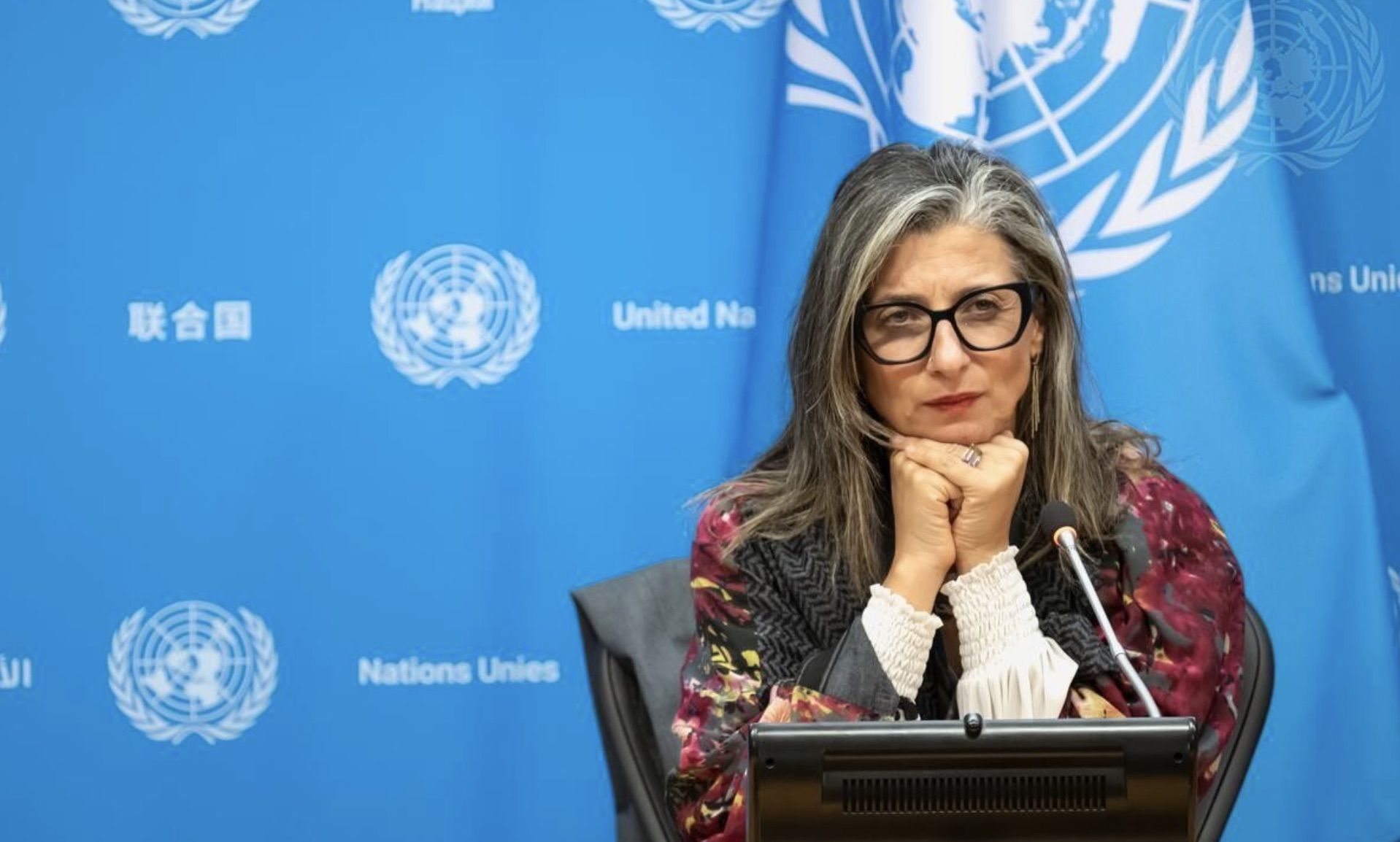
THE most important challenge in 2026 will be the protection of human rights and human rights defenders. News over the holidays that Francesca Albanese is facing 'sanctions' from the United States for her vocal opposition to genocide, while Benjamin Netanyahu is invited to Mar-a-Lago at Trump’s invitation, highlights exactly where we are right now. That this has happened without immediate uproar in her defence speaks to the sinister international climate.
The International Criminal Court Chief Prosecutor, Karim Khan, has had his bank accounts frozen, his visa to the United States revoked and has no access to Microsoft for emails or basic tasks. He is prosecuting war crimes without fear or favour and is facing punishment in his personal and family life. This is a direct assault on international human rights and yet there is little to zero international media attention.

Kimberley Prost from Canada has had her bank accounts and credit cards frozen for voting in favour of an investigation into war crimes in Afghanistan. She and her family have no access to PayPal, Amazon, Visa or any other US-owned or -backed international financial institution.
That the European Union has not moved immediately to defending these foremost judges and defenders of international law tells us the extent of cowardice in the international arena right now.
International human rights do not operate in a vacuum. Human rights defenders do not live on warm fuzzy feelings of doing right. All require robust defence, resourcing and action when under attack. There was a time when the United States was referred to, albeit in disparaging terms, as the World’s Policeman, espousing commitment to freedom, liberty and human rights, when the reality was often quite different. Now that the pretence is gone and the United States assumes the role of the World Conflict Extortioner, it beholds all other nations to stand up and defend the laws and standards that prevent war, conflict and genocide. To do other is to reverse our history back to pre-enlightenment times.
As we continue in our own country to defend the rights of those who have suffered violations, there are some who will try to pressurise the bereaved, injured and tortured to accept crumbs from a state violations table in the form of a fundamentally unreformed Legacy Act, because the international climate for human rights is such a challenged space, and the British Supreme Court has not been as conservative in living memory. It is a shameful position from people who have never lost as much as a night’s sleep from conflict harm. And that position is itself a defeat of human rights.
Whether in Palestine, Sudan, Ukraine or Ireland, human rights are universal. They are not for negotiation, compromise or political expediency. Victims and survivors are the standard bearers for why law and its defence are so necessary. The consequences of impunity and appeasement for those harms is that they will inevitably be repeated. How a nation stands up for victims and defends all human rights defenders under attack will mark out their historical standing once this period of depravity ends.
For end it will. And those Quislings and Chamberlains of this time will be judged harshly. In 2026, as we overcome our shock at the assault on the rights-based order, it is time for action. History will not forgive those who baulk.