THERE was something unusual – eerie even – in the air as Dúlra and Squinter dandered along the shores of Lough Neagh on New Year’s Eve. It was a perfect winter’s day, crisp and cloudless. But the fields facing the lough seemed to have rejected the tranquil mood.
They were somehow jumpy. Dúlra couldn’t quite figure it out, but his attention kept being pulled away from the tranquil beauty of the lough and the sleeping Sperrins on the far side – there is no sign of that poisonous green algae at year’s end – and back inland.
There are two main types of agriculture in these parts: sheep that need massive, pristine fields that are green deserts to nature, and another much more aesthetically pleasing one that stretches back centuries – apple orchards.

Here on the Loughshore Road near the hamlet of Aldergrove, the famous orchards of County Armagh are replicated in Antrim. And the winter-wizened apple trees are tended like prized Bordeaux vines.
The more Dúlra looked the more he realised that there was something afoot. It was as if the ground beneath the bare branches was moving just like the water on the lough itself. Dúlra raised his bins and focused. And there, among the grass and undergrowth, was a sea of birds.
These weren’t familiar native birds like blackbirds or finches, but much bigger and more colourful birds. And easily startled ones, because as we strode closer, a mass of them lifted into the air, their white rumps flashing against the low sun. The fieldfares of Scandinavia were enjoying an orchard feast.
We took the next right on to Corbally Road. When they finally bilingualise these signs this one will read Corrbhaile, meaning the pointed townland. Then it was through an old rusted gate into the orchard where the fieldfares were feeding.
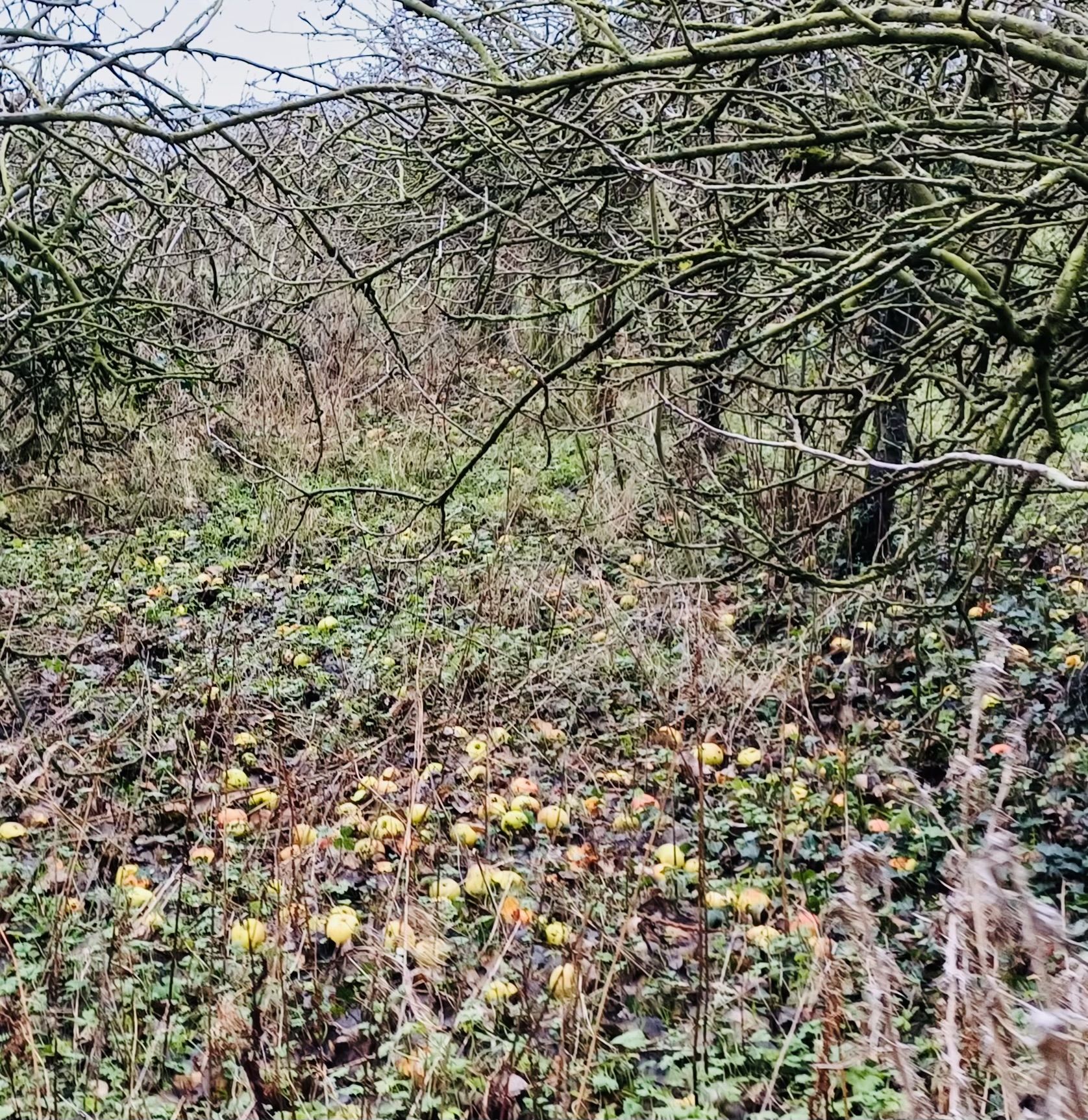
And we immediately saw what had attracted them. For some reason, the apples in this orchard hadn’t been harvested in the autumn and the ground was carpeted with unwanted fruit. Unwanted by humans, but not by fieldfares. Normally the cider giant Magners/Bulmers – based in Tipperary, the Armagh of the South – buy up apples from all over the island; why these have been left to to the birds is anybody’s guess.
AN APPLE A DAY: The fieldfares have arrived in County Antrim in numbers from Scandinavia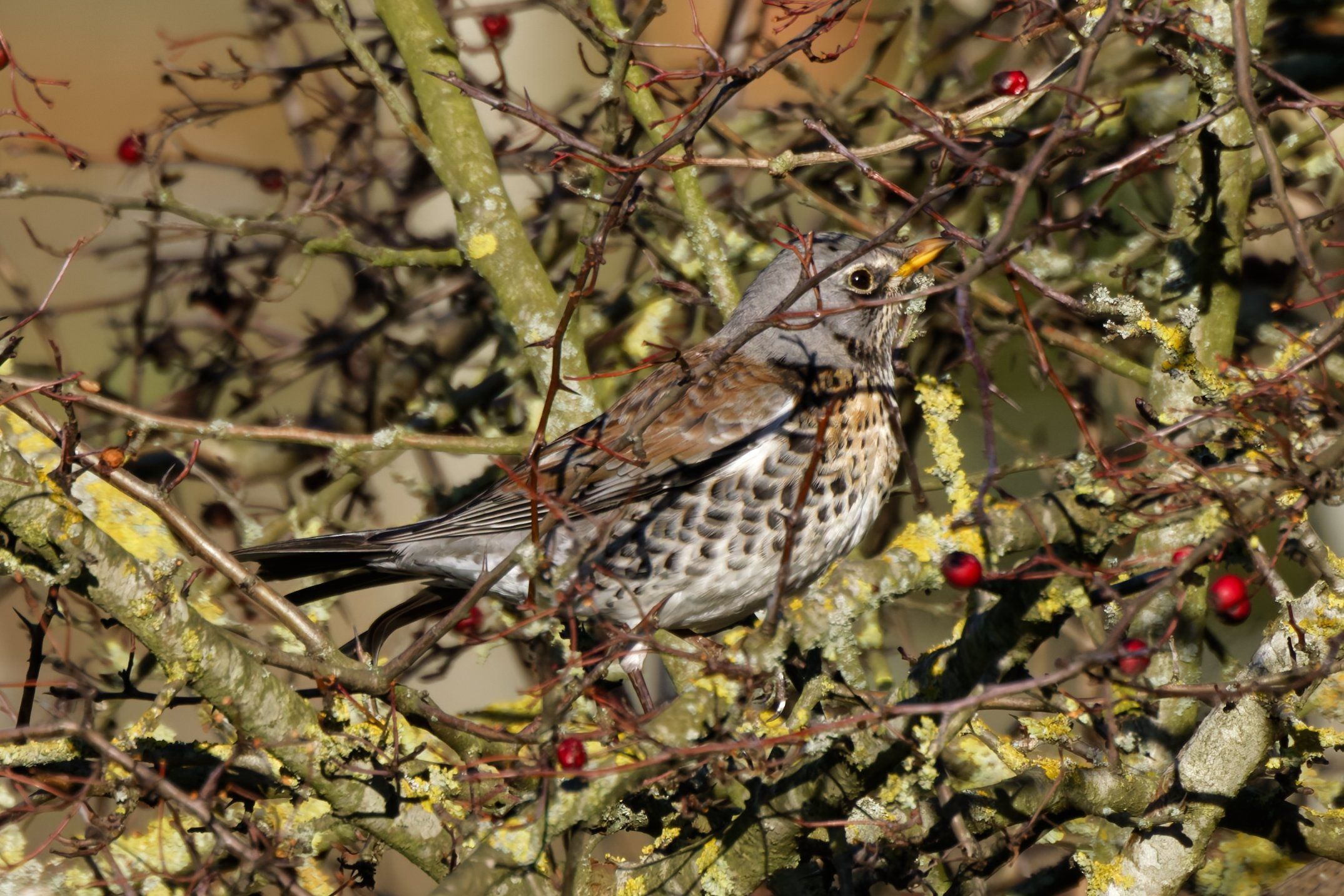

This is the original meaning of windfall. The fruit grows so full and heavy that the lightest breeze can send them tumbling to the ground, while a blustery wind can virtually strip the branches. And when these fieldfares arrived at the shores of Lough Neagh, they must have felt like they’d won the lottery. We walked under and through the gnarled branches, black against the bright blue sky, startling fieldfares as we went. And as we looked at our feet we saw that many of the apples had large chunks gouged from them by the hungry fieldfares.
They are a strange bird, fieldfares, sacán in Irish. They avoid the city, arriving here every winter in large numbers to feast on the ever-declining haw berries on Ireland’s once world-famous hedgerows. They’re always on alert and at the slightest sign of an intruder, they’ll fly off strongly to the highest tree where they'll sit like wooden birds on a weather vane, all pointing in the same direction.
Because they are so wary of people, Dúlra had never got a close to them – until New Year’s Eve. But from now on he’ll never mistake them as he has in the past for their smaller cousins, the song thrush, mistle thrush, or that other Nordic visitor, the redwing. They were also enjoying this sweet (or is it sour?) festive feast in the orchard. This is the first winter Dúlra has had a chance to see redwings and fieldfares in quick succession and he’ll never again confuse them, either in markings or in calls. The fieldfare rattles rather like a magpie, while the redwing – more likely to be seen in town – emits a mysterious shriek that you often hear at night as they fly overhead in the darkness.
Apples and birds are a great combination. Every winter, Dúlra cuts apples in half and throws them in the garden for his ground-hopping blackbirds. He’d love to offer them more, but his weekly grocery budget is alread too heavy with birdfeed. Little do the city blackbirds know that whole fields at Lough Neagh are littered with their favourite fruit.
Ireland’s biggest lough is no longer the wildlife haven it once was, but at least this winter its apple-farmers have given our Scandinavian visitors an unexpected treat.
•If you’ve seen or photographed anything interesting, or have any nature questions, you can text Dúlra on 07801 414804.