DÚLRA has no doubt which Belfast area is tops for nature. It’s got to be Poleglass – and this week he got further proof of it.
He was calling into a friend’s house there for five minutes at the weekend and took the chance to admire his garden through the patio doors from the living room. Like so many people, this guy loves to feed the birds and there were plenty of starlings there, as well as blue tits, chaffinches and robins.
But it didn’t take long for them to scatter. Just as Dúlra started watching them, a sparrowhawk glided silently in and perched on the fence.
It sat there about 10 feet from Dúlra – so close he was afraid to move a muscle. He knew the bird would pick up the slightest movement and be on its way.

This was a truly beautiful bird – it possessed a kind of fatal attraction. The smaller male hawk had its back to the window but as it turned its head to look Dúlra in the eye, it showed a stunning orange neck.
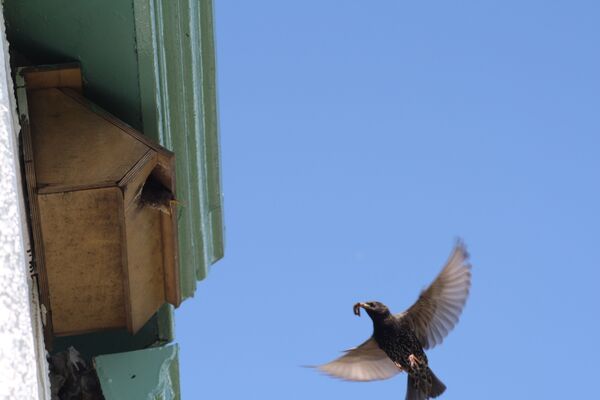
This bird is a killer like no other. While readers are forever sending Dúlra pictures of its larger mate devouring pigeons in gardens all over Belfast, the male bird dines on finer cuisine.
It couldn’t handle a pigeon – they are about the same size – but smaller garden birds don’t stand a chance against its speed and stealth. It will dart low over hedges like a fighter jet avoiding radar and pounce on its prey before they even know what hit them.
Dúlra stared in amazement and moved his hand ever so slowly into his pocket for the phone. But the sparrowhawk saw even that small movement and in an instant it was gone to whence it came.
There was no kill on this visit, but the garden was now as silent as the grave. The birds were so filled with terror by the visit of this grim reaper that they remained out of sight in the hedges, frozen stiff.
Such is the reputation of the sparrowhawk, spioróg in Irish, that even its appearance is terrifying. It’s like Dracula spreading a shadow of fear all around him.
Dúlra’s male sparrowhawk appears several times a day – he doesn’t always see it, but he knows when it has visited because of that suddenly silent garden. Sometimes it’ll be an hour before garden birds pluck up the courage to visit the feeders again.
Poleglass is packed with trees – from the air it must look like a continuation of Colin Glen. And although the hawks will probably nest in the forest, they could safely build a home in one of the hundreds of fir trees that line the streets here.
The Poleglass reign of terror of the male sparrowhawk will thankfully continue!
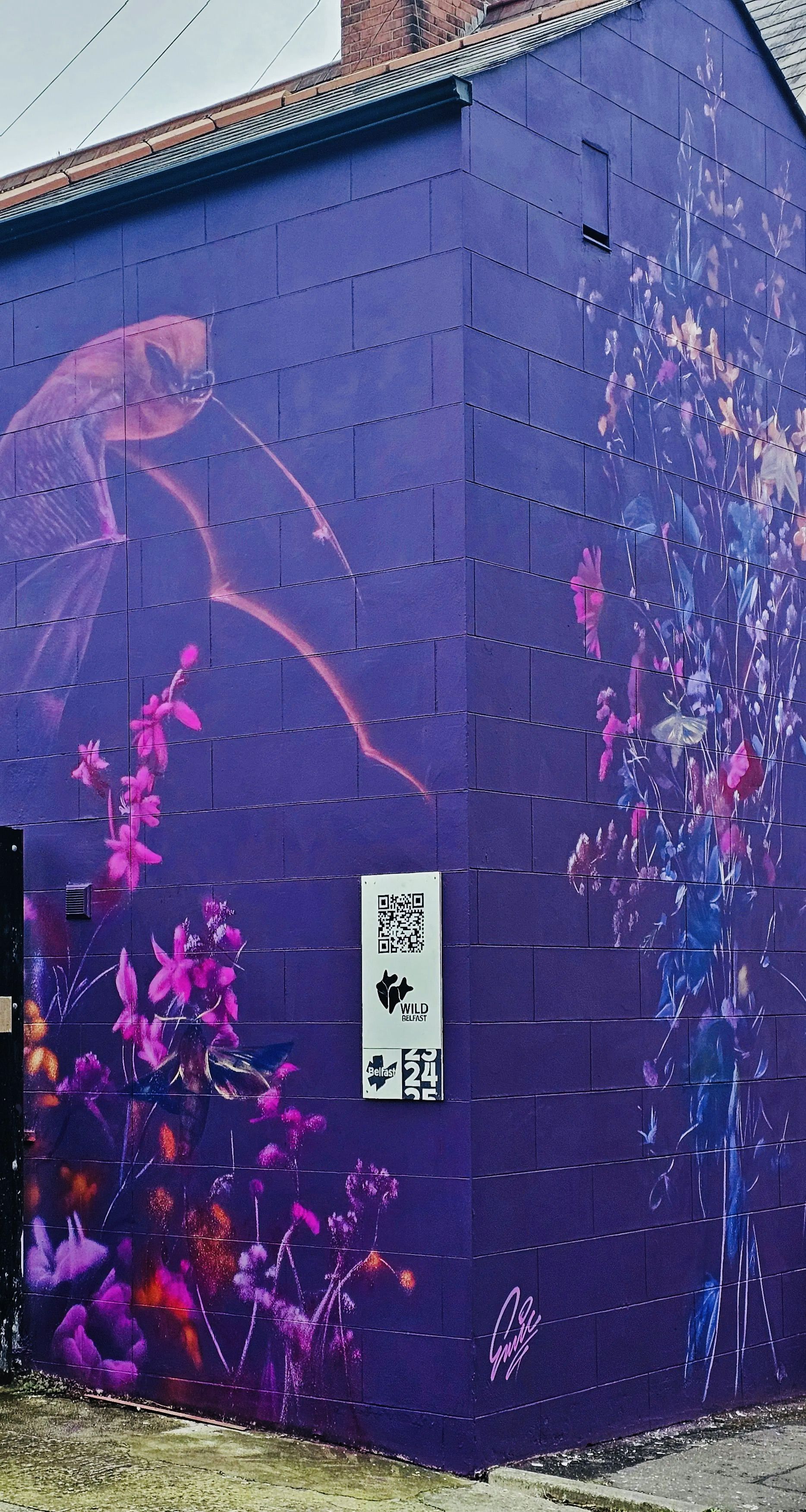
On a quiet street off the Stranmillis Road sits one of Belfast’s best murals – and there’s a lot of competition for that accolade in this city!
Not only has the house in Colenso Parade near Botanic Gardens been covered in beautiful wild flowers on a dark purple background, but it actually helps nature in a big way.
Because if you look closely at this picture, near the top is a small vent for bats to nest in. Two bat bricks were built into the wall – and the mural itself is a collection of night-blooming flowers that attract moths which are eaten by bats.
The mural was created by artist Emic to highlight the importance of ‘moon gardens’ that produce flowers that benefit nocturnal pollinators.
Although huge, this mural is actually easily overlooked. But that’s intentional – its dark colours lean into the nighttime theme, giving great camouflage to the bat boxes and their residents.
Dúlra never knew this ‘living wall’ mural existed until he was shown it recently by ecologist Conor McKinney, who is spearheading a brilliant campaign to win National Park City Status for Belfast.
If the National Park bid is anything like his campaign to save the starlings of Albert Bridge, where he successfully lobbied authorities to end light pollution there which was spoiling the birds’ Lagan roost, his City Park bid will be a shoo-in.
If you’ve seen or photographed anything interesting or have taken any nature photos, you can text Dúlra on 07801 414804.