WE’VE had the Irish language revival, the Gaelic games revival – now it’s time for the Irish environment revival.
The Gaelic Woodland Project was set up six years ago with the aim of returning land to nature and rebuilding the Irish people's ancient connection with the countryside.
The charity bought 12 acres of land in County Mayo and rewilded it with native trees, removing invasive species, and they are now working to turn land in County Cavan into a native forest to mark the 200th anniversary of the Great Famine. It’s a small start, but their message is beginning to take root. It’s those same roots that the Irish language revival was built on that today sees hundreds of weekly classes in cities like Belfast.

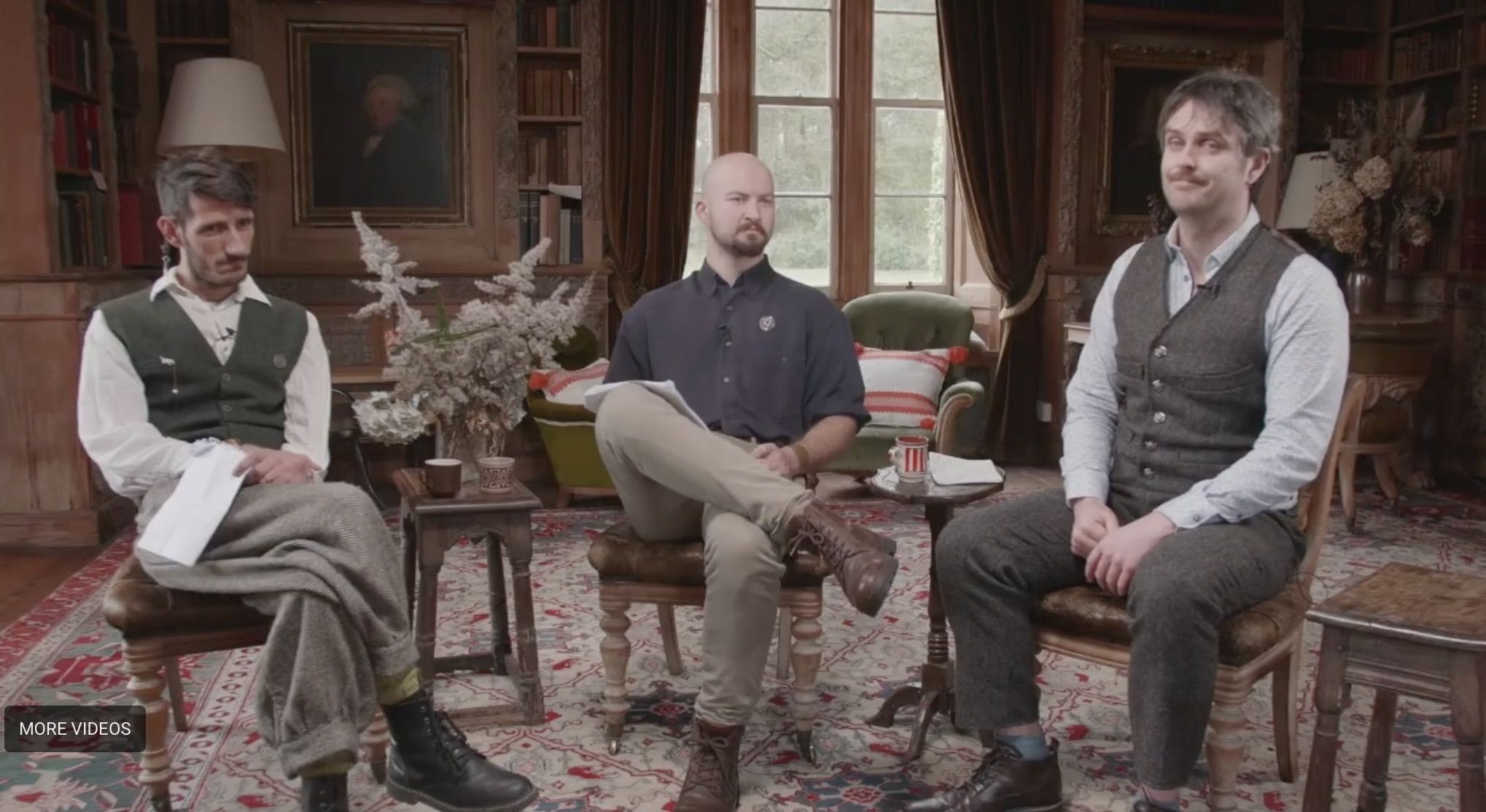
There are plenty of groups out there planting trees, but this project is different. The three directors – Eoghan Connaughton, Oisín Ó Néill and Santiago Rial – are all experts in the Irish language, history and ecology, three things they merged to take their plans to a new level. Their growing movement is as much cultural as it is ecological.
As Argentinian Santiago points out: “Nothing in nature exists in and for itself. The whole world around us works under this constant exchange of energy and nourishment.
“Everything works that way, even our digestive tracts.
“Only humans say, all of this is for me.”
Eoghan says Irish people lived for thousands of years in close harmony with nature and that that desire is still in us, despite centuries of hardship and deforestation.
Humans arrived in a wild Ireland 12,000 years ago, but in ecological terms that’s relatively little.
“An oak lives 1,000 years, so that’s just 12 oaks ago,” Eoghan says.
“It’s the mission of the Gaelic Woodland Project to foster that reconnection, to allow people to engage with nature and their native language in a two-way system.”
He wants us to realise once again that the land sustained us and we protected it. That it had a value before a value was put on it.
Speaking at an online presentation mainly to the Irish diaspora in America, Oisín said that by the time of the Great Famine, people’s relationship with nature had been severed due to the struggle to simply survive.
“Today agriculture is about extraction from the field, but if we look back to the crucible of Gaelic culture, the value of the land wasn’t what you can take from, the value of the land was caring for it for the next generation.
“Just like the efforts that were made to reinvigorate the language and the Gaelic games, we are in a position to reinvigorate the land, not in what you can get from it, but what you can give to it, that reciprocal relationship. To reclaim that is a beautiful thing.”
Sadly, as Oisín points out, there are strong forces against such positive change, forces who want to bring us back to industrial farming, end rewilding and even oppose allowing our fields and bogs to simply recover.
He says: “We need a cultural change. Even with the Irish language there are actors at work who are against it.
“There are communities in the North who are tearing down Irish language signs, who refuse to see the status of the Irish language despite it being a native language of the land.
“We’re trying to bring more people in, introduce them to this way of working with the land in a non-extractive, harmonious, sustainable way and hopefully that can change the culture.”
Historian Elizabeth Stack pointed out that the Irish believed you couldn’t own the land, just the animals on it. But a capitalist, colonial mindset pushed that belief to the fringes.
“I think there is a growing need in people for this kind of connection,” said Elizabeth.
“There has been a pushback against capitalism and colonialism in its various forms, and maybe even let’s include the fall away from the established churches.
“People are looking for belonging and community and for answers and for things that are more powerful than themselves. Maybe rather than an institution they are going inward and down and it’s into the silence and into nature where we’ll be able to get this sense of rightness and balance.”
The hope of the Gaelic Woodland Project is that not only can they return a few isolated pockets of land to what they once were, but that a movement will be formed and a growing patchwork of restored native forest will sprout up right across the land.
Good ideas take time to grow. When the GAA was founded in 1884, they would never have imagined that every town and village across Ireland would have its own club.
Wouldn't it be just as great if, in 100 years’ time, every townland had its own native forest?
• If you’ve seen or photographed anything interesting, or have any nature questions, you can text Dúlra on 07801 414804.