IT takes a lot to draw Dúlra’s attention away from the World Cup, and that was especially true on Tuesday as gallant Ghana faced England.
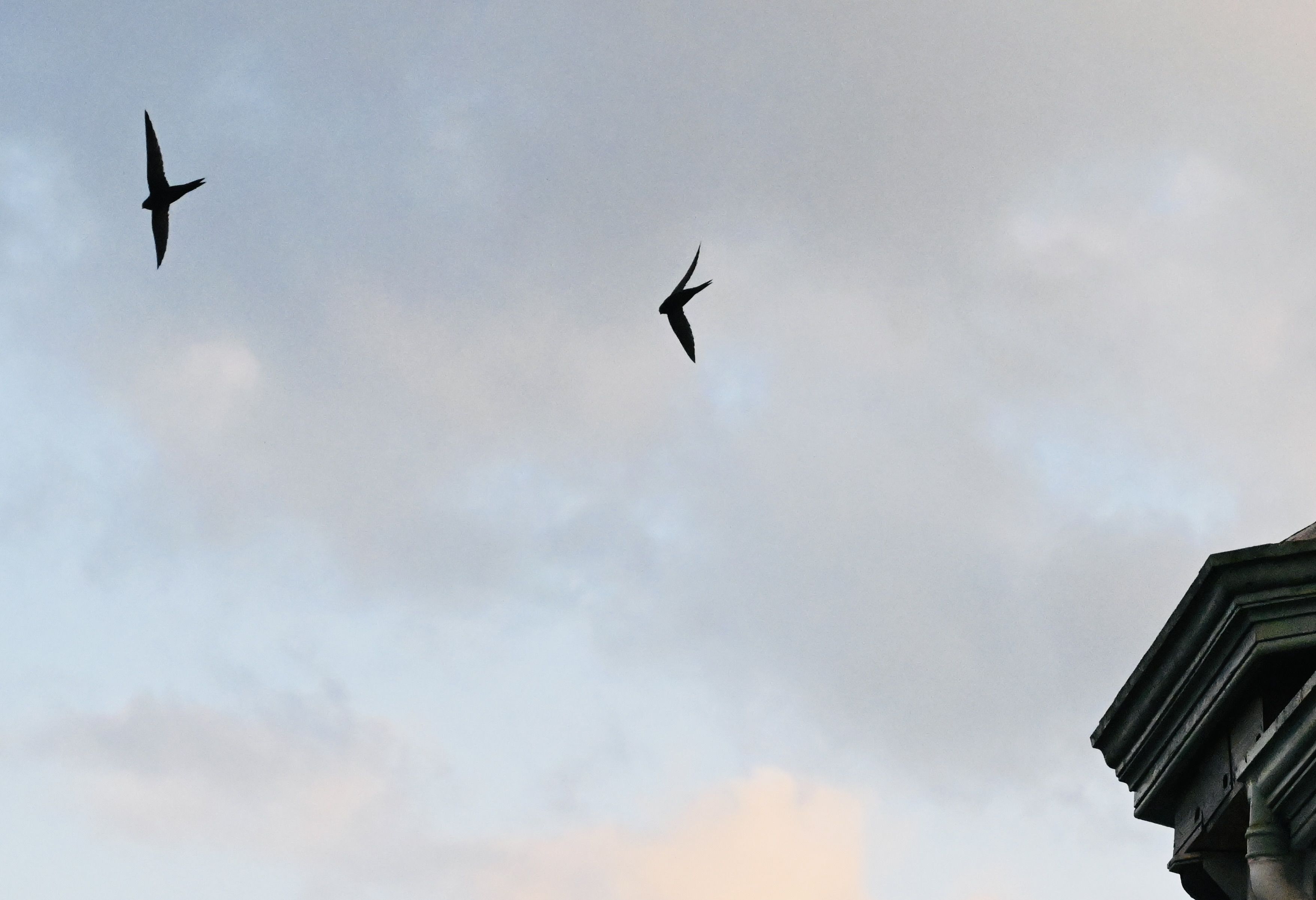
But as the match entered the second half, suddenly his gaze was caught by something more extraordinary and dramatic than any game of football – three swifts had appeared out of thin air and zoomed past the living room window in a flash.
And not even Messi could compete with their grace and skill.
Dúlra forgot about the match and went outside. Dusk was settling and Belfast was quiet in the late June heatwave. Dúlra scanned the heavens for his new visitors and spotted the birds – gabhláin gaoithe in Irish – the distance, high up against the darkening sky.
They had heard his caller – it sends out swift calls constantly, with about 10 seconds of silence between each screech. It can be trying – those shrill calls are drilling into his head now while he’s writing this!

For a bird that only has one call, it could have chosen a sweeter one. Instead it’s like a wailing banshee. You can turn up the volume on the mini-amplifier, but even at full volume, it’s not as loud as the real thing.
On Tuesday night Dúlra watched in awe as the three birds high up in the sky headed directly for him. The calls were blasting out from the bedroom window, just below the three purpose-built nestboxes that have been up now for three or four years without any residents. The three swifts were obviously intrigued.
They were like fighter jets honing in on the house. Swifts can hit 70mph and these birds were at full speed and in full voice. In seconds they were all around the house – and screaming at full volume. They darted towards the boxes; at times it seemed like they were brushing them with their wings.
They actually seemed too fast to stop. Swifts find it hard to slow down – they are built for pure speed. Some birds like the peregrine falcon are faster – but the swift is the fastest of them all for sustained, non-diving horizontal speed.
It was realised only recently that swifts could be attracted to boxes by their own calls. And in many areas that has helped save the bird from virtual extinction as their traditional nest spots are destroyed, often in old abandoned buildings and churches, as well as family homes.
Any roof repairs, and their nest sites vanish.
The problem with finding a new nest site is that swifts put their lives on the line when they touch down on land. They only do this once a year to lay their eggs.
Their bodies have lost much of the requirements for ground living. Their feet barely extend. And their narrow wings mean they can’t take off from level ground.
So they don’t readily enter a nestbox or indeed any hole. For all they know, it could be a hole into an attic and once they hit the ground, they’ll be entombed.
Which is why the callers are great – swifts are called into good nest sites by other nesting birds, and the three swifts at Dúlra’s house believed they were being hailed by a happy resident.
It’s late for swifts to breed – but it’s possible these birds haven’t found a nest site yet, perhaps a pair and a single bird who would find a site and then hope to attract a mate.
The birds stayed in the fading light, zooming around the house like big bats, only disappearing at half-ten on one of the longest days of the year. They finally left to roost, not in a tree or crevice, but high up in the sky, their eyes closed as they float in the air while the city below them sleeps.
Hopefully they’ll return tonight and take that big step, literally, and move into one of the boxes.
Dúlra caught the last few minutes of the match, as Ghana celebrated a draw and England started their usual inquest. But Dúlra’s mind was on other, much more thrilling, things.
If the swifts moved in, it would be like winning the World Cup.
* If you’ve seen or photographed anything interesting, or have any nature questions, you can text Dúlra on 07801 414804.