IT might be boiling hot, but for Dúlra it’s not summer until he hears a certain bird’s voice.
Its call used to roll off the Belfast Hills down to our house in the city every year and whoever heard it first would always shout “Do you hear the cuckoo?” And immediately we’d stop and listen, maybe lean an ear towards the mountain and wait in silence.
And it would always arrive, that famous call loved by people but dreaded by all other birds.
It was the ultimate evidence of the changing of the seasons, that summer had arrived.
The cuckoos of Black Mountain are probably still calling, but Dúlra now finds himself living a bit further away from the hill. And so to get his annual cuckoo fix, he has to travel.

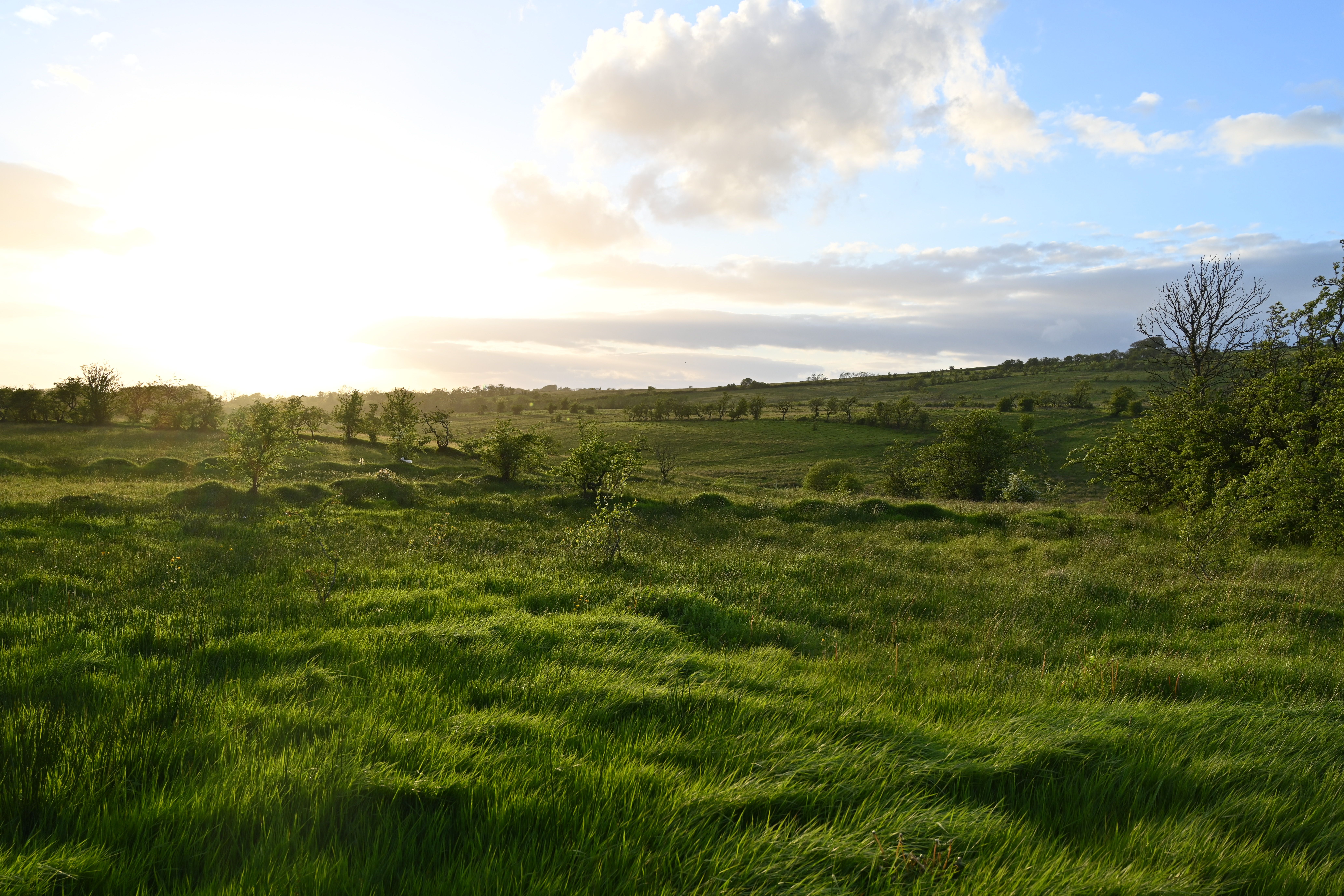
Cuckoos – cuach in Irish – have their own favourite birds, birds that they know will take care of their single, giant offspring better than others. Their all-time favourite host – although ‘host’ infers some sort of co-operation which is definitely not given – is the meadow pipit. And there can be few places with more meadow pipits per square mile than Slievenacloy nature reserve above Poleglass.
You can walk the paths here, but much of the grass is off-limits – abandoned to the birds and a few native cattle. The pipits’ nests might be on the ground, but they’re hidden like treasures. Dúlra has found a few over the years and each one is a wonder to behold – a tiny cup filled with eggs deep down inside a clump of grass or rushes.
There’s no point at all in launching a cold search for one, but occasionally a mother will fly from the nest as you’re out walking, and if you can spot where she rose from, you might be lucky.
Cuckoos are much more cunning, and they’ll watch the parents as they come and go from the nest, before pouncing to lay that single egg.
And so this week Dúlra went up to Slievenacloy, not to see the omnipresent pipits, but in the hope of hearing that elusive sound of summer.
And you’ve got a much better chance out here, where sound travels far. Sometimes when you’re walking on Slievenacloy you’ll hear a person’s voice and look around, thinking they’re beside you, and then realise they’re on another hill half a mile away. And you can actually listen to their conversation!
A cuckoo’s call can travel an incredible two kilometres on a quiet, silent day – it acts like a long-range broadcast to mark territory and attract a mate.
Sliabh na Cloiche – the Hill of the Stone – is full of music. Skylarks called in the sky, stonechats in the ditches and sedge warblers in swamps as Dúlra walked across the fields. Wait a couple of hours for dusk, and the grasshopper warblers will start reeling. There are scores of them here, but they somehow hide in the grass during the day, only venturing out when the sun goes down.
But none of these birds held Dúlra’s attention. He was searching for something else entirely.
He was thinking of calling it a day when he finally heard it. It was faint – but it was clear. The cuckoo must have been on the neighbouring Colin Mountain, but its voice carried in the still air.
We may now be in July, but for Dúlra, summer has just arrived.
• Reader Paddy Mackel reports seeing a fox dandering across the Stewartstown Road just above the Hunting Lodge at 7pm – broad daylight – last Thursday.
“Two cars had to stop to let it cross,” he said. It’s amazing how nature has taken ownership of the city – foxes are common all around Poleglass and on the Belfast Hills, but they’re obviously spreading out and feeling very confident.
And another reader Gerry is blessed to have a couple of young jays visiting his garden – this shy but colourful crow is also increasing in numbers – it was almost non-existent locally a couple of decades ago.
Contact Dúlra on 07801 414804.