DÚLRA learned the lesson early in life and it stayed with him ever since – throw out a few handfuls of finch seeds and these colourful birds will be your companion forever.
This week he counted 17 chaffinches feeding on seeds in his garden. Seventeen! And it all began way back when...
Schoolboy Dúlra was tortured by a mysterious allergy and the doctor told him to go to Ballyowen Health Centre for tests. Every week for a few months half a dozen circles of tiny pricks were made on his forearm, onto which were added a liquid containing things he might be allergic to, like pollens and house dust. If the dots reacted, they’d found the allergy.
When they finally cracked it, Dúlra was stunned – and you might be too, considering what he writes about every week. But he’ll keep that big reveal for the end.

On his way to the Ballyowen, he’d cross the massive empty field that used to be Silver City British army base. He noticed that a flock of chaffinches and greenfinches fed among the grasses and ‘weeds’ here. But one day as he disturbed the flock, he heard another call – a linnet’s.
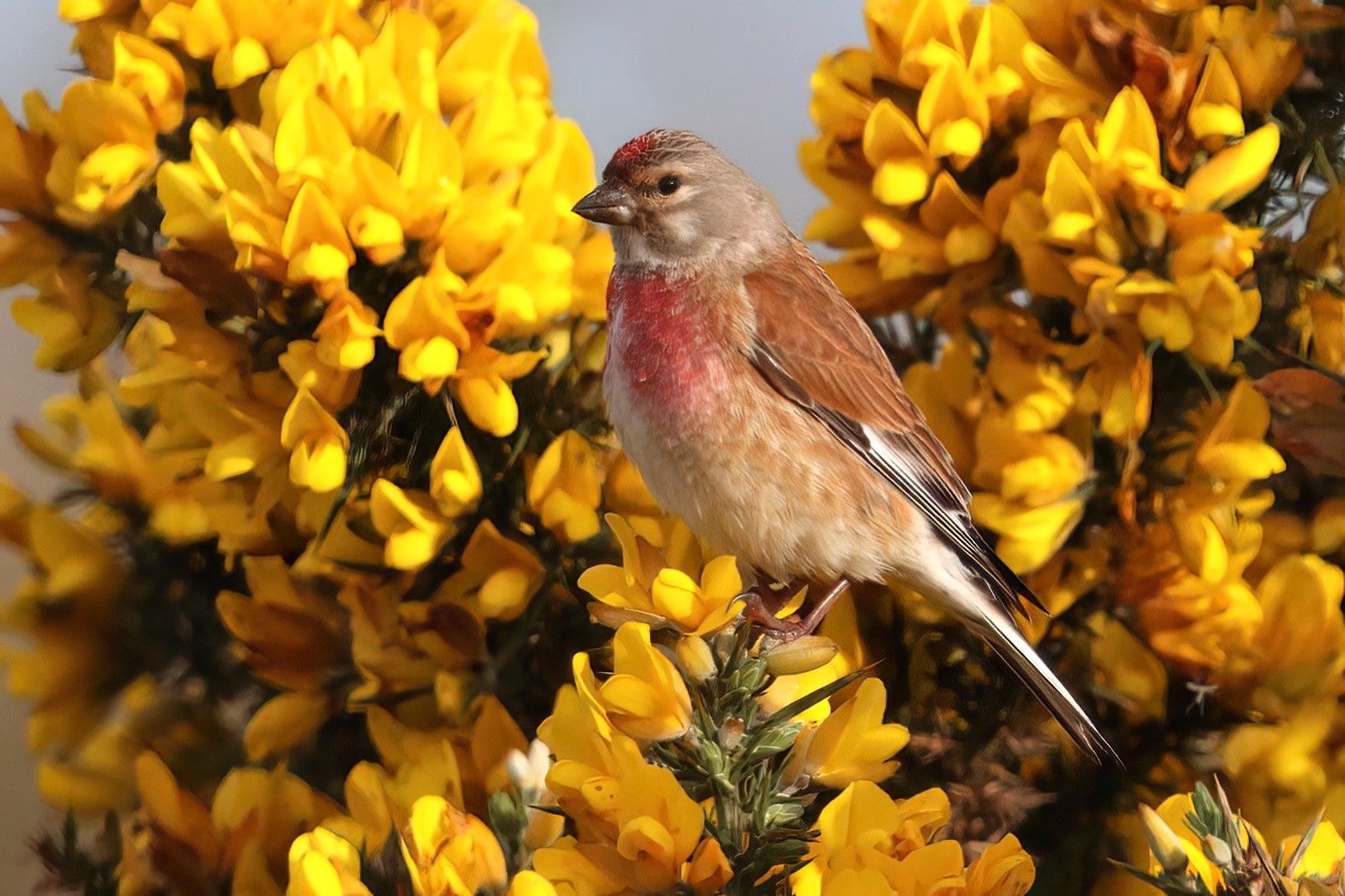
He knew the linnet’s chatter because he had heard it non-stop every weekend for months. It was the bird we wanted to catch above all others. The linnet is a glorious singer, and if it could be bred with a canary to produce a linnet mule, well, you’re talking opera standard. It would be like crossing Elvis Presley with Beyoncé!
Dúlra had the canary waiting for its new mate in a divided cage built for that exact purpose.
That winter, we had spent month after freezing month on the snow-covered slopes of Black Mountain trying to catch one.
We’d set a trap – glue-covered straws that we’d prepared the night before and which we’d lay out on a patch of land a couple of yards square. Then we’d chase the flock of 40 or so linnets all over the mountain in the forlorn hope they’d land on that precise spot.
Pointless wouldn’t do it justice.
It was illegal, of course, but what wasn’t in those days? And in his boyish enthusiasm for birds predated his knowledge of how wrong this was.
But Silver City was, literally, a silver lining. Dúlra thought that instead of chasing the linnets, he could maybe attract them, so he grabbed a handful of canary mix – loved by finches – and spread it every week on the same spot on his way to the Ballyowen.
Soon the flock settled on that patch.
One week he set the trap, and as soon as the birds arrived to feed, he sprinted over. A half dozen of them were stuck to the straws. One at a time he set them free with a rub of paraffin – a chaffinch, another chaffinch, a greenfinch – and then he came upon a small brown-backed bird with a pink chest. It was a male linnet.
The poor bird was destined to be stuck in a cage in a shed for the next year next to a canary it didn’t have any affection for – but when spring came, it sang its heart out in a song so sweet that it turns Dúlra melancholic just thinking about it. In the end he set it free – that was the year trapping birds suddenly became something so alien to Dúlra that it’s hard for him now even to contemplate his actions.
Today, if you want colourful finches in your garden, you just have to scatter some seeds. Dúlra’s 17 chaffinches are evidence of that. As yet he hasn’t any linnets to go with them – or indeed the even rarer brambling – but winter is far from over and we live in hope.
And they finally did get to the bottom of Dúlra’s teenage allergy after months of experimenting with all sorts of ingredients. One particular day the armprick swelled and turned red as soon as the drops were added applied to the skin.
“What’s in those drops?” Dúlra asked the nurse.
“Feathers,” she matter-of-factly replied. “You’re allergic to birds.”
• If you’ve seen or photographed anything interesting or have any nature questions, you can text Dúlra on 07801 414804.