THE Kenova Report adds further substance to the litany of existing reports that over several decades have exposed the extent of British state participation in the murder of citizens.
The Kenova Inquiry commenced in June 2016 and the final report was published on December 9, 2025.
Operation Kenova covered four distinct investigations:
• Operation Kenova – Stakeknife.
• Operation Mizzenmast – The Murder of Jean Smyth-Campbell.
• Operation Turma – The killings of Sergeant Sean Quinn and Constables Paul Hamilton and Allan McCloy.
• Operation Denton – The activities of the Glenanne Gang.
The Kenova Inquiry was prohibited from investigating the contents of some disclosures by MI5 because these disclosures were made late. They were also affected by the Legacy Act 2023. Thus there was no scope for follow-up inquires, witness interviews or other investigation activity. The late disclosures came after:
• The death of Scappaticci.
• The announcement of the Kenova prosecution decision.
• The publication of the Interim Report.
• The entry into force of Part 3 of the Legacy Act 2023.
The Cabinet office held up the release of family reports.
Like many previous legacy inquiries, Kenova faced significant difficulties getting access to relevant material held by MI5. Collusion is not just the occasional use of spies or agents by the British. Collusion is a matter of institutional practice by successive British governments. It has been employed by the British in countless former colonies of the Empire to maintain their control – from Kenya to Malaya to Cyprus to Yemen and many more. Including Ireland.
It meant establishing unionist paramilitary groups here in the early 1970s; the systematic infiltration by the British of all unionist death squads; controlling and directing these groups; arming; training; and providing them with information on people to be killed.
For example, Brian Nelson was highly placed within the UDA and was one of those intimately involved in the murder of human rights lawyer Pat Finucane. The former Commissioner of the London Metropolitan Police Service John Stevens carried out three investigations into Nelson and collusion in the 1980s and early 90s. He reported that Nelson received up-to-date intelligence from his handlers in the Force Reconnaissance Unit (FRU) on those they wanted the UDA to kill. FRU protected him, even after he was arrested as part of the Stevens investigation. Nelson was also central to the illegal importation of weapons from the South African apartheid regime to arm unionist death squads in 1988.
The extent of British control over unionist death squads was later revealed by Stevens when he told a Westminster Parliamentary Committee in May 2011: “Of the 210 people we arrested only three weren’t agents.”
Original documents relating to Stakeknife existed when Stevens began his investigation. Afterwards they were handed back to the MoD and these and other documents relating to other agents were destroyed.
There were a number of official reports by the Police Ombudsman. For example, in 2007 Operation Ballast – a report from the Police Ombudsman into collusion between the RUC and UVF in North Belfast – concluded: “My Enquiries have highlighted collusion, the wilful failure to keep records, the absence of accountability, the withholding of intelligence and evidence, and the extreme of agents being involved in murder. These serious acts and omissions have meant that people have been killed or seriously injured.”
According to the report, UVF leader Mark Haddock was paid at least £80,000 by his RUC handlers. Haddock and other UVF informants were linked to at least 10 murders, and probably more.
It is worth noting that two retired assistant chief constables of the RUC, seven detective chief superintendents and two detective superintendents were among 40 officers who refused to be interviewed by the Ombudsman’s team.
In 2012 the de Silva report into the murder of Pat Finucane was published. It revealed that:
• 85% of intelligence that the UDA used to target people for murder originated from British army and RUC sources.
• Agents working for MI5, RUC Special Branch and Military Intelligence were participating in criminality, including murder.
This issue was also considered extensively at cabinet level and ministers were clearly aware that the agents were being run without guidelines. The director general of the MI5 raised it with the Prime Minister Margaret Thatcher in 1988.
In January 2022, Operation Greenwich was published. It investigated 19 murders in the North West between 1989 and 1993. It concluded that British state forces colluded with UDA gangs in killing citizens. In keeping with the pattern in other investigations, files and intelligence relating to the use and handling of agents were destroyed. The weapons used by the UDA were supplied by Ulster Resistance.
In February 2022, Operation Achille was published. The Ombudsman investigated 11 murders and one attempted murder in South Belfast between 1990 and 1998. The report stated that eight South Belfast UDA members were linked by intelligence to the murders or attempted murders of 27 people. All eight individuals were police informants either at the time of the attacks, or subsequent to them.
The Ombudsman's Report also recorded the “deliberate destruction” of files relating to the Sean Graham betting shop murders; intelligence failures which allowed loyalists to obtain weapons and a failure to exploit all evidential opportunities; the failure of RUC Special Branch to pass on information to investigators; and the continued use by RUC Special Branch of informers involved in serious criminality, including murder.
All of this brings us back to the Kenova Inquiry. Once again we are told that files on the activities of ‘Stakeknife’ have been destroyed or withheld by MI5. British Military Intelligence protected him for decades; funded him; and advised him on hiding assets.
Stakeknife’s handling was directly overseen by the FRU Commanding Officer, supported by an Operations Officer from MI5. In addition, FRU handlers took Stakeknife on holiday when they knew that he was wanted by the RUC for murder. MI5 were aware of this at the time. He was flown by military aircraft and given military identification.
There has been an understandable media focus on Stakeknife and his associates. The use of agents like these has been part and parcel of British strategy in Ireland going back centuries. Undoubtedly their actions were reprehensible and shameful, whether they were cajoled, blackmailed, coerced or bought off. Notwithstanding this, the truth is that the vast majority of republican activists throughout the conflict remained true to their republican principles. Those who betrayed these are the exception not the rule.
We should not be surprised by the Kenova Report. John Finucane, son of Pat Finucane, said it well: “Operation Kenova was deliberately undermined by the British state agency MI5. Operation Denton confirms collusion between British state actors and loyalists. These reports expose criminality, collusion and cover-up at the highest levels of the British State. Only a fully independent, Article 2 Human Rights-compliant, victim-centred legacy process can command the confidence of families.”
•The Kenova Report is 166 pages long and it is impossible to deal with it all in this column. However, it is available on the PSNI website at www.psni.police.uk/about-us/our-publications/ operation-kenova-final-report
2026 step-up in unity work planned
AS 2025 draws to a close the momentum around the demand for Irish unity continues to grow. Last week Sinn Féin’s Commission on the Future of Ireland published its annual report. 2025 was an exceptionally busy year for the Commission, with nine public events hosted in Ireland, one at the European Parliament and 13 events organised by Friends of Sinn Féin in America and Canada. In addition, a national strategic conference was held and a series of internal party discussions took place.
The growth of interest is also evident in the mounting number of motions in local councils, North and South, advocating for Irish unity and the preparatory actions needed to give effect to this.
In the past few months motions have been passed by Dublin, Louth, Leitrim, Sligo, Donegal and Kerry County Councils. Further motions will roll out across the 26 counties in the months ahead. Fermanagh and Omagh Council have voted to establish a formal Working Group on Irish Unity. This will meet in early 2026. Mid-Ulster District Council had a workshop with Professor John Doyle DCU, Dr Karen Bonner UU and Brenda McVeigh (retired Principal Finance Officer Dublin Govt.) on Economic Opportunities and Challenges in Context of UI. Derry and Strabane Council also had a presentation from Prof John Doyle on the economics of Irish unity.
SPEAKER: Professor John Doyle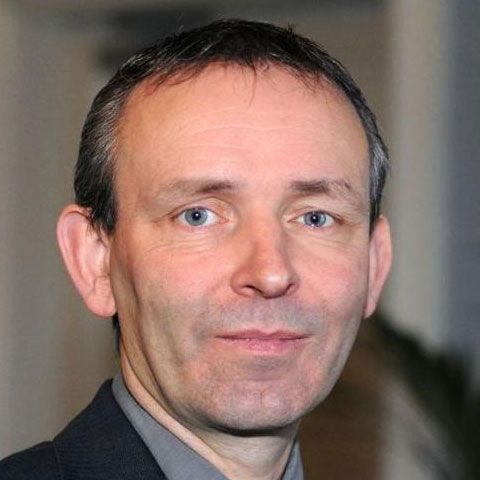

The issue of unity was front and centre during the recent Presidential campaign and in October Sinn Féin proposed a motion in Leinster House and subsequently in the Seanad calling on the Irish government to prepare for unity. It passed in both places.
A programme of work for 2026 is planned, helping to increase the drive around Irish unity.
• ANTI-SEMITISM is wrong. Just like racism, sexism or sectarianism. The attacks on Jewish people on Bondi Beach are shameful. My thoughts are with those who were murdered, the injured, their bereaved families, the wider Jewish community and the people of Sydney and Australia.