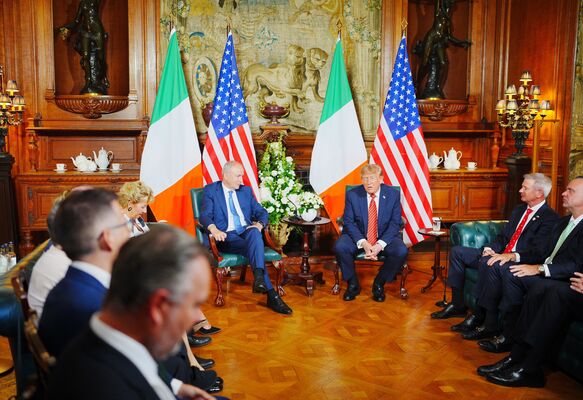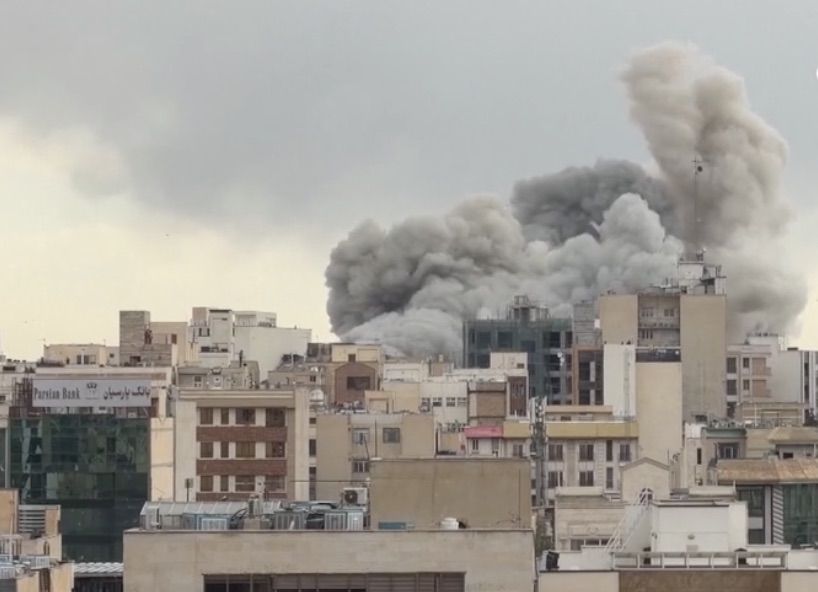
AS I write this, the war declared by President Donald Trump last Saturday against Iran, and his avowed aim of regime change, is continuing as the death toll rises. The US and Israel had clearly been planning this attack for some time. The USA did this as negotiations involving it and Iran were, according to the Oman mediators, making progress.
This war must be condemned. Diplomatic efforts had not ended. There was still hope. President Trump and Benjamin Netanyahu broke international law, ignored Iran’s sovereignty, and destroyed that hope with bombs.
Under the UN Charter, states are prohibited from using unilateral force, except in two cases: (1) when authorised by the UN Security Council; (2) in self-defence. The US and Israel did not go to the UN Security Council ahead of Saturday’s strikes. That only leaves self-defence and that is absent in this case.

President Trump’s first year in this Presidency has been marked by separate attacks on seven countries – Yemen, Iran, Somalia, Syria, Nigeria, Venezuela and Iran again. He is currently starving the people of Cuba and has given the green light to more attacks on Palestinians by Israel. His actions are a fundamental breach of international law and a violation of the United Nations Charter.
Regrettably, governments, like Britain and Germany, which have collaborated in the genocide in Gaza, are backing Trump’s regime change strategy. An Taoiseach Micheál Martin in his response chose to ignore the aggressor role of the USA and Israel and criticise Iran. There is a lot to criticise about Iran but it is a fundamental mistake to be ambiguous about this latest USA aggressive action. Peace and security in the Middle East will not be achieved by unilaterally and without warning attacking another nation. A cessation and diplomacy is the only way forward.
50 years ago the disastrous decision was taken to ‘criminalise’ prisoners
50 years ago on Sunday past I was in Cage 11 in Long Kesh prison camp. It was a Monday. It was also March 1, 1976, the date on which the British Labour government’s decision to end political status took effect.
Political status had been introduced in June 1972 after a hunger strike by republican prisoners and as part of the context for negotiations that were to take place between republicans and the British.
In March 1974 a Labour government, led by Harold Wilson, came to power and embarked on a new strategy to defeat Irish republicans. Ending political status was only one part of it. Laws were changed to allow for ease of convictions in the non-jury Diplock Courts, particularly using beatings and forced confessions. New cellular special control units called H-Blocks were constructed in 1975 in another part of Long Kesh, to house the expected new influx of those now to be designated ‘criminals.’
Merlyn Rees was the British Secretary of State with responsibility for the new ‘Ulsterisation, Criminalisation, Normalisation’ strategy. Its aim was simple; reduce the number of British soldiers getting killed, and replace them with the locally recruited RUC and UDR. In the British mindset local forces were expendable and their deaths less likely to cause a political fuss In Britain and internationally.
Criminalisation was about trying to convince people, especially the nationalist section of our people, that republicans were motivated by greed. That we were ‘gangsters’ involved in a ‘criminal conspiracy’. We were, in the new language of the 70s, godfathers, mafiosi – out for what we could make personally. The British hoped that this new spin on an old propaganda theme would reduce support in Ireland and the international community.
Normalisation was a PR campaign intended to persuade people that life in this part of Ireland was normal – except for the bad republicans.
In apiece I wrote in Cage 11 published in Republican News, entitled ‘Beware the Ides of March’ I wrote: “British Direct Ruler Merlyn Rees’s new act came into being at twelve midnight, and suddenly we stopped being political prisoners. That’s as clear as day. As soon as the legislation came into effect, Irishmen and women in the jails all over the North became criminals. It was like an act of God... Merlyn knows he has the power to change people’s motivation, people’s reasoning, people’s attitudes. All he has to do is get a law passed and we are all compelled to obey it. It’s as simple as that. After all, you can’t support criminals, and there is nothing we poor Irish can do if the mighty British government passes legislation to prove it. Haven’t Merlyn Rees, Harold Wilson, Gerry Fitt, Thomas Passmore, Cardinal Conway, William Cosgrave, Conor Cruise, Ian Paisley and Uncle Tom Cobley and all told us so?”
Unsurprisingly to those with any grasp of Irish history, Rees’s strategy backfired. Seven months after republican political prisoners were labelled ‘criminal’, Kieran Nugent, the first republican to be sentenced under Rees’s new laws, bravely told the prison officers who were trying to force him to wear a criminal uniform that they would have to nail it to his back On another March 1, this time in 1981, Bobby Sands commenced the hunger strike that would result in his death and those of nine others.
It was a turning point in Irish history. Another example of a disastrous policy by a British government that underestimated the courage and resilience of Irish republicans.
Women remain undervalued
THIS Sunday is International Women’s Day. For over 100 years March 8 has been set aside to celebrate women who are active in society: in their communities, trade unions, voluntary organisations, in their families and the political institutions. It is also an occasion when inequalities, injustices and violence still suffered by many women are highlighted. According to one UN report nearly 70 per cent of countries surveyed revealed that women continue to face more barriers than men to accessing justice. And for the 676 million women who live within 50 kilometres of an active conflict zone “justice systems are largely absent and perpetrators act with impunity.”
The reality is that millions of women and girls around the world are confronted by violence, discrimination, and abuse. The United Nations defines violence against women and girls as “Any act of gender-based violence that results in, or is likely to result in, physical, sexual or psychological harm or suffering to women, including threats of such acts, coercion, or arbitrary deprivation of liberty, whether occurring in public or private life.”
Last Saturday 160 primary school girls were killed in a US/Israel attack on their school in Iran. The United Nations estimates that over 28,000 women and girls have been killed in Israel’s genocide against the Palestinian people. Tens of thousands more have no access to health care or personal care because their health service has been destroyed.
Nor should we forget that much of women’s work today is still undervalued and underpaid.
Irish women are still disproportionately concentrated in low-skilled, low paid and part-time employment. Older women are more likely to live in social isolation. Traveller women face higher poverty, mortality and unemployment levels, and lower levels of educational attainment than their settled counterparts. Internationally girls and women continue to face additional issues like female genital mutilation and arranged marriages.
Women on the island of Ireland and all over the world have won many battles for equality over the past century, but there are further battles ahead. The struggle for justice and equality and equal rights will continue.
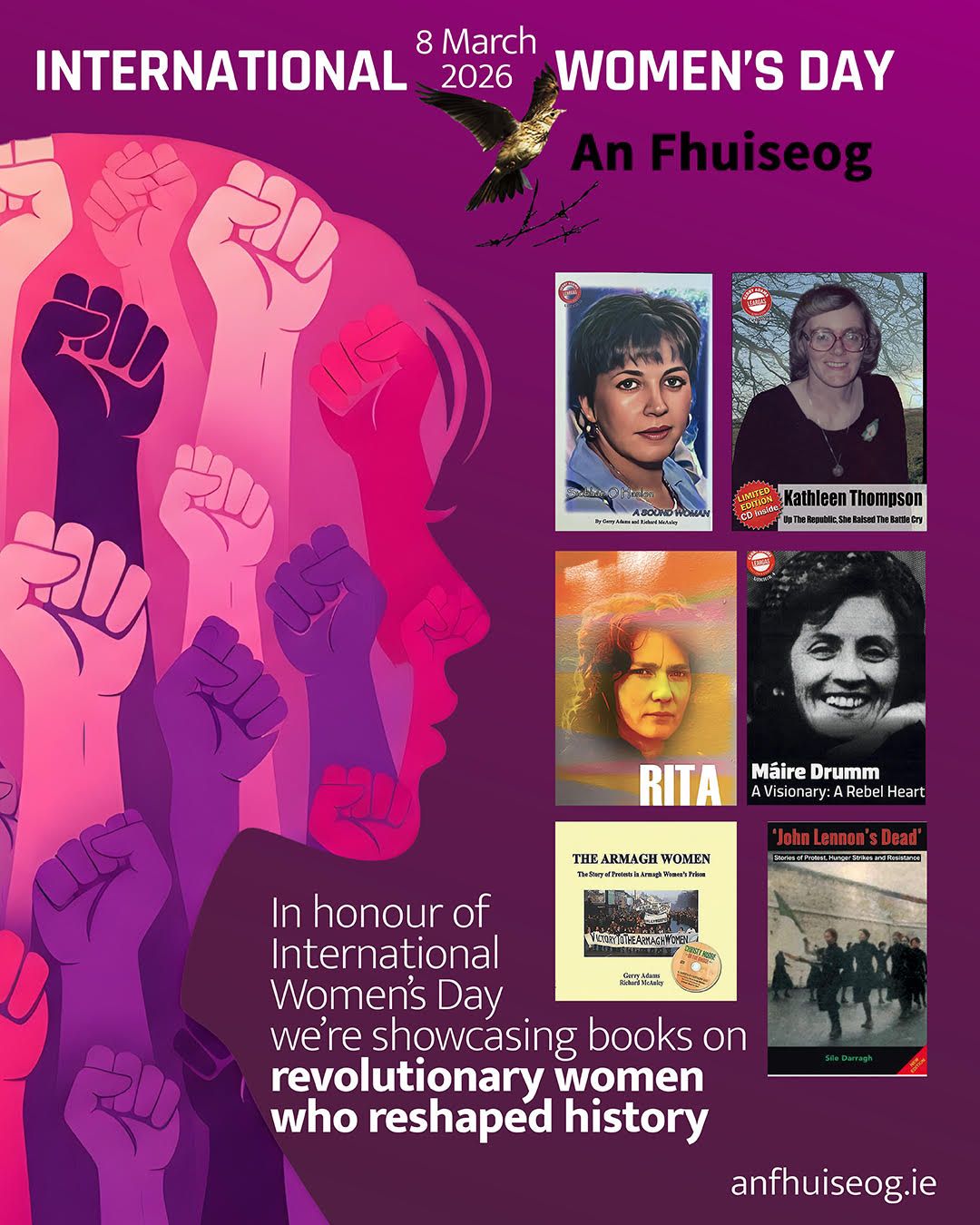
This International Women’s Day, An Fhuiseog at 55 Bothar na bhFál is proud to showcase a powerful collection of books celebrating revolutionary women and authors who have helped reshape history. From fearless activists to inspiring thinkers, these women challenged the world around them and paved the way for generations to come.
It’s important that we take time to reflect on the women who came before us, to honour their courage, recognise their impact, and continue the conversations they began about a future that embraced equality and independence.
50 years ago on Sunday past I was in Cage 11 in Long Kesh prison camp. It was a Monday. It was also March 1, 1976, the date on which the British Labour government’s decision to end political status took effect.
Political status had been introduced in June 1972 after a hunger strike by republican prisoners and as part of the context for negotiations that were to take place between republicans and the British.
In March 1974 a Labour government, led by Harold Wilson, came to power and embarked on a new strategy to defeat Irish republicans. Ending political status was only one part of it. Laws were changed to allow for ease of convictions in the non-jury Diplock Courts, particularly using beatings and forced confessions. New cellular special control units called H-Blocks were constructed in 1975 in another part of Long Kesh, to house the expected new influx of those now to be designated ‘criminals.’
Merlyn Rees was the British Secretary of State with responsibility for the new ‘Ulsterisation, Criminalisation, Normalisation’ strategy. Its aim was simple; reduce the number of British soldiers getting killed, and replace them with the locally recruited RUC and UDR. In the British mindset local forces were expendable and their deaths less likely to cause a political fuss In Britain and internationally.
Criminalisation was about trying to convince people, especially the nationalist section of our people, that republicans were motivated by greed. That we were ‘gangsters’ involved in a ‘criminal conspiracy’. We were, in the new language of the 70s, godfathers, mafiosi – out for what we could make personally. The British hoped that this new spin on an old propaganda theme would reduce support in Ireland and the international community.
Normalisation was a PR campaign intended to persuade people that life in this part of Ireland was normal – except for the bad republicans.
In apiece I wrote in Cage 11 published in Republican News, entitled ‘Beware the Ides of March’ I wrote: “British Direct Ruler Merlyn Rees’s new act came into being at twelve midnight, and suddenly we stopped being political prisoners. That’s as clear as day. As soon as the legislation came into effect, Irishmen and women in the jails all over the North became criminals. It was like an act of God... Merlyn knows he has the power to change people’s motivation, people’s reasoning, people’s attitudes. All he has to do is get a law passed and we are all compelled to obey it. It’s as simple as that. After all, you can’t support criminals, and there is nothing we poor Irish can do if the mighty British government passes legislation to prove it. Haven’t Merlyn Rees, Harold Wilson, Gerry Fitt, Thomas Passmore, Cardinal Conway, William Cosgrave, Conor Cruise, Ian Paisley and Uncle Tom Cobley and all told us so?”
Unsurprisingly to those with any grasp of Irish history, Rees’s strategy backfired. Seven months after republican political prisoners were labelled ‘criminal’, Kieran Nugent, the first republican to be sentenced under Rees’s new laws, bravely told the prison officers who were trying to force him to wear a criminal uniform that they would have to nail it to his back On another March 1, this time in 1981, Bobby Sands commenced the hunger strike that would result in his death and those of nine others.
It was a turning point in Irish history. Another example of a disastrous policy by a British government that underestimated the courage and resilience of Irish republicans.
Women remain undervalued
THIS Sunday is International Women’s Day. For over 100 years March 8 has been set aside to celebrate women who are active in society: in their communities, trade unions, voluntary organisations, in their families and the political institutions. It is also an occasion when inequalities, injustices and violence still suffered by many women are highlighted. According to one UN report nearly 70 per cent of countries surveyed revealed that women continue to face more barriers than men to accessing justice. And for the 676 million women who live within 50 kilometres of an active conflict zone “justice systems are largely absent and perpetrators act with impunity.”
The reality is that millions of women and girls around the world are confronted by violence, discrimination, and abuse. The United Nations defines violence against women and girls as “Any act of gender-based violence that results in, or is likely to result in, physical, sexual or psychological harm or suffering to women, including threats of such acts, coercion, or arbitrary deprivation of liberty, whether occurring in public or private life.”
Last Saturday 160 primary school girls were killed in a US/Israel attack on their school in Iran. The United Nations estimates that over 28,000 women and girls have been killed in Israel’s genocide against the Palestinian people. Tens of thousands more have no access to health care or personal care because their health service has been destroyed.

Nor should we forget that much of women’s work today is still undervalued and underpaid.
Irish women are still disproportionately concentrated in low-skilled, low paid and part-time employment. Older women are more likely to live in social isolation. Traveller women face higher poverty, mortality and unemployment levels, and lower levels of educational attainment than their settled counterparts. Internationally girls and women continue to face additional issues like female genital mutilation and arranged marriages.
Women on the island of Ireland and all over the world have won many battles for equality over the past century, but there are further battles ahead. The struggle for justice and equality and equal rights will continue.
This International Women’s Day, An Fhuiseog at 55 Bothar na bhFál is proud to showcase a powerful collection of books celebrating revolutionary women and authors who have helped reshape history. From fearless activists to inspiring thinkers, these women challenged the world around them and paved the way for generations to come.
It’s important that we take time to reflect on the women who came before us, to honour their courage, recognise their impact, and continue the conversations they began about a future that embraced equality and independence.