RENOWNED Armagh artist John B. Vallely’s latest exhibition 'From Wounded Knee to Gaza' will be on display from Thursday 30 July to Friday 7 August in St Mary’s University College as part of Féile an Phobail.
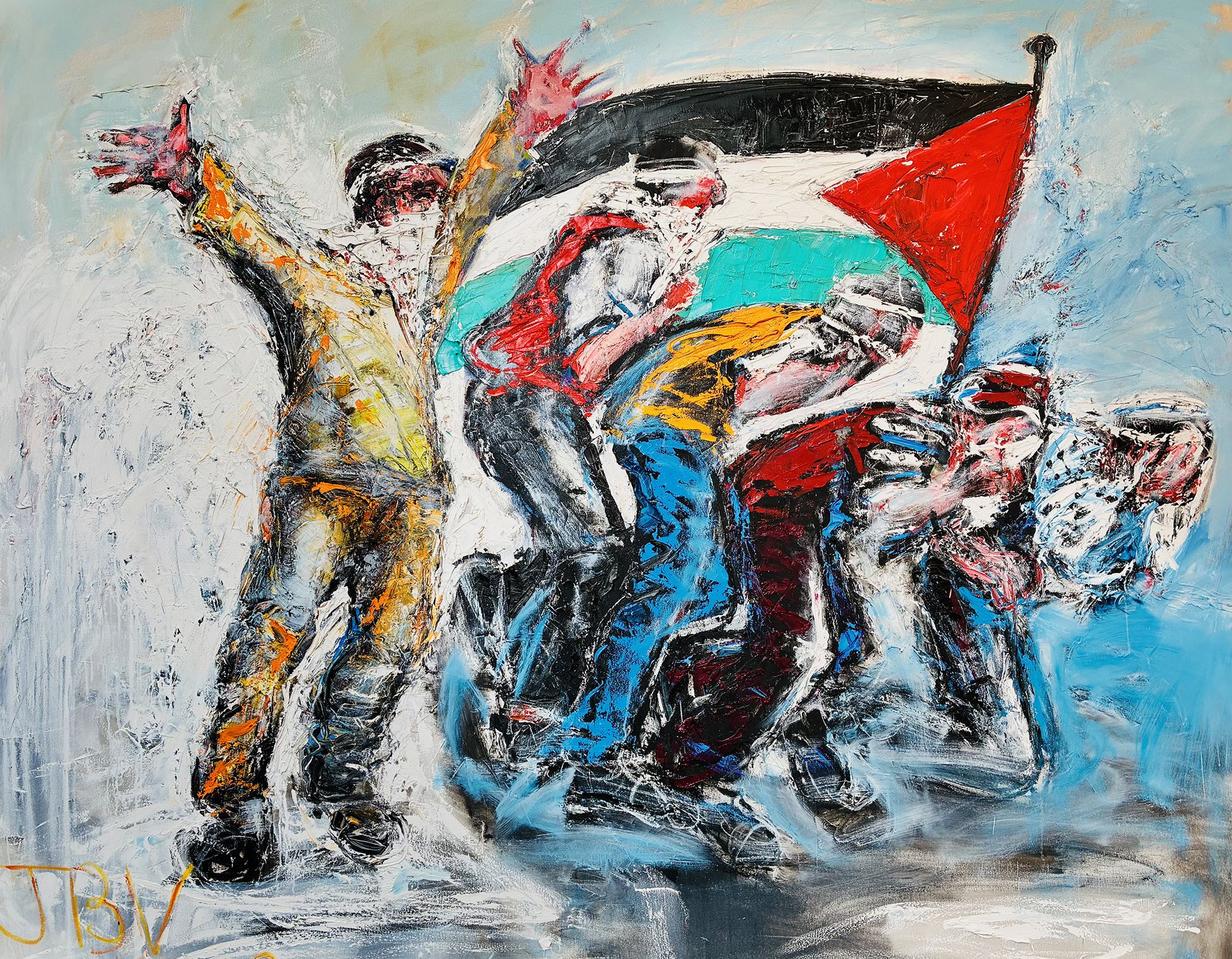
Vallely draws on connections between historical and contemporary human suffering, and explores themes of injustice, conflict and resilience. He compares the Israeli genocide in Gaza with the Wounded Knee Massacre of the Lakota people by the US Army in 1890.
On the 6 August, there will be a special screening of the accompanying film, also titled 'From Wounded Knee to Gaza', produced by celebrated Armagh filmmaker Antaine Ó Donnaile. This will be followed by a panel discussion examining the contemporary political context, the ethical responsibilities of artists, and the role of creative expression in shaping public consciousness and fostering solidarity.
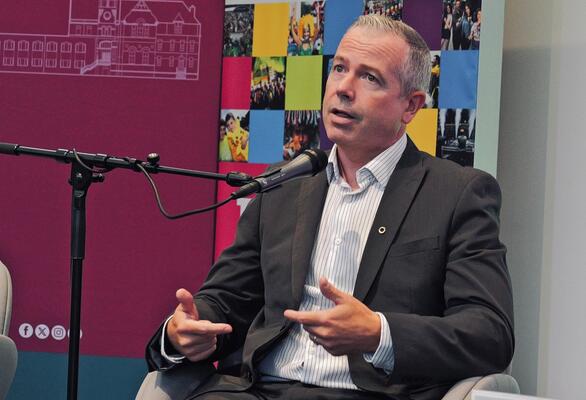
The panel will be chaired by Peter Finn, Principal of St Mary’s College, and will feature JB. Vallely, the director Antaine Ó Donnaile, and the Iranian academic Azadeh Sobout. Sobout is a post-doctoral research fellow at Queen's University and her research engages with questions of culture, identity, and political expression, with a particular focus on how narratives of displacement and resistance are shaped and communicated. She has written about the importance of craft and traditional art as a form of resistance and resilience.
The exhibition brings together work produced over many years, with the piece 'Gaza' dating to 2008. Vallely has long been involved with solidarity struggles, was imprisoned for taking part in civil rights protests in the late sixties, and was a founding member of the Armagh Palestinian group.
“I’m very involved in support for Palestine, and I’m also very interested in the genocide of the American Natives, and it all just came together for me one day and the concept of From Wounded Knee to Gaza hit me like a train," he said.
“Wounded Knee was a genocide of the native people by white colonisers from Europe and what’s happening in Palestine is exactly the same.”
Antaine Ó Donnaile said that it was a privilege to showcase the work of JB Vallely.
“Brian had been sending me photographs of works in progress that he was doing in his studio for this series, From Wounded Knee to Gaza," he said. "Brian is 85 this year, he’s one of the most important painters in Ireland and combines culture, sport, music and the arts, and it’s a really important legacy series that he’s doing at the minute. So I thought it would be an awful pity not to film him doing it."
Vallely and Ó Donnaile spent a number of days together recording the film.
“Brian has always been on the side of the underdog," adds Antaine. "He celebrates the best in people, so it was a real privilege to be there, to see him and smell the oils, and be part of that in his studio.”
There are many stories told in the nineteen paintings of the exhibition, including that of Zintkála Nuni who was found alive as a baby, still strapped to her dead mother’s body four days after the Wounded Knee massacre. As nothing was known of her identity, she was named Zintkála Nuni — Lost Little Bird.
Vallely draws a striking parallel between Zintkála Nuni’s story and that of five-year-old Palestinian girl Hind Rajab whose story was documented in the film ‘The Voice of Hind Rajab'. Little Hind spoke for three hours to dispatchers of the Palestinian Red Crescent Society, slowly dying in a car beside six relatives following an attack by Israeli tanks. She told the dispatcher her class in school was called ‘the Butterfly class' and Vallely has drawn on this image poignantly in his works A Little Butterfly Named Hind Rajab, The Butterflies of Gaza, and Butterflies Soar in Gaza.
Despite the Red Crescent pleading with IDF soldiers to be allowed to send a nearby ambulance to rescue Hind, they refused and moved tanks up close to the destroyed car. Eventually, Hind went silent and it was later determined that the IDF had fired at least 335 high-velocity rounds into the car. The IDF also killed the two paramedics who attempted to save Hind and her family.

Zintkála Nuni - the Little Lost Bird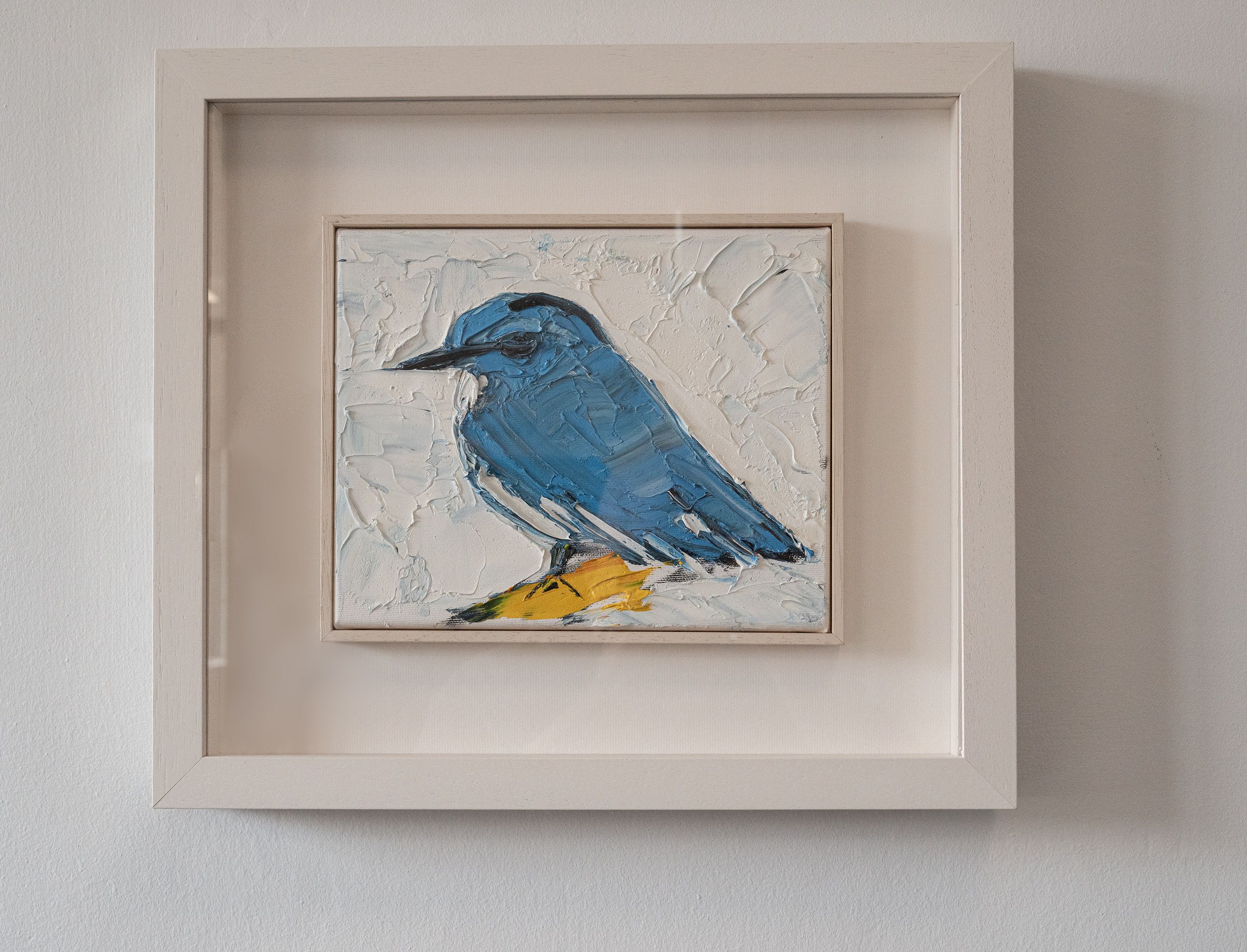

Vallely is firm on the role of the arts in giving a voice to the voiceless.
“I think creative people – writers, artists, musicians – have a duty, and a right, to speak out. We shouldn’t be defined by convention, and we shouldn’t be afraid.”
He is joined in these convictions by Ó Donnaile.
“If you influence one or two people, you can change mindsets. You can live it in your own life as well. I’m reminded of the Dunnes Stores workers who started the strike during the apartheid struggle. They were battling on their own for many years and ended up changing the law, and are now celebrated as a great example of how grassroots activism can have a great impact.”
And Vallely believes that the Irish people naturally identify with oppressed people around the globe.
“I think Irish people, because of centuries of oppression, are inclined to identify with the underdog, and that’s what’s happening here. We don’t identify with the big and the powerful and the rich.
John B. Vallely’s exhibition, From Wounded Knee to Gaza, will be on view from Thursday 30 July to Friday 7 August in St Mary’s University College. The accompanying film by Antaine Ó Donnaile will be screened in St Mary’s on Thursday 6 August at 5pm and will be followed by a panel discussion.