YOU heard ‘All I Want for Christmas is You’ when you started your supermarket shop in the fruit and veg aisle an hour ago, and 40 minutes later as you’re headed towards the check-out with trolley loaded, you’re hearing it again. You’ve come to the end – or is it the start? – of the dreaded Festive Season Loop.
We can blame the shops and the shopping centres for churning out the same list of songs in different order every year, but the truth is that they’re only giving us what we want. And the truth is that you love All I Want for Christmas is You, even if you’d much prefer to hear it while sitting under the Christmas tree with your feet up and a glass of something hot and mulled.
I give you All I Want… as an example of the Loop because it’s probably the most modern of the songs which absolutely, defintootly find it on to every classic Christmas playlist. It probably hasn’t occurred to you as you listen to Rockin’ Around the Christmas Tree for the 30th time this year, but the fact is that we don’t like anything new at this time of year. It’s all about tradition and familiarity. Which is not only why no new Christmas songs make the charts, but also why artists don’t even bother writing them any more. Mariah Carey’s festive firecracker was a hit in 1994 and if, like me, you waved farewell to 50 some time ago, you still gasp on realising just how long ago the 90s were; and you’ll cough up your egg nog when you do the math, as Mariah would say, and realise that All I Want for Christmas is You is 31 years old.

So while contemporary artists have given up on Christmas as a source of income, those who hit the jackpot all those decades ago are continuing to coin it in as our appetite for cosily familiar festive musical fear gets bigger year by year.
Here's a list of the ten songs that music lovers (or just Christmas lovers) put at the top of the Christmas royalty payments tree.
10. Stay Another Day. East 17. 1994.
Another young oldie, Stay Another Day is, on the face of it, as far from a Christmas tinsel-and-snowballs standard as you can get. The song was co-written by band member Tony Mortimer, and is about the death by suicide of his brother Ollie. The Christmas bells were added to the end of the song to make the most of the Christmas market and the boys recorded a festive video complete with snow and white anoraks. It did the trick. It’s estimated that the song earns Mortimer and his co-writer around £120,000 per year.
9. Mistletoe and Wine. Cliff Richard. 1988.
The song was a number in a moderately successful musical called Scraps (aka The Little Match Girl). Mistletoe and Wine was meant as a heart-tugger, sung ironically when the little girl of the second title is kicked out of the poor house into the snow. By the time the musical was made into a TV film it had become a rousing drinking song. Cliff spotted the potential and when the writers allowed him to change the words a bit to accommodate his Christian beliefs, a Christmas, ahem, classic was made. It was particularly successful in Ireland, where it spent four weeks at No.1. The song fetches around £150,000 a year for Cliff to praise God with.
8. 2,000 Miles. The Pretenders. 1984.
Ten years before East 17 made a Christmas hit out from tragedy, The Pretenders led the way, vocalist Chrissie Hynde writing 2,000 Miles about the death two years earlier of the band’s guitarist James Honeyman-Scott of a drug overdose. This song, though, is by its lyrics very identifiably a Christmas song, telling as it does of missing Honeyman-Scott while the snow is falling and people singing Christmas songs. 2,000 Miles bring Hynde around £170,000 a year in royalties.
7. Stop the Cavalry. Jona Lewie. 1980.
An unexpected Christmas winner for two-hit wonder Lewie (he also did You Will Always Find Me in the Kitchen at Parties). Stop the Cavalry was kept off the number one spot by the St Winifred’s School Choir with Grandad, and by Imagine, reissued that year after the murder of John Lennon. Lewie says he didn’t write the anti-war song specifically about Christmas, but Stiff Records homed in on the ‘Wish I was at home for Christmas’ line, added bells (East 17 anyone?) and the result was a rather quirky Christmas keeper. Lewie finds somewhere in the region of £200,000 in royalties in his Christmas stocking.
6. Wonderful Christmastime. Paul McCartney. 1979.
The Christmassiest of Christmas songs, as much loathed as it is loved, the Irish and British public didn’t much get it on its initial release and it limped into the charts both here and across the pond. But in subsequent years the song gathered popularity, reaching higher positions, including No.1, in a number of countries at different times. The relentlessly upbeat song was unusual in being released as a standalone single without being included on any album. Despite being detested by many McCartney and Beatles fans, McCartney carries his disappointment every year to the bank, where he deposits a quarter of a million smackers in royalties.
HARD WORK: Shane MacGowan worked on Fairy Tale of New York for two years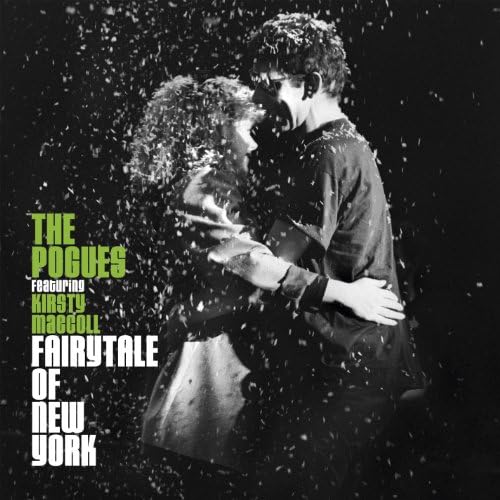

5. Last Christmas. Wham! 1984.
Although the song was released as a Wham! single, Andrew Ridgeley played no part in the writing or recording of the mahoosive hit, which was all George Michael’s work. The song was beaten to the Christmas No.1 spot by the charity single Do They Know It’s Christmas? – which – altogether now! – George Michael also performed on. In the 40 years since it was a hit, Last Christmas has been in the charts 14 times, including five consecutive Top Ten placings between 2016 and 2020. The song contributes some £300,000 annually to the estate of the late, great George.
ONE-MAN SHOW: Last Christmas is credited to Wham! but it's entirely George Michael's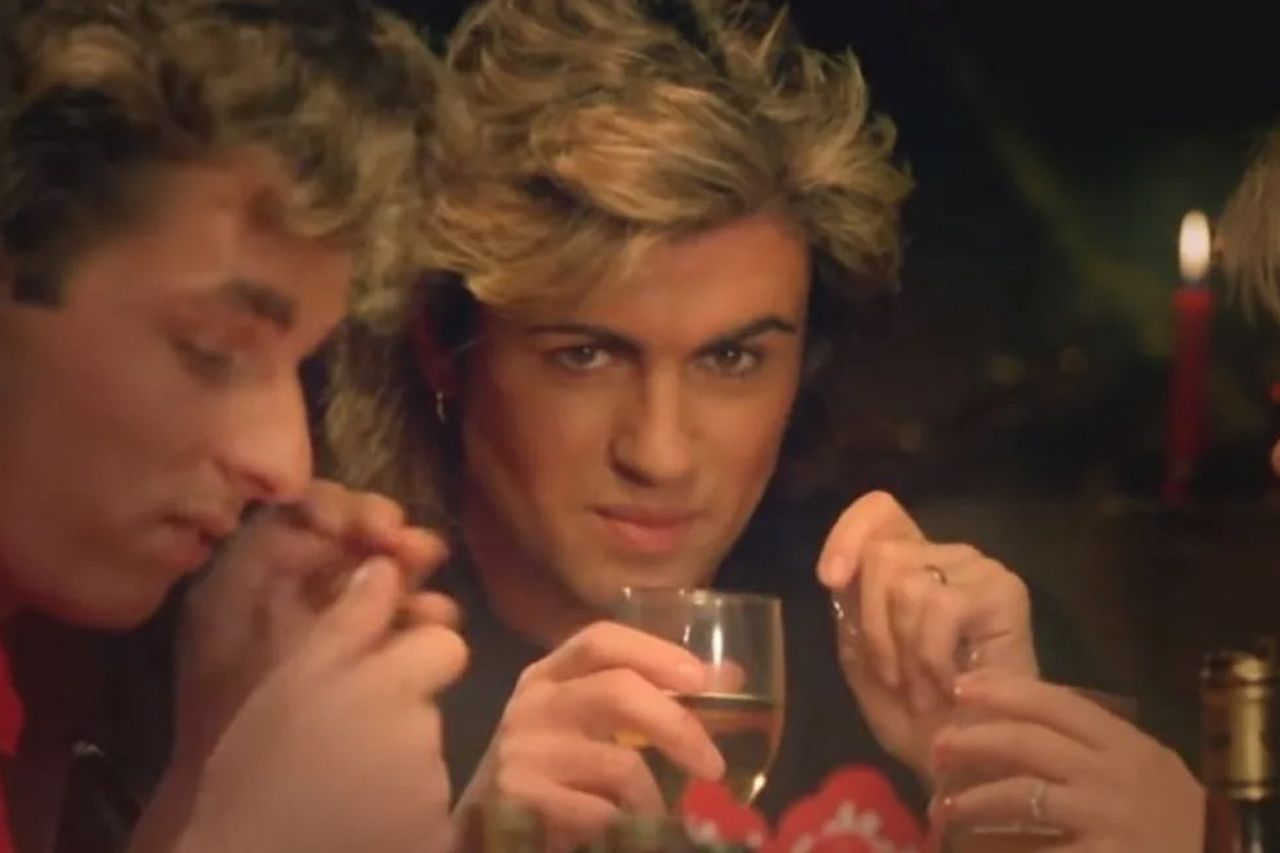
4. White Christmas. Bing Crosby. 1942.
White Christmas, as we all know, was written for the famous movie, White Christmas. Just kidding. It was actually written for the movie Holiday Inn (White Christmas was made fully 12 years later). One of the most performed songs of all time, Crosby’s version remains the best-selling single of all time (in hard copy), with over 50 million sales worldwide. White Christmas is a contemporary anomaly as it’s a Christmas song that is entirely secular, with no mention of the Bethlehem, the Baby Jesus, Joseph, Mary, or indeed the wee donkey. Today, of course, that would make it part of the Woke War on Christmas. Writer Irving Berlin would be £350,000 to the good every year if he were still alive – and if royalties didn’t stop being payable 70 years after the recording.
WELL I NEVER: Here's White Christmas being performed in... White Christmas, but it was first seen in Holiday Inn some years earlier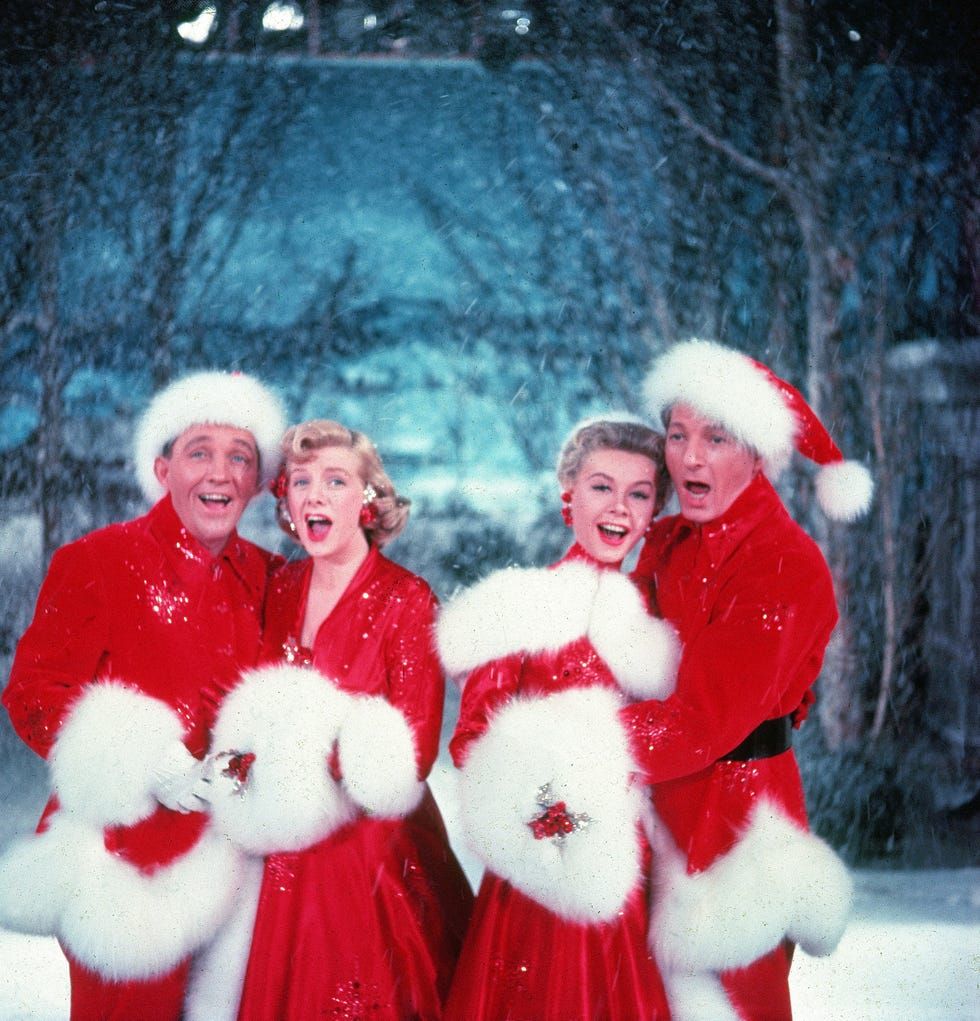
3. All I Want for Christmas is You. Mariah Carey. 1994.
Did you know that a bloke wrote a song called All I want for Christmas is You four years before Mariah Carey co-wrote her Christmas classic? And did you know that he waited until 1922 to sue? Which is one of the main reasons Andy Stone’s claim was unsuccessful. La Carey isn’t as careless with the lorryloads of money she makes from the ultimate festive floorfiller. She has posted a video every year since 2019 declaring the Christmas season started and giving ‘permission’ for her song to be played. Christmas doesn’t start for Mariah at Midnight on December 1. It starts at midnight on November 1. Little wonder we throw £380,000 in her direction every (lengthy) Christmas.
2. Fairy Tale of New York. The Pogues. 1987.
The iconic duo of Shane MacGowan and Kirstie MacColl are no longer with us, but it’s as true as it’s corny to say that their musical argument will stay with us for as long as Christmas trees have tinsel. MacGowan and Pogues colleague and co-writer Jem Finer began writing the song in 1985, but spent two years leaving it and going back, with several rewrites and aborted recordings before it was finally handed over to the world, only to be kept from the Christmas No.1 spot by Always On My Mind, The Pet Shop Boys’ lowest musical point, imo. Fairytale of New York has become the unofficial starting gun for Christmas, and when the gunsmoke clears and we uncover our ears, Finer and the estate of MacGowan are £400k to the better.
1. Merry Christmas Everybody. Slade. 1973.
In a real Battle of the Christmas giants, Noddy Holder’s festive monster hit beat Wizzard’s I Wish It Could Be Christmas Every Day to the No.1 spot. Holder wrote the song in 1969 under the title Buy Me a Rocking Chair, and it came back into his head when the by-now phenomenally successful band were scratching around for a song to attack the 1973 Christmas charts with. The title was changed, the lyrics Christmasfied – and unto the world a classic was born. Slade were so popular that year that on the day before their Christmas hit they were awarded a silver disc by the British Phonographic Industry for pre-order sales of a quarter of a million. Double that figure up to half a million and that’s how much Sterling Noddy stuffs into his top hat every Christmas.
• The Performing Rights Society are professionally coy when it comes to revealing what their members trouser over the Christmas period – or indeed over any period – so the following figures are approximate and have been culled from a number of sources including the BBC, RTÉ, the Independent, Wikipedia, NME, the Irish Times.