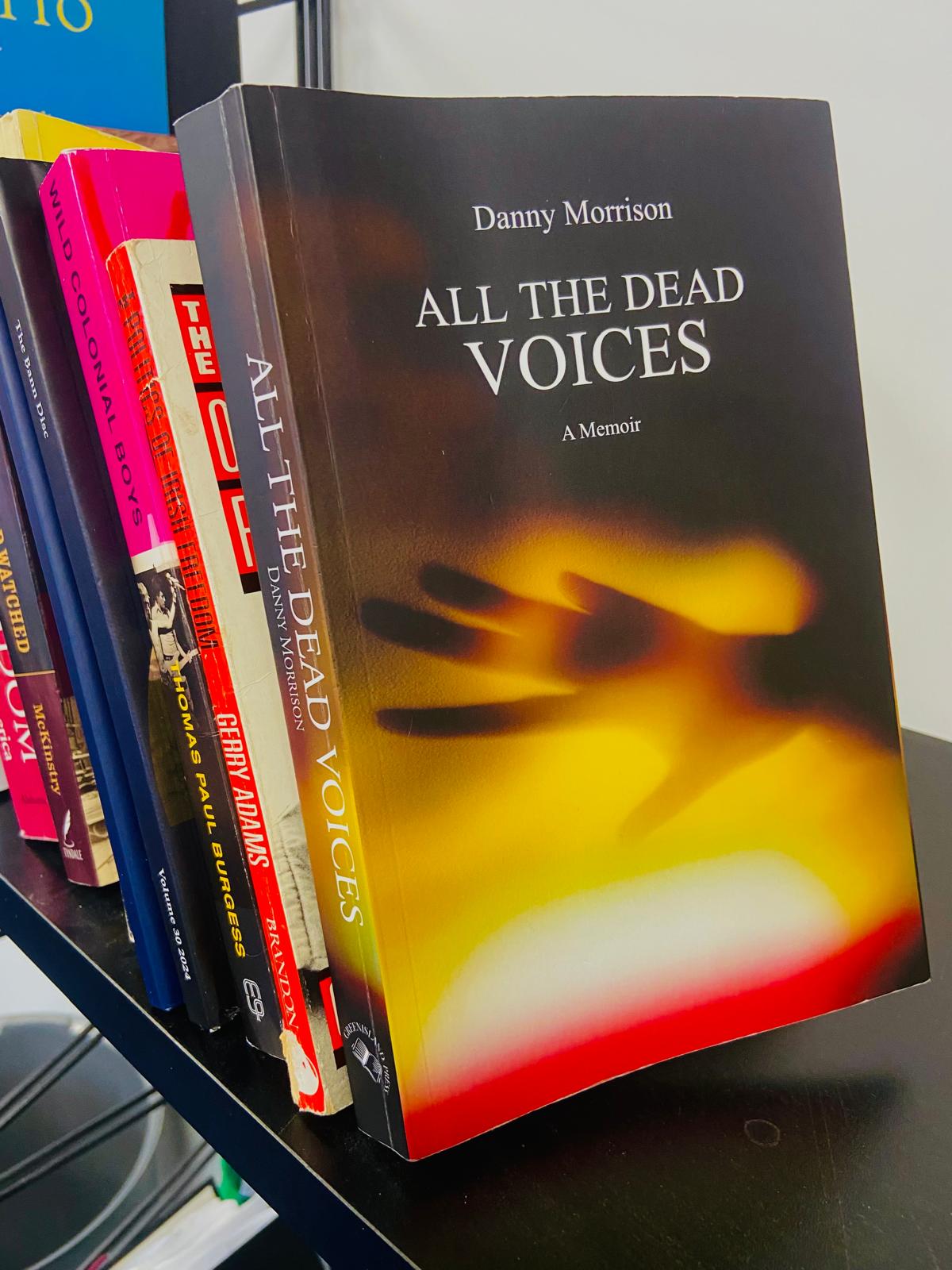
All the Dead Voices - A Memoir. Danny Morrison. Greenisland Press.
We don't tell our own stories often enough - but then when wars end in messy circumstances, some truths must remain mute.
A further complication when we Irish are writing our memoirs is that we are less than verbose when it comes to talking about loss. The Yanks tell us that it's good to talk — many's the therapist's bank account concurs — but it's part of our condition not to talk about the deepest scars on the heart. Or maybe just an Irish coping mechanism. Either way, we have a dearth of literature which deals with our 30-year, all-nighter in the Garden of Gethsemane.
So cue a deserved drumroll for a new opus from Danny Morrison who has crammed many lifetimes into one — most of which feature in part in this overdue offering.

Danny Morrison has a unrivalled story of risk and derring-do to tell but, in a time of the state's unsettled scores, discretion dictates that his memoir must be limited.
But of course, that places no limits on his evocative portrayal of young love in sixties Belfast or his lively accounts of life on the edge in a city where warfare lived cheek-by-jowl with lives unaffected by tear gas, P-checks or house raids on the other side of the planet. In Bangor, say, or Ballyhack.

A wannabe journo who dropped out of college to sign up post-internment, the author would go on to become the best-known and certainly the cheekiest face of Sinn Fein in the white heat of the war - no doubt those who authored the 1988 Broadcasting Ban had his wholly unapologetic and unanswerable defence of the IRA's campaign slap-bang in their sights.
And yet, there is little politics in this memoir, one of its many strengths. The author is strongest when he is relating his own lived experiences, prosaic or powerful. And yet, this work wanders far and wide, excavating the history of his famed republican uncle Harry White and even as far as his Canadian in-laws.
But back home is where the heart is. The Night of Auld Lang Syne section in particular will resonate with readers who have experienced that nether world in which we once lived, poised between delightful normality — a New Year's Eve sing-song — and surreal normality, bracing for a deadly prison protest in the coming year of 1981.
"At midnight the musicians played 'Auld Lang Sang' and we got up and linked and sang heartily. To my right I discovered that I was linked to Nora...and for a guilty moment I was able to forget that eight miles away three hundred men were lying in the H-Blocks, still on the blanket and for some a clock was ticking."
THE WAY WE WERE: Céilí na Cásca, 1980, Collette Adams, Tom Hartley, Gerry Adams, Danny Morrison, Peadar Hartley 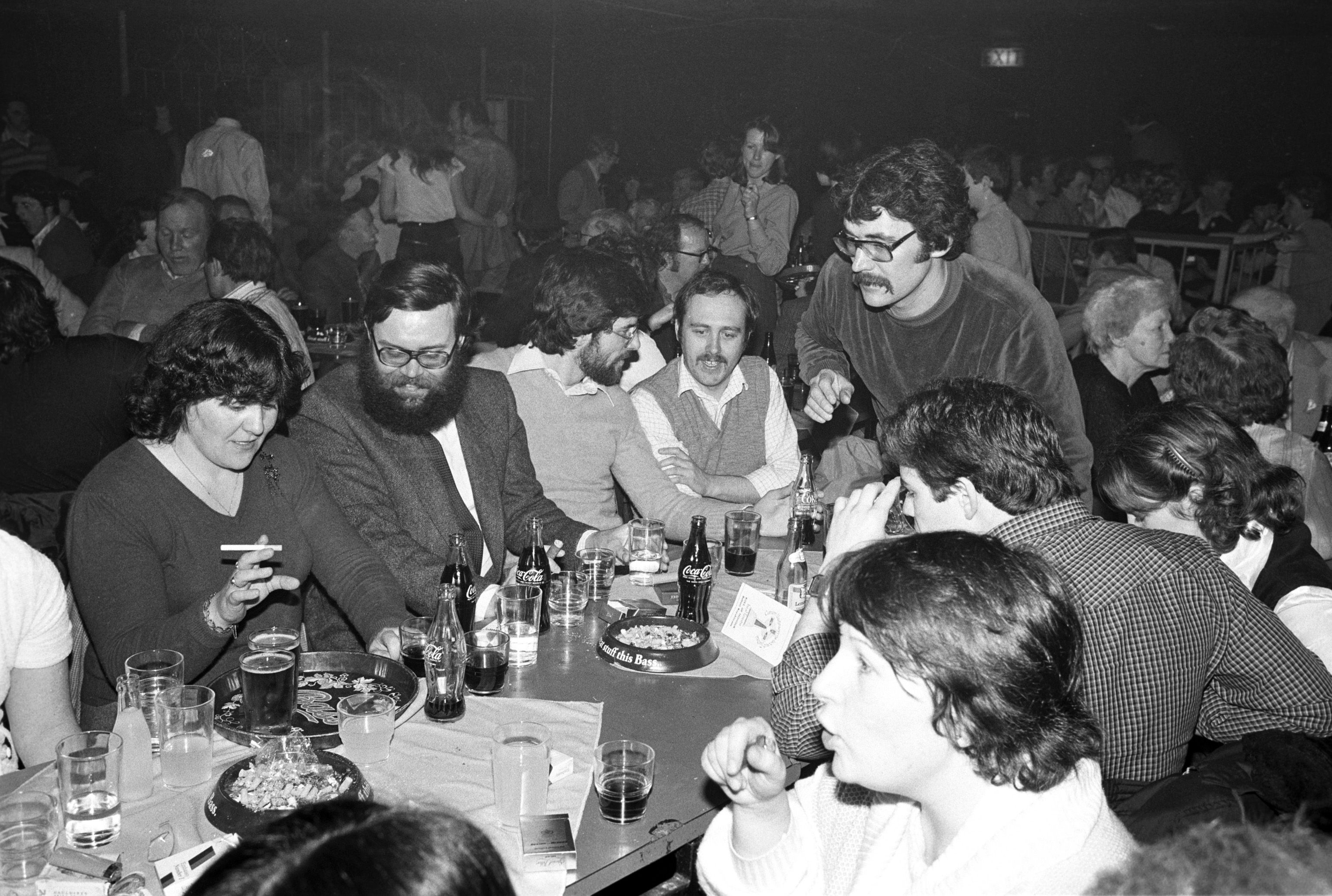
Like the photo albums and newspaper clippings which trigger much of his reminiscing on these pages, that image is weighted with the sadness which pervades almost every memory our community has of our painful past.
The same passage continues: "Just after 5am on Wednesday, 8 July, we received news that the fifth hunger striker Joe McDonnell had died. I went to the Republican Press Centre on the Falls Road to deal with the media. The eight o'clock news was on the radio when a dull shot rang out......I ran out to see what was happening and found a small crowd around a body lying on the ground...'The fucking cops just opened fire for nothing!' I was told..The victim had been shot in the face...Only later in the day did I learn that the woman lying in Linden Street had been Nora."
While a poignant poster-poem now marks the site on the Falls where Nora McCabe was shot dead by the RUC, 'All The Dead Voices' ensures too that this mother-of-three is not forgotten. Can a work of memoir have a greater calling?
As the author himself says, rounding off an emotional recounting of the short but sparkling life of IRA volunteer Jimmy Quigley, shot dead by the British Army in 1972. "Jimmy lived on in the thoughts and on the lips of his mother, his brothers, his friends and comrades..." So do many others in this retelling of times past.
There is, of course, an afterlife to all these echoes of terrible times and we are invited along to Danny Morrison's more recent treks to graves of revolutionaries and writers - often both - and, finally, on a glorious cycling camino through Galicia, my fave part of this journey.
The past is, of course, the past. And life is for the living. Nevertheless, 'All the Dead Voices' affirms my conviction that there is a great peace to be found in looking back without rancour on the troubles we've known. Amen to All The Dead Voices.
'All the Dead Voices' is available from An Ceathrú Póilí bookshop in An Chultúrlann and from all good book stores or direct from Greenisland Press.