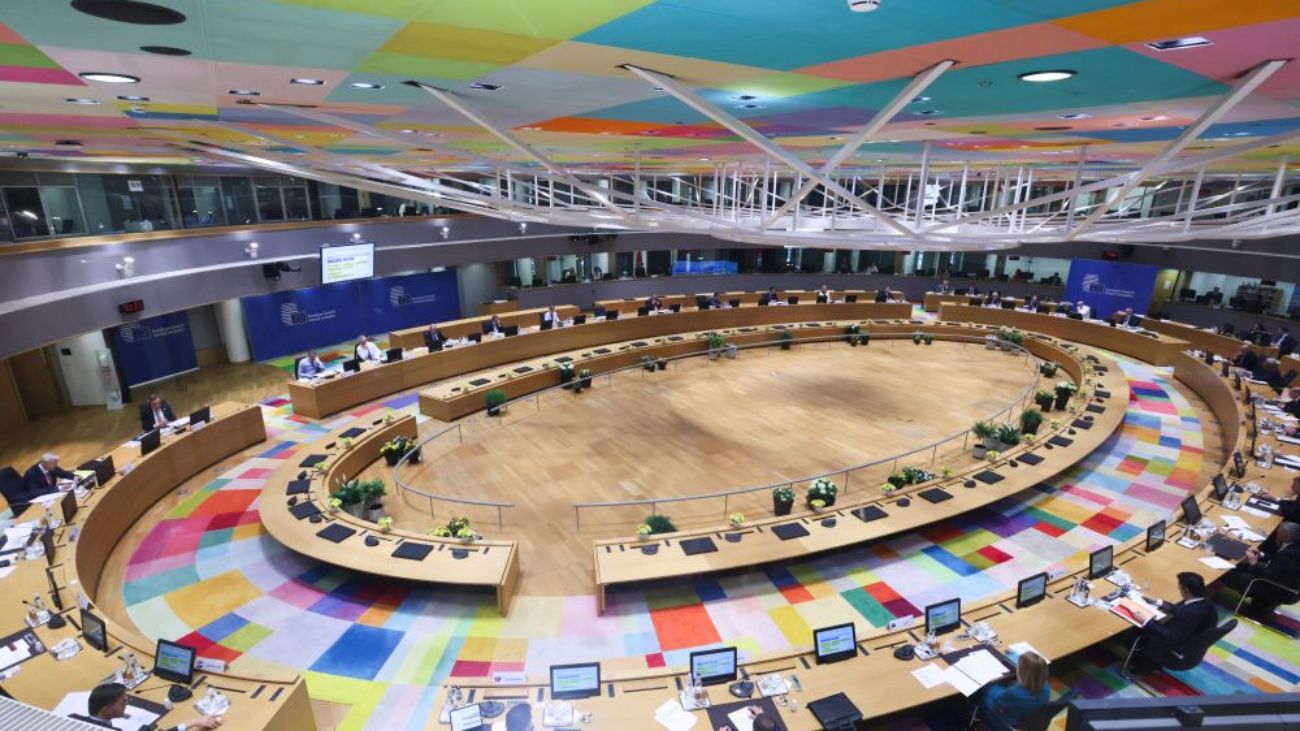
ON July 1 the Irish government will assume the Presidency of the Council of the European Union. This will be its eighth time holding this key administrative and political role within the EU and the first time since Brexit.
The agenda for this Presidency is enormous and will affect all of our lives. It will include new legislation as well as significant negotiations around all of the major national and international issues affecting the world at this time – the Israeli genocide in the Gaza Strip; the war in Ukraine; Venezuela; threatened US Foreign Policy adventures toward Greenland; Cuba; Colombia; Nigeria; Iran; famine in Africa; climate change; migration.
An Taoiseach Micheál Martin has defined the state’s Presidency of the EU as “a Presidency defined by action”, which sounds impressive, but so far no-one in the Irish government has said anything about using this unique opportunity to raise the issue of Irish unity. Thus far, Micheál Martin’s approach to Irish unity can best be described as “a leadership defined by inaction”.

Unity is the most important issue facing the people of Ireland at this time. Momentum around it has grown enormously but Micheál Martin refuses to prepare for Unity. And thus far there has been no evidence that he will use the EU Presidency to talk to our European allies about constitutional change on this island as set out in the Good Friday Agreement. This is a mistake.
In our submission to the government’s programme for the Presidency, Sinn Féin urged it to make reunification a central political priority. The 2017 decision by the EU, that all of the island of Ireland automatically becomes part of the EU in the event of unity, was a significant decision. In addition, polling by Amárach Research for the European Movement Ireland shows strong majority support, North and South, for a united Ireland within the European Union.
We are just two years short of the 30th anniversary of the Good Friday Agreement. The EU Presidency provides a historic opportunity to put Irish unity on the European and global agenda. Seanadóir Conor Murphy put it well recently when he said: “It is essential that the groundwork for unity begins now to avoid uncertainty and ensure a peaceful, democratic transition to a united Ireland within the European Union. A united Ireland within the EU must be a central political and policy priority of Ireland’s EU Presidency in 2026.”
Micheál Martin’s fence-sitting on Mercosur is a blow to his credibility
THE European Commission has backed a free trade agreement with Argentina, Brazil, Paraguay and Uruguay. The European Parliament is set to decide on the future of the Mercosur Agreement. It has taken 25 years to get to this point. The European Commission has decided to support this proposition and the smart money says the Parliament will follow suit. But perhaps not.
It’s not over until it’s over. There will be a legal challenge to the deal, including Sinn Féin’s MEPs, and a vote in the European Parliament. Sinn Féin is also bringing forward a Dáil motion calling on the government to support the legal action and mandating all MEPs to vote against the deal.
IRELAND SAYS NO: Independent Ireland TDs Michael Fitzmaurice and Richard O Donoghue opposing the Mercosur deal at a packed TUS Athlone International Arena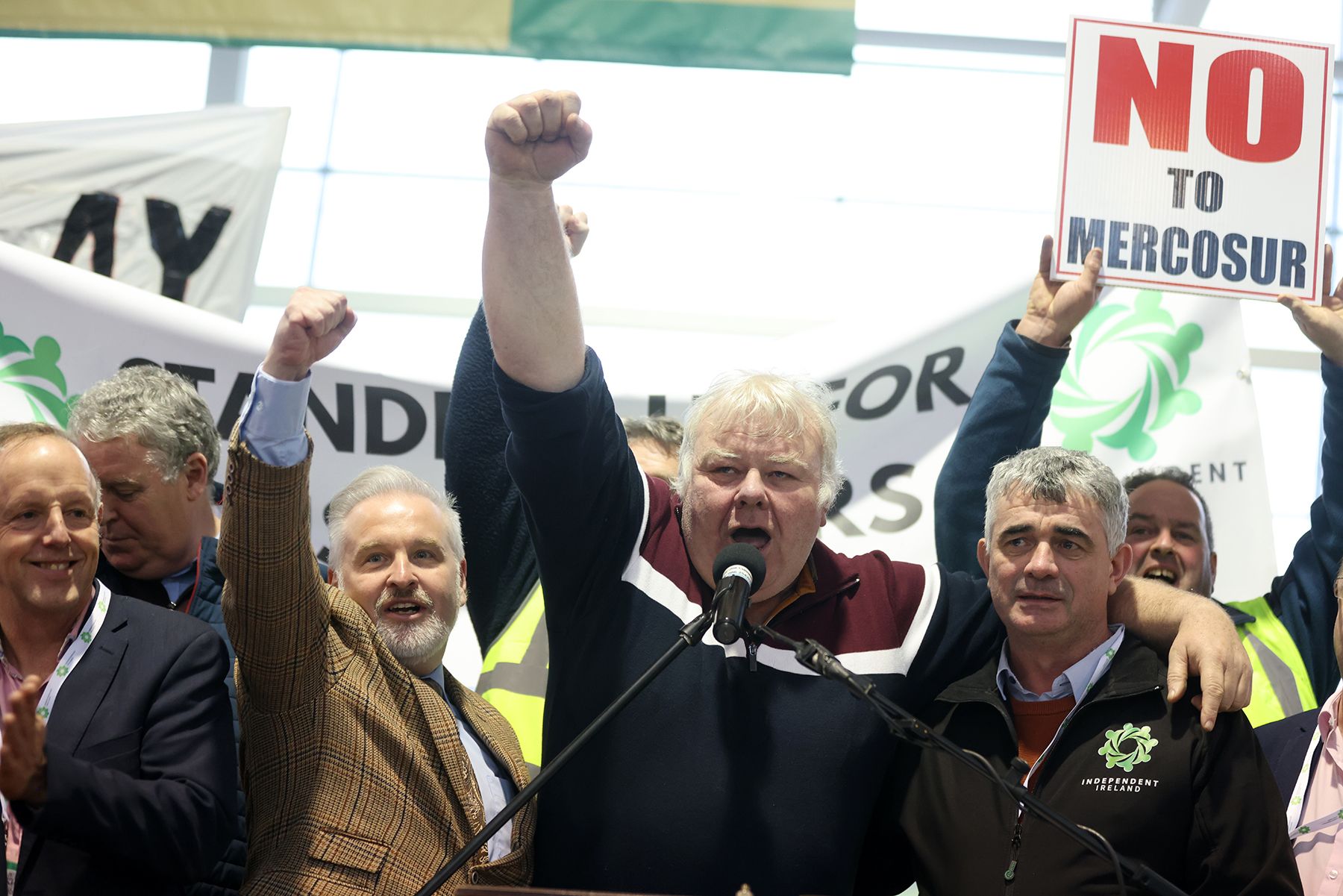

If the Mercosur deal goes through the EU will be flooded with 99,000 tonnes of beef and 180,000 tonnes of chicken which are frequently produced using toxic chemicals banned here for decades. The agreement also runs contrary to EU and Irish climate legislation and will accelerate deforestation and environmental destruction, particularly in Brazil. All this poses a grave and immediate threat to Irish agriculture and rural Ireland, north and south.
The Irish government’s role in this has been despicable. The Programme for Government commits the parties to opposing Mercosur. Despite this An Taoiseach and An Tánaiste were consistently coy about their position until forced to do so recently.
Last week on RTÉ's Good Morning Ireland, speaking from China, Micheál Martin said: “A lot of progress has been made.”
On the following morning’s Good Morning Ireland government TDs, including John McGuinness, queued up to repudiate An Taoiseach’s remarks. Before that programme was over the government was briefing that it will oppose Mercosur. By all accounts Independent government ministers, particularly Michael Healy-Rae, were livid. Long distant crisis telephone calls followed between An Taoiseach and An Tánaiste. Belatedly the government announced it will oppose Mercosur. It is little wonder that Dublin is rarely taken seriously. That's what happens when you speak out of both sides of your mouth at once.
Festive women
SOME of the traditions that surround Christmas and the New Year celebrations have changed over recent years. For example, when I was growing up Christmas decorations didn’t start appearing in homes until a fortnight or so before December 25. Now, Halloween is barely over before Christmas decorations start appearing.
And in the past the tree, crib and the rest of the decorations all stayed in place until January 6 – the Feast of the Epiphany, the date on which it is said that the three Wise Men visited the baby Jesus in Bethlehem. This year decorations were mostly down by the start of the New Year. And already Easter eggs are in the shops.
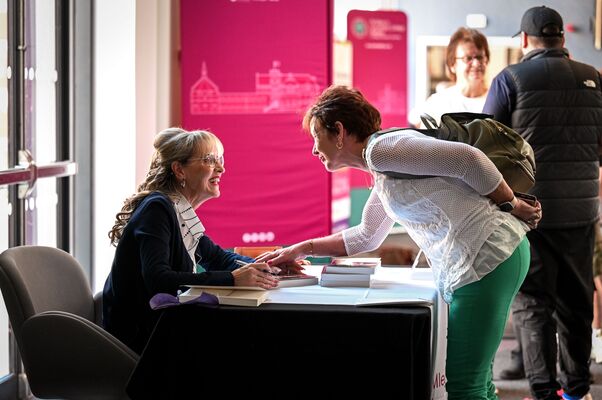
However, one celebration that has taken on a new lease of life is Nollaig na mBan – Women’s Christmas. Like the Epiphany, it is celebrated on January 6. It used to be confined to rural areas, but that is changing.
Nollaig na mBan is the day when the role of women, who generally did all the work for Christmas, was celebrated. It was the day when women got together with other women to enjoy a brief few hours of celebration on their own.
In a recent article in the Journal.ie, Dr Mary McAuliffewrote about the origins of Nollaig na mBan in Kerry and Cork. She describes how it has been “celebrated since at least the 19th century” and references the UCD Folklore collections where there are “references to the practice of Women’s Christmas.”
Today, Nollaig na mBan has witnessed a revival. It has become more than a day on which the woman of the house can rest. It is an opportunity for women to celebrate their friendships and their achievements. Long may it spread and grow.
A sign of hope
THE draft budget for the Executive, recently announced by Finance Minister John O’Dowd, included an allocation of an additional £40 million toward the rebuilding of the new Casement Stadium.
Sadly, despite the 1998 Good Friday Agreement and its principles of equality and parity of esteem, the decades since then have produced many examples of political unionism continuing to resist investment and funding allocation for nationalist areas. Casement Park is a case in point.
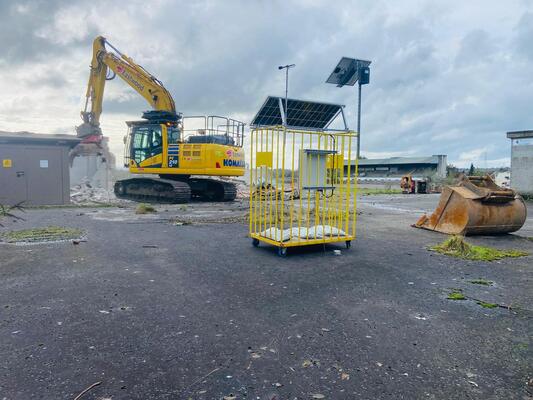
The announcement is a positive and welcome development. So too is the news that demolition work on the old stadium will begin this month as Casement enters what the GAA describe as “the delivery stage”. This will be followed by a “remediation and bulk dig contract that will prepare the site for future development.”
Since it was first opened in June 1953 Casement has been at the heart of the West Belfast community and hallowed ground for Belfast Gaels. It is Antrim's County ground. The new Casement Park also has the potential to provide a significant economic stimulus for the local economy.
Moreover, the new Casement Park will be more than a sports stadium; it will be a community hub which will bring with it social and cultural benefits. I have long held the view that the work to rebuild Casement must proceed regardless of the negativity of some elements of unionism. So I welcome the GAA statement that the development is now entering the delivery stage.
Planning permission has been granted. So let the work commence. Well done to all of those working to advance the day when the new Casement opens. All of us who believe in equality should support this project in every way we can. Gaels in particular need to unite behind Cumann Luthcleas Gael’s plans to proceed with the new Casement. It’s time to deliver.