SO Mike Nesbitt is going to retire as leader of the Ulster Unionist Party (UUP). At one point I was on nodding terms with Mike when he worked in the BBC, and he struck me at the time as a modest, highly intelligent guy. Whether he’s remained that way I don’t know – sometimes life makes a person a narrower, more intense version of themselves, sometimes it expands them, opens them to new things, not necessarily good things. For instance, some of you may remember Conor Cruise O’Brien, who started as a Labour Party candidate in Dublin and ended up a sad unionist in the North.
Mike’s announcement that he's stepping down included the statement “The next five-year mandate stretches to May 2032, the month I hope to celebrate my 75th birthday.” He’s clearly focused on what condition he himself will be in to lead his party then; he has, intentionally or unintentionally, disregarded the fact that Sinn Féin, the biggest party in Ireland, has identified 2030 as a target date for a border poll.

So it’s conceivable that Mike’s talk about seats in Stormont in 2032 may be seats in a non-existent parliament. Or it may, of course, be Mike’s effort to keep his constituents thinking that NEI as is will be the same NEI, part of the UK, in 2032.
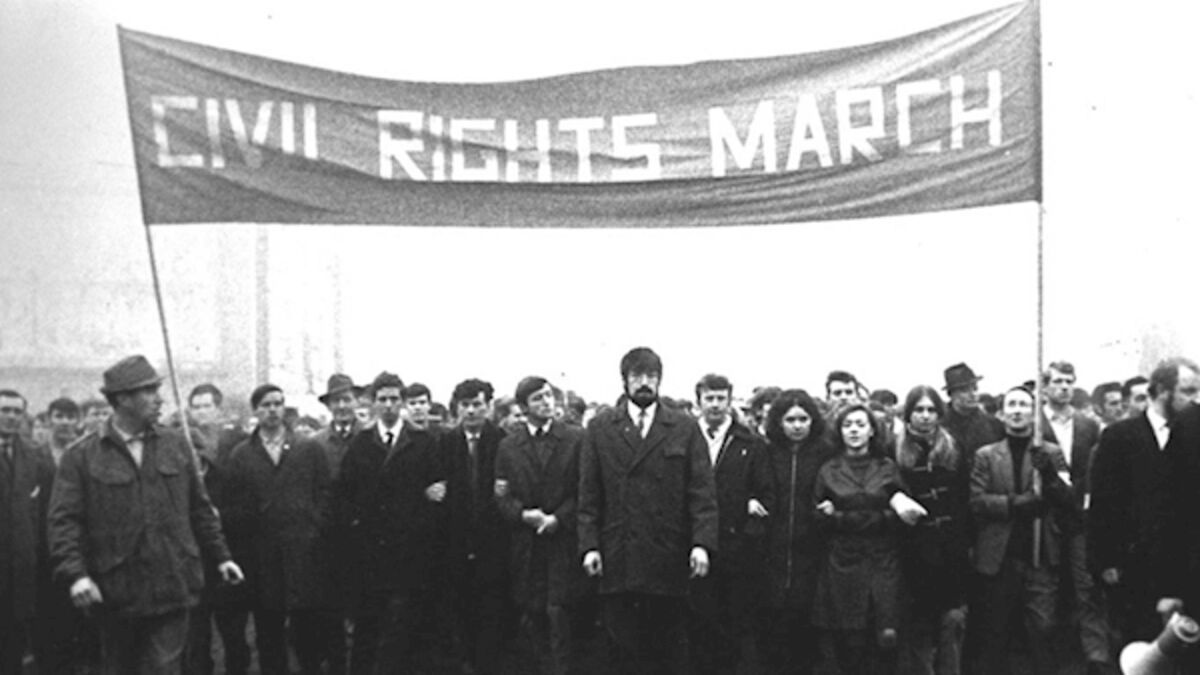
Which brings us to a bigger question: why do we have a UUP? Well, maybe because for decades – since the inception of the state – the UUP ruled NEI. For over 50 years it took a firm, anti-Catholic line in terms of jobs, housing and anything else you can think of. But then came the Civil Rights movement and Ian Paisley managed to persuade the unionist people that the UUP was too weak in handling these uppity Taigs and so the Democratic Unionist Party (DUP) came into being, showing what sectarianism on steroids looked like. The DUP grew, the UUP shrank, and so today we have the DUP with 26 seats in the Stormont Assembly and the UUP with nine.
In nationalism, the shift in power was more diverse. Once we had the old Nationalist Party, which over decades won a limited number of seats but were political eunuchs, stymied at every turn by the ruling UUP. Then came the Civil Rights movement, and out of that came John Hume and the SDLP.
For some thirty years the SDLP was the voice of peace and justice, with John Hume talking about a post-nationalist age. But just as the DUP had eaten into UUP representation, so too the hunger strikes gave Sinn Féin political muscle. It grew and grew and grew, North and South. At present, Sinn Féin have 26 seats in the Northern Assembly and the SDLP have eight.
This downward trend of two parties into their present shrunken form raises the question “What are they for?”
Wouldn’t unionism be stronger if it had one united party? Probably, but that’s not how they want it. In fact, Jim Allister’s TUV party is to the right of the DUP, a position once thought impossible, and is nibbling at their heels. Unionist parties have often talked of electoral pacts but rarely about coming together as one party.
We see parallel changes in the SDLP. Once the post-nationalist party, now its shrinking members are openly nationalist, in favour of a united Ireland. And yet it sees itself as different from Sinn Féin. Maybe as 2030 approaches, it’ll become aware of the pressure for a border poll and realise that its continued existence is, frankly, pointless.