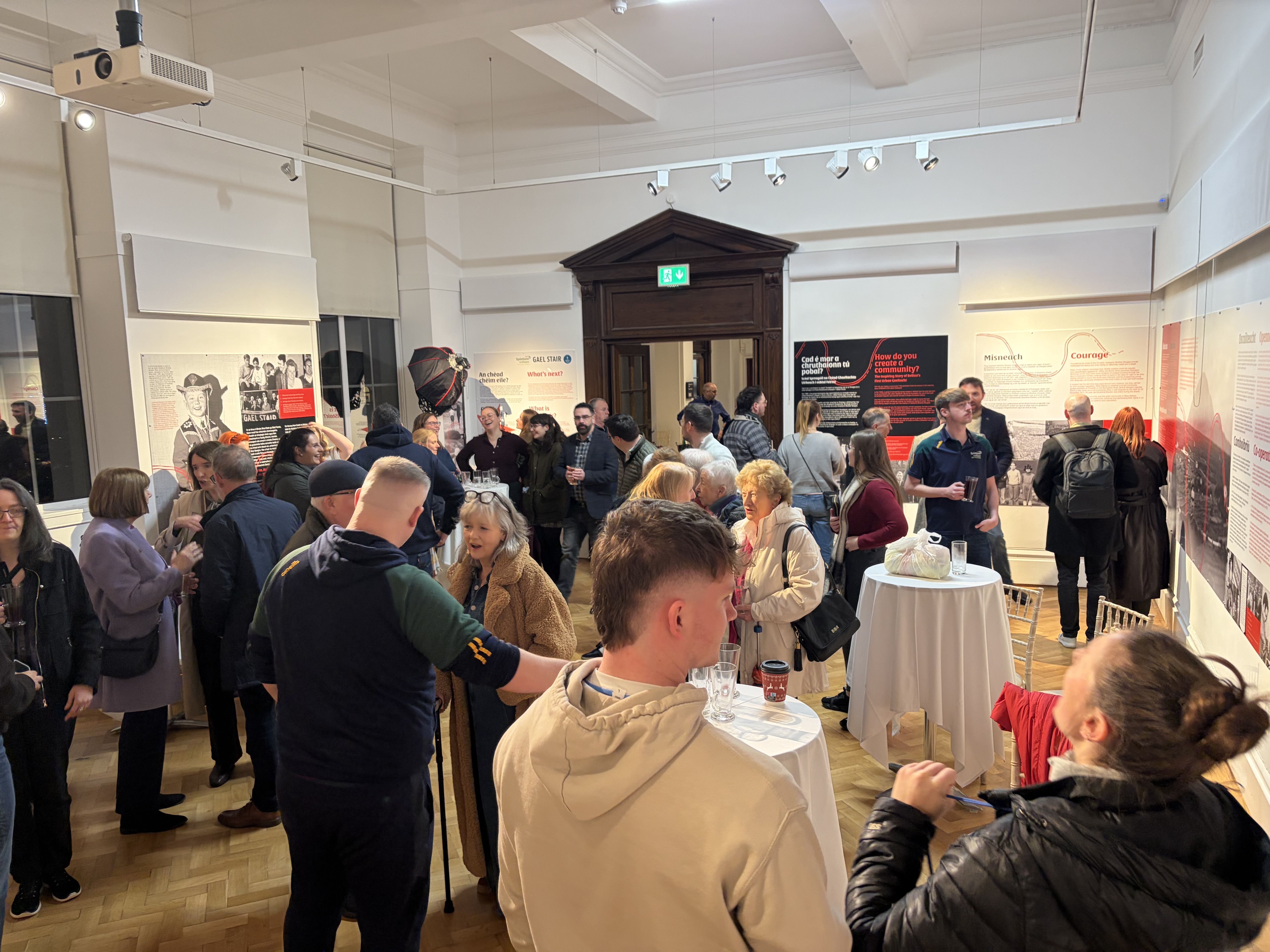
Friends, family, and supporters of the Shaw’s Road Gaeltacht gathered last Thursday at the Uster Museum to celebrate the launch of a new exhibition which charts the inspiring story of Gaeltacht Bhóthar Seoighe (the Shaws Road Gaeltacht).
The first urban Gaeltacht project in the North, founded in the early 1970s, was the initiative of a handful of young Belfast couples who took the radical decision to break entirely from English and to live their everyday lives as Gaeilge.
The exhibition, the fruit of Irish language heritage initiative GaelStair, illustrates how those pioneer families built their own homes, raised a new generation of confident Irish-speakers, founded the first Irish primary school, and played a key role in various community enterprises such as the Whiterock Industrial Estate (subsequently invaded and disbanded by the British Army who turned it into a military base in 1979).

They even rebuilt the homes belonging to the people of Bombay Street after they had been torched by loyalists in the pogroms of August 1969.
It was from their model of self-reliance and community initiative, undeterred by official prejudice and negligence, that the subsequent Irish language revival movement in Belfast drew its inspiration. The impact of those early campaigners is reflected today in the more than one thousand pupils attending Irish medium secondary school Coláiste Feirste as well as the success of cultural venues like Raidió Fáilte and the Cultúrlann, not to mention the global phenomenon that is local rap trio Kneecap.
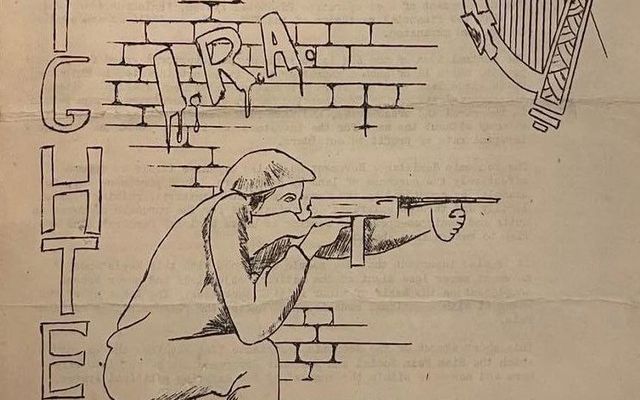
The exhibition incorporates a variety of images and text, much of it acquired through an archival excavation carried out by the pupils of Coláiste Feirste in the attics and basements of the Shaws Road Gaeltacht homes. Examples include Irish language books from the 1950s and ‘60s, architectural drafts of the original houses, letters and comms from Irish republican prisoners, self-translated children’s textbooks used by the pupils of Scoil Ghaelach Bhéal Feirste (now Bunscoil Phobal Feirste), as well as letters, diaries, and photographs of the founding families, which bring to life their ideals and travails.
Several of the urban Gaeltacht’s founding fathers (and mothers) were in attendance at the event, including representatives of the Mac Seain, Mistéil, Ua Bruadair and Mac Aindreasa founding families.
Diarmuid Ua Bruadair, a second generation member of the Shaws Road Gaeltacht and today principal of Gaelcholáiste Doire, gave the keynote address at the South Belfast gathering.
“The theme of tonight is community and the community of Bóthar Seoighe in particular. This community includes not only the families of the scheme itself, but families and people who have been part of the project throughout the years, children who have attended the school and their parents, people who have spent time working in the school, people who have been inspired by this story," he said, in Irish.
"We are connected through the lifelong journey we are on, a journey that has left its mark on the city and the country, a journey rooted in love, determination and courage, generosity and pride and it is wonderful that the story of this passionate journey, the story of our community, can be seen here in the Ulster Museum.”
Seán Mistéil, another scion of the Shaws Road Gaeltacht and head of the GaelStair initiative, told the Andersonstown News said the work would help the next generation of Irish speakers understand their own history.
“Our hope is that this exhibition - and our work more generally - can inspire the wider community, as well as to help the next generation of Irish speakers to understand and celebrate their own identity," he said. "We don’t just want to look back at the past - we want future generations to exceed and expand the ambitions of the Shaw’s Road Gaeltacht.."
GaelStair plans to build a permanent archive and museum in West Belfast to house the GaelStair archive.
The bilingual Pobal Bhóthar Seoighe exhibition will run at the Ulster Museum until 10 May 2026.