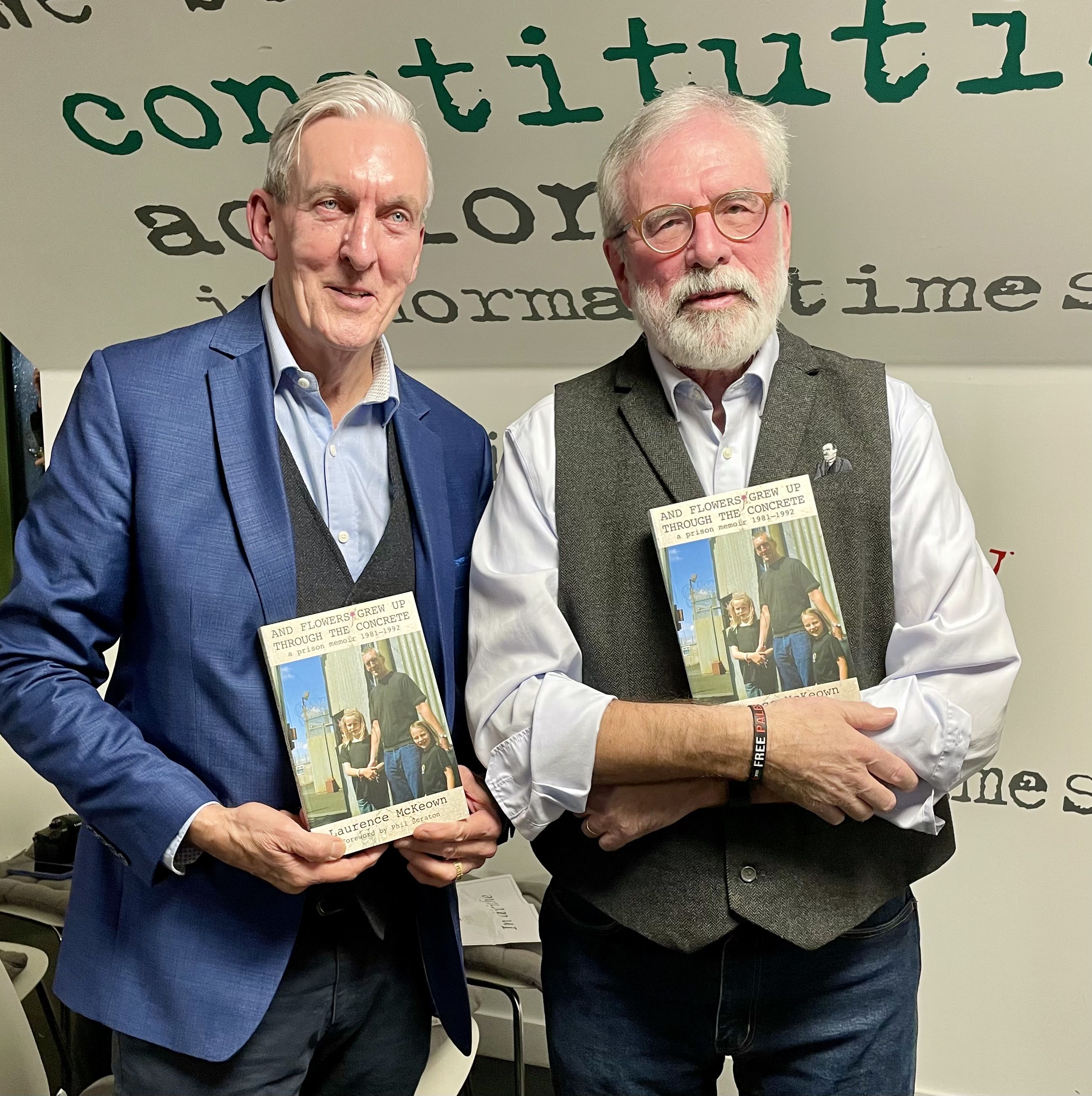
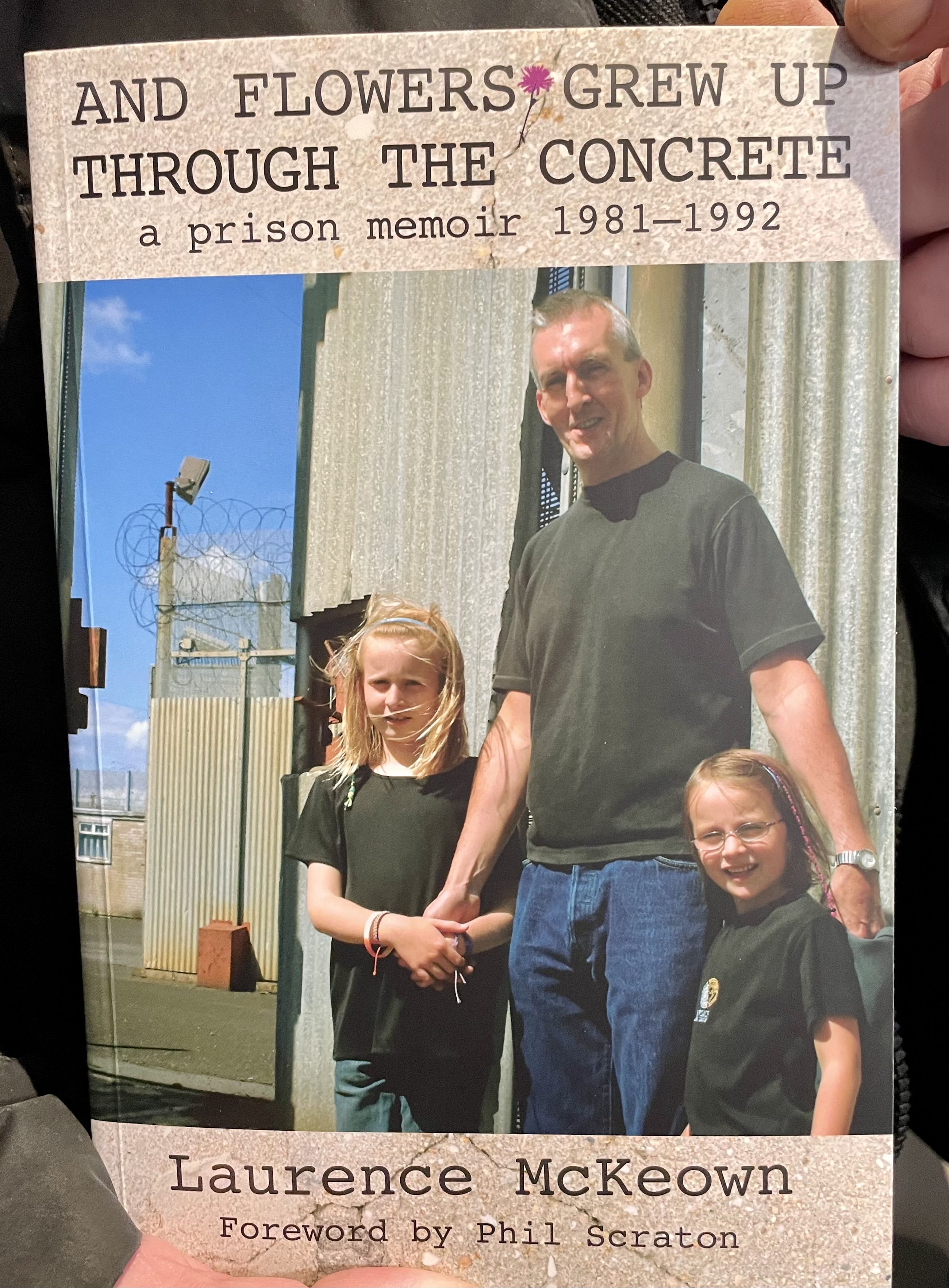
‘AND Flowers Grew up Through the Concrete’ is Laurence McKeown’s second prison memoir. Big Laurny is a very fine writer. This latest book is an account of his journey through imprisonment, hunger strike, brutality and growing self-awareness. It is beautifully written and unashamedly honest in its emotion.
Laurence is one of those gifted republican POWs who spent years – decades in some cases – in British prisons and who have written about their experience. Together they have generated a huge body of prison literature comparable to previous periods in the independence struggle.
Among them are Eoghan MacCormaic and Jim’Jazz’ McCann; Pat Magee; Gerry Kelly; Síle Darragh’s inspirational account of the women in Armagh, ‘John Lennon Is Dead’; Danny Morrison; Roseleen Walsh; Tony Doherty, Chrissie McAuley, Jim McVeigh; Jake Mac Siacais; Richard McAuley and others. I apologise to any I have left out – always a danger when you produce a list of any kind.
Perhaps the best known of all the prison writers is Bobby Sands, whose poems, songs and accounts of life in the H-Blocks and on hunger strike still resonate over four decades after his death. Writing on scraps of paper to be smuggled out, Bobby’s poetry, prose, political polemic, songs and other writings in Irish and English are now part of the tradition.
Laurence’s previous books include, with Brian Campbell and Felim O’Hagan, ‘Nor Meekly Serve My Time’, which covers the blanket protest from 1976 to 1981; ‘Out of Time: Irish Republican Prisoners Long Kesh 1972-2000’; and with Brian Campbell the script for the film H3.
Laurny’s first prison memoir, ‘Time Shadows’, was published four years ago. This latest memoir now completes his account of his jail experience.
It covers the many challenges the political prisoners faced after the hunger strike ended, including the Mass escape of 1983 and its aftermath; the ongoing prison struggle as the prison system continued its efforts against the prisoners; and the differences in approach and politics that emerged among the political prisoners themselves. Laurny gives his views on this in a measured but clear and honest way, without rancour.
Professor Phil Scraton in his foreword quotes Nelson Mandela who described the apartheid South African approach to prison as “designed to break one’s spirit and destroy one’s resolve”. It was our experience too of British penal policy. The accounts of Republican POWs reflect their courage and determination not to be criminalised. It is an amazing story of human endeavour – of men and women overcoming enormous adversity.
Nowhere is this more evident than in Laurny’s evocative and deeply moving account of his last hours on the hunger strike and the decision by his mother to order medical intervention when he slipped into unconsciousness.

He writes: “That evening I said to her, ‘I’m sorry all this came about for you.’ She leaned across to me and whispered, ‘You know what you have to do and I know what I have to do.’
“I didn’t understand at the time what she meant, but I think I do now, years later. If I were to die suddenly, then that was how it was intended to be. It would be God’s will. But if my life ended up in her hands and the decision was hers, then she would give me life.”
And that’s what his mother, Mary did – on Laurny’s 70th day of hunger strike – she gave him life.
Just as she had when she gave birth to him.
In one part of the book Laurny writes about the way emotions are expressed in the Irish language. How emotions are ‘on you’. He writes about the numerous events he has spoken at and the countless interviews he has given and how over time he has learned to do these competently. But there are times, as he describes it, when “I can be in the middle of a sentence when a word, an image, or a sound comes to mind and I’m flooded with emotion. I either openly weep or need to pause mid-sentence and wait until I can compose myself again.”
It happened to Laurny the night of his book launch in Áras Uí Chonghaile as he spoke about his experience. It happened to me also that same night speaking of the hunger strike. It just comes at you out of the blue and you find yourself choking. Or reduced to silence. Or tears.
Laurny writes honestly about this. His book is a compelling and accessible piece of story-telling. It exemplifies the power of memory and of the written word and the personal and individual understanding of events. Well done, Laurny.
And well done Beyond the Pale for publishing this very fine book. If you do nothing else as 2025 draws to a close, buy this book and read it. You will not be disappointed.
And Flowers Grew up Through the Concrete – A Prison Memoir by Laurence McKeown.
Available from Beyond the Pale, info@beyondthepale books.com and at An Fhuiseog. 55 Falls Road, and www.anfuiseog
Spiorad Ghearóid Uí Cairealláin ina steille bheatha
REÁCHTÁLADH deireadh seachtaine d’imeachtaí sa Chultúrlann cúpla lá ó shin chun Gearóid Ó Cairealláin, a fuair bás anuraidh, a chomóradh agus chun ár meas a léiriú dá fhís agus dá chrógacht.
Scrúdaigh na himeachtaí téamaí na hagóidíochta a bhí go smior ann.
Mo bhuíochas ó chroí le hEoghan Ó Néill agus leis na daoine a chuir Scoil Gheimhridh Uí Chairealláin le chéile. Obair iontach, agus sílim go mbeadh Gearóid an-sásta leis. Díospóirecht, ceol, siúlóid, imeachtaí éagsúla… agus an taispeántas galánta fosta ar shaol Ghearóid.
Seo Gearóid romhain mar chara agus mar fhear a raibh go leor fiontar aige. Agus é ag baint suilt as an saol i gcónaí. Tá gá in achan tstreachailt le glór atá dúshlánach – ach dearfach fosta. Bhí neart smaointe ionspioráideacha ariamh ag Gearóid.
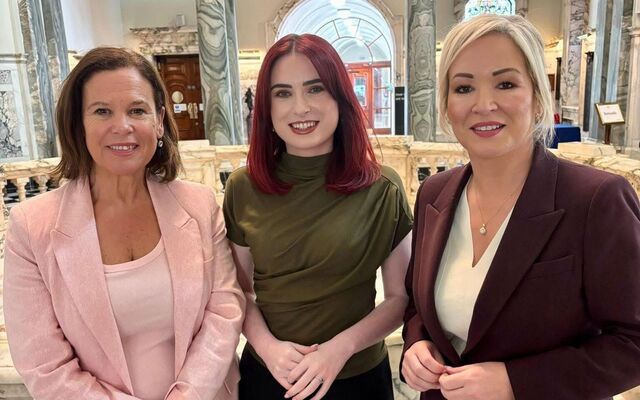
TRÍ GHÁIR DO GHEARÓID: An t-údar le Bríd Ó Gallchóir, baintreach Ghearóid (i lár baill) agus le clann is cairde Ghearóid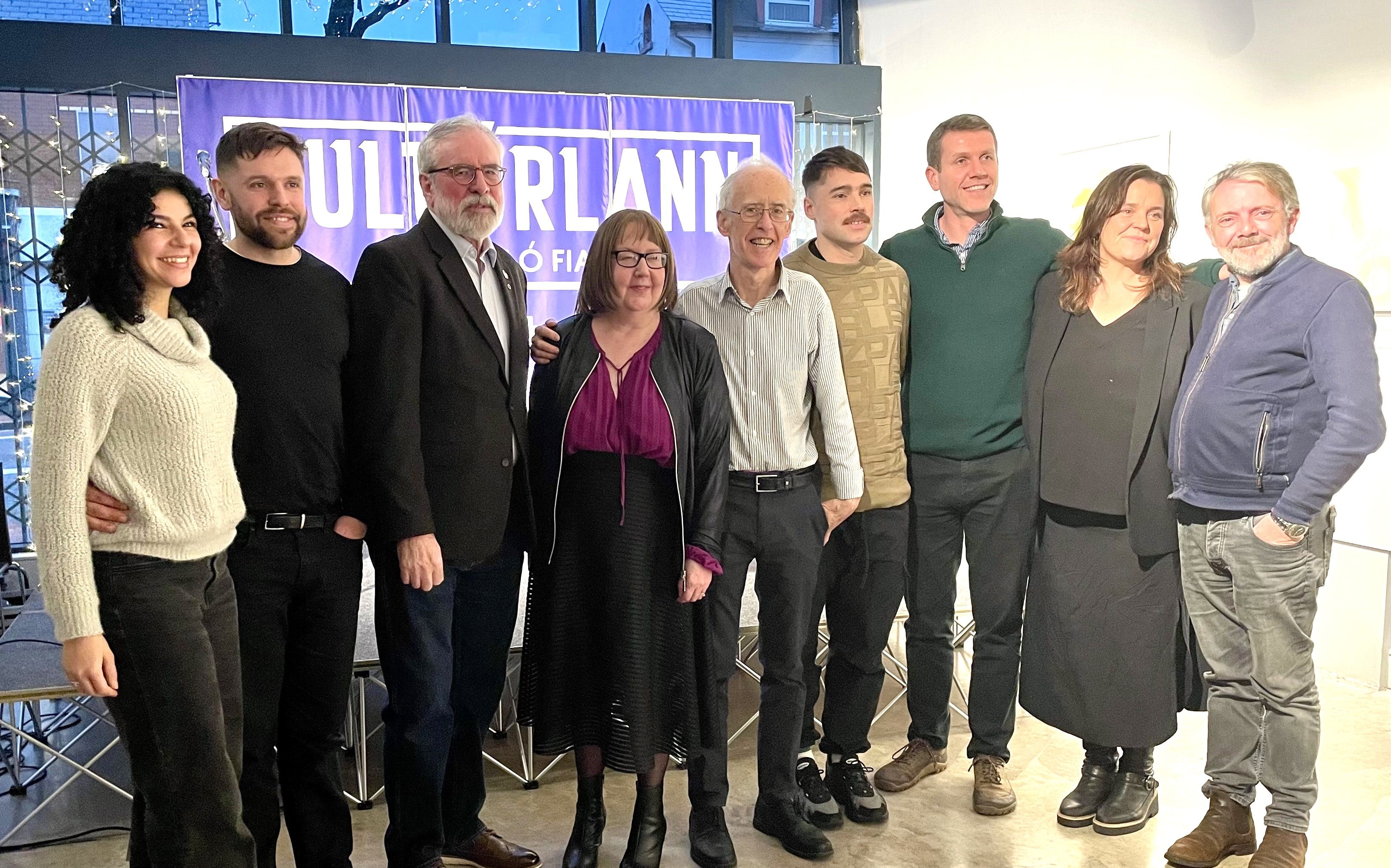
Tá a fhios againn go bhfuil smaointe ionmholta ag a lán daoine, ach ba é Gearóid ar dhuine de na daoine sin a rinne beart de réir briathair.
Chuir Gearóid agus a chairde a lán tograí ar bun: Preas an Phobail; Lá; An Ceathrú Póilí (le nod beag do Fhlann Uí Bhriain), Raidió Fáilte, Aisling Ghéar, an Mheánscoil/Coláiste Feirste, An Cheathrú Ghaeltachta agus araile.
Agus grá i gcónaí do na healaíona – ceol, drámaíocht, scríbhneoireacht, craoltóireacht. Craic agus spórt.
Thóg siad ar obair na gceannairí a thóg Sráid Bombay, Bóthar Seoighe, Garáiste an Phobail agus tograí pobail eile.
Thóg Gearóid agus a chairde ar na bun-chlocha sin.
Agus chuir an Dream Dhearg leis an obair sin. Táimid fíorbhuíoch díobh. Tá difríocht mhór idir dreamers agus visionaries. Ba visionary é Gearóid.
Peace deal must include the Ukrainian people
THE President of Ukraine, Volodymyr Zelensky, has visited the Irish state. In the course of his meetings, President Zelensky also addressed the Oireachtas in which he called for a peace without humiliation.
His visit came at a time when there is widespread speculation that the US government is pressuring Ukraine to accept a peace deal that would force it to cede land to Russia.
My starting point as a republican is clear. The people of Ukraine have a right to self-determination and the Russian invasion is a breach of international law. With Russia intensifying its drone attacks on Ukraine, especially its targeting of civilian infrastructure.
That means establishing a sustainable, permanent, and just outcome to the war through a negotiated peace settlement. It also means that Ukraine must be part of all negotiations. Concocting a deal behind the backs of the people of Ukraine is a recipe for disaster.