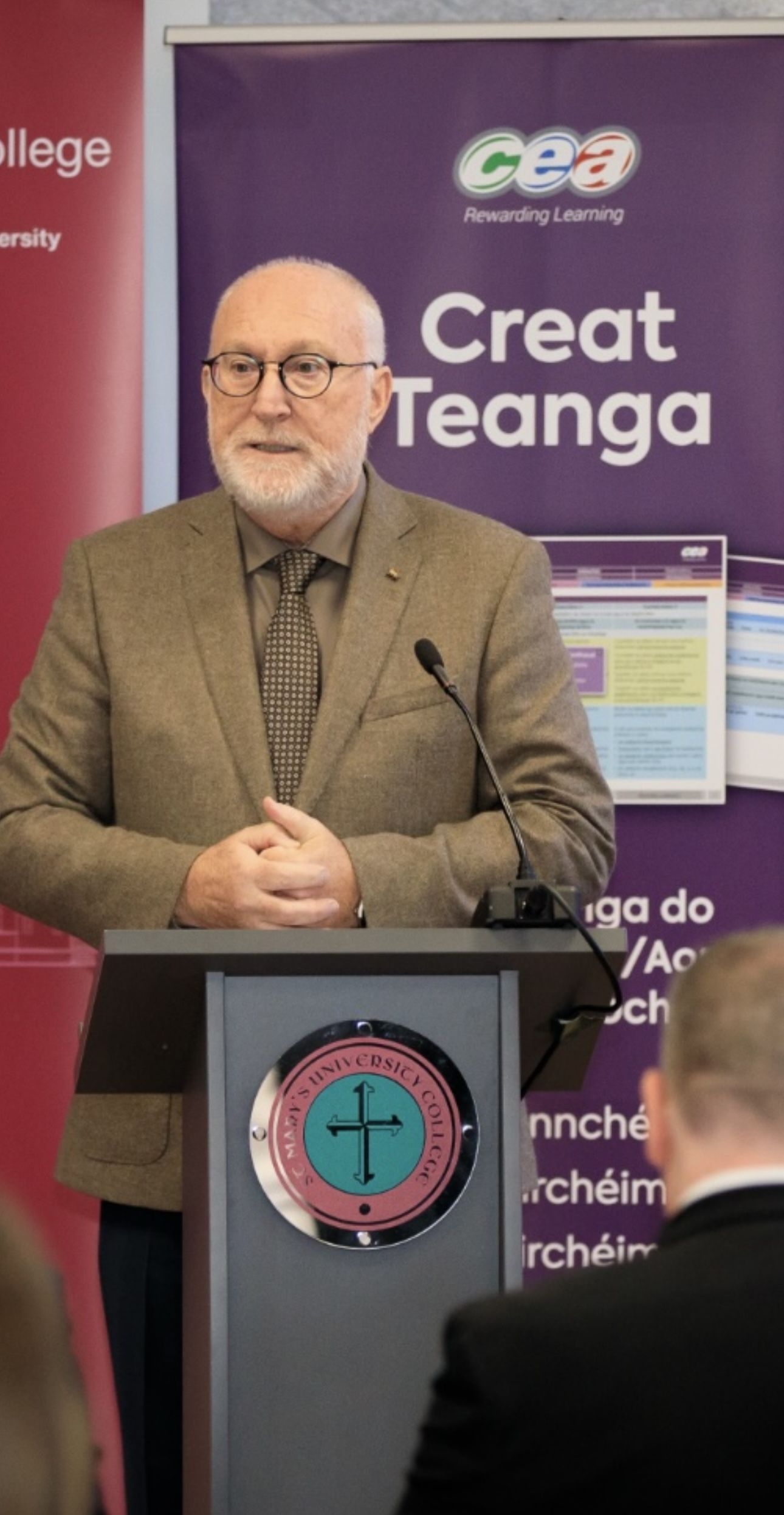
THE principal of St Mary's University College on the Falls Road has said that more needs to be done to to address "clear blockages" from young people entering higher education.
Professor Peter Finn was speaking after latest figures revealed that West Belfast had the lowest proportion of young people entering universities and colleges in the North in 2025.
The entry rate into higher education institutions among 18-year-olds sat at 29.7 per cent for 2025 – almost nine per cent below the North's average. The latest statistics from the Universities and Colleges Admissions Service (UCAS) were released this week for the 2025 undergraduate admissions period.
The West Belfast parliamentary constituency was the lowest in 2025, followed closely by Upper Bann (29.9 per cent). North Belfast (32.5 per cent), Newry and Armagh (33.1 per cent) and Foyle (35.7 per cent) were the constituencies with the next lowest entry rates.

On the other hand, almost one-in-two 18-year-olds in North Down (49.3 per cent) were accepted onto courses this year – the highest rate of any constituency in the North.
Belfast South and Mid Down (47.6 per cent), East Antrim (46.9 per cent), South Antrim (43.5 per cent) and Strangford (40.9 per cent) were the constituencies with the next highest entry rates.
Professor Peter Finn from St Mary's University College on the Falls Road described the figures for the West of the city as "very disappointing".
"At the outset it should be noted that West Belfast is an area of considerable diversity in terms of its demographic composition. Within the area, the numbers are likely to vary considerably as the figures reported by UCAS are aggregated.
"Nevertheless, despite the excellent work of local schools, the West Belfast Partnership Board, and other agencies across the constituency there are clearly blockages to entry which must be identified and addressed as a matter of urgency. It has been well established that a university education brings significant benefits to both the individual and communities.
"A primary factor in accounting for the figure is that West Belfast continues to experience considerable economic and educational disadvantage resulting from the long-term process of de-industrialisation, a lack of significant economic investment, the continued legacy of the conflict and neglect.
"Political and community leaders in West Belfast have worked tirelessly for decades to overcome those issues but they remain problematic, as despite the resilience of the people, they are deep seated and structural in their nature.
"A second factor is the cap on university places in the North, which requires a very high proportion of 18-year-olds to attend institutions of higher education outside of the jurisdiction. Those who do so incur significant additional costs of tuition, travel, and subsistence. In that context, attending college or university outside the jurisdiction is often not financially feasible for those from families with relatively low incomes. They are hit the worst by the cap on university places.
"At St Mary’s University College, we are committed to widening access and participation and our student intake profile demonstrates that. It is also true for the level of very necessary student support we provide.
"We do however have spare teaching capacity in terms of space which could accommodate additional students, especially from the local area. With a lift of the cap on student numbers and appropriate financial support the extra capacity could assist, especially if targeted foundation degrees were used as an entry point to university education."